
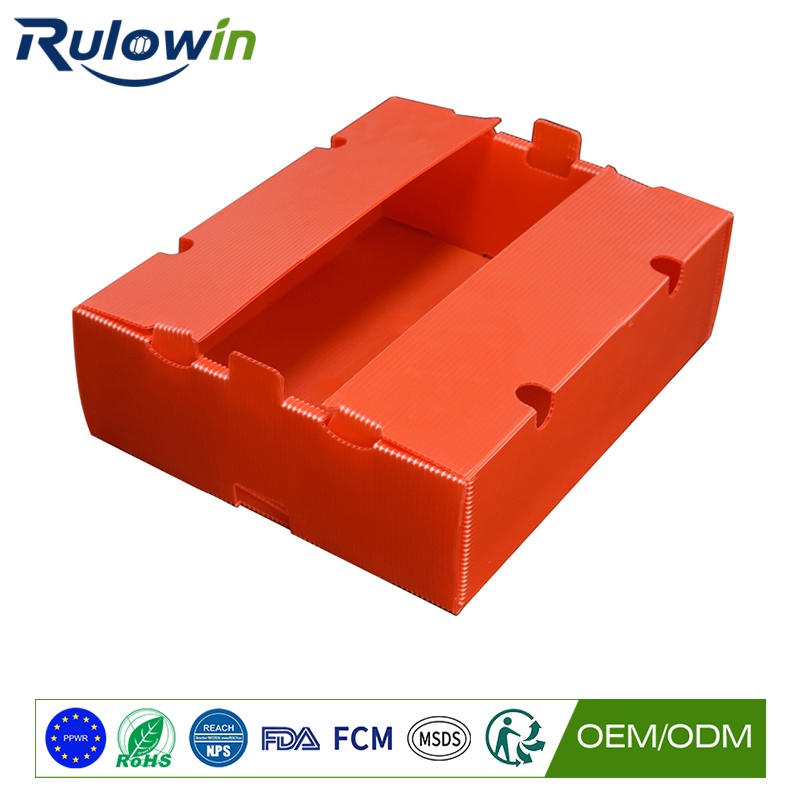
One of the strongest practical arguments for plastic crates over wooden ones is pest and foreign body control. It is also where a reusable plastic fleet can still fail, because the failure mode is different – not harbourage, but fragments.
Why wood is a problem
Wood is absorbent, splinters, and provides harbourage. Moisture and product residue in a wooden pallet or crate create exactly the conditions insects and rodents look for, and there is no way to clean inside it. Washing a wooden crate wets it further and makes the problem worse.
Plastic does not absorb, can be washed, and has no internal voids that open to the product surface when it is sound. That is a real and defensible advantage, and it is why plastic packaging is often specified in food environments.
Where plastic still fails
Fragments from damaged crates. A split corner or an open cut edge on a corrugated PP crate exposes the flutes. Those can break off, and a piece of plastic in a product is a recall-class finding.
Inadequately sealed edges. The most common source. An unsealed cut edge wears and sheds progressively rather than suddenly.
Repaired crates. A repair using tape, wire or a non-compatible adhesive creates its own foreign body risk. If a crate has to be repaired, it should be repaired properly or retired.
Empties stored badly. Crates left open in a yard collect debris and can harbour pests themselves, particularly if they retain product residue.
Broken labels. Label fragments are as much a foreign body as plastic.
What helps
- Sealed or welded edges on any crate in a food environment, which removes the shedding mechanism at source.
- A retirement rule applied strictly. Split base, open edge, cracked wall – out of service immediately. Not “when we get round to it”.
- Moulded identification rather than labels, so there is nothing to peel.
- Covered empty storage off the ground, so empties are not collecting material between uses.
- A repair standard that either permits proper welded repair or forbids repair entirely. The middle ground of tape and hope is where incidents come from.
The inspection habit
Foreign body control in a reusable fleet comes down to inspection discipline. A quick check of every crate at the point it is loaded – looking at the base, the corners and the edges – catches nearly everything. It takes seconds per crate and it is the difference between a systematic control and a hope.
Where the inspection is done matters. Doing it at the packing line, immediately before product goes in, is the last line of defence and the one with the best chance of catching something.
The record side of it
Moving away from wood removes the splinter risk that foreign body audits focus on most, but it does not remove the obligation to show that you are managing the risk you do have. It replaces one set of documents with another.
What helps is a log that ties incidents to crate age. Record each fragmentation event – date, crate type, batch or moulding date if you can read it, where it was found, what it was doing. Six months of that produces something more useful than any policy document: a curve showing where in the fleet life failures start to climb. In most operations we have seen the data, it is not the oldest crates that shed most; it is the ones in the band just past peak usage, handled hardest and washed most often, before anyone has thought about retiring them.
That curve justifies a replacement budget in a way that an incident report never does. “We found plastic in twelve shipments last year” generates a corrective action. “Fragments begin appearing at about four years, and nineteen percent of our fleet is past that” generates a purchase order, which is the outcome you actually need.
The other half is simple: your pest contractor’s reports should mention returnable packaging storage. Stored crates are excellent harbourage, stacked wet and dark and undisturbed, and a contractor who has never been shown where the empties sit cannot tell you what is living in them.
What we can do
We build produce boxes with sealed and welded edges so there is no open flute to shed, and we can supply moulded identification so there are no labels to fail. Tell us your foreign body requirements and we will tell you what the box needs – and if your fleet has aged to the point where fragments are appearing, that is a replacement programme rather than a cleaning problem.