
Single-part loads are straightforward: repeat one pattern until the height runs out. Mixed loads are not, because the pattern has to serve two masters. It has to be stable, and it has to come apart in the order the line or the customer needs. Where those two conflict, the temptation is to solve stability and let the receiving end sort it out.
Start from the unload sequence
Before drawing the pattern, write down the order in which the parts are needed at the far end. Parts needed first go on top or at the front. Parts that are only needed occasionally go at the bottom. Getting this wrong is cheap to fix on paper and expensive to fix in a goods-in bay, where it shows up as double handling.
Weight distribution across the deck
Heavy units low, light units high, and the weight as even across the deck as the mix allows. An off-centre load sits badly on a truck and worse on a rack. Where the mix makes perfect balance impossible, the rule is to keep the heavy side towards the middle of the deck rather than to one end, because a load that is heavy at one end leans.
Grouping by destination
Where one pallet feeds several destinations, grouping by destination rather than by part number usually wins, even where it costs some cube. A pallet that has to be broken down and re-sorted at a cross-dock costs more in handling than the space it saves. Colour coding by destination is a cheap way to keep this visible.
Completing the top layer
Mixed loads rarely fill the top layer exactly. The options are a partial layer held with wrap, a filler box, or a shorter final layer. Partial layers are the usual cause of damage at the top of a load, because the wrap has nothing to pull against. A stack of empty boxes used as filler is the common improvised fix and it works better than it looks.
What to write down
A mixed-load pattern is only reproducible if it is documented as a layer-by-layer diagram with the part number in each position. A written list is not enough; packers need to see where each box goes. Where the mix changes frequently, a standard layer diagram with blanks to fill is more useful than a pattern per order.
When the mix changes every order
Where no two pallets are alike, a fixed pattern is not achievable and the useful output is a rule rather than a diagram: heavy low, first-needed on top, gaps at the edge, nothing floating unsupported. Four rules a packer can apply to any combination without a drawing.
That is less precise than a layer plan and more reliable in practice, because it survives contact with a real order book. Where a small number of mixes repeat, keep a diagram for those and the rule for everything else.
The part pallet is the normal case
Full pallets are what get drawn and part pallets are what get shipped. A pattern that only works when the layer is complete fails most weeks. Designing the top layer to finish with a filler – a stack of empties, a pad and tight wrap – matters more than optimising the ideal case.
What to write on the instruction
Heavy low. First-needed on top or at the front. Gaps to the edge, never through the middle. Nothing unsupported. Four rules that cover any mix and need no diagram, which is what makes them survive contact with a real order book.
What we can do
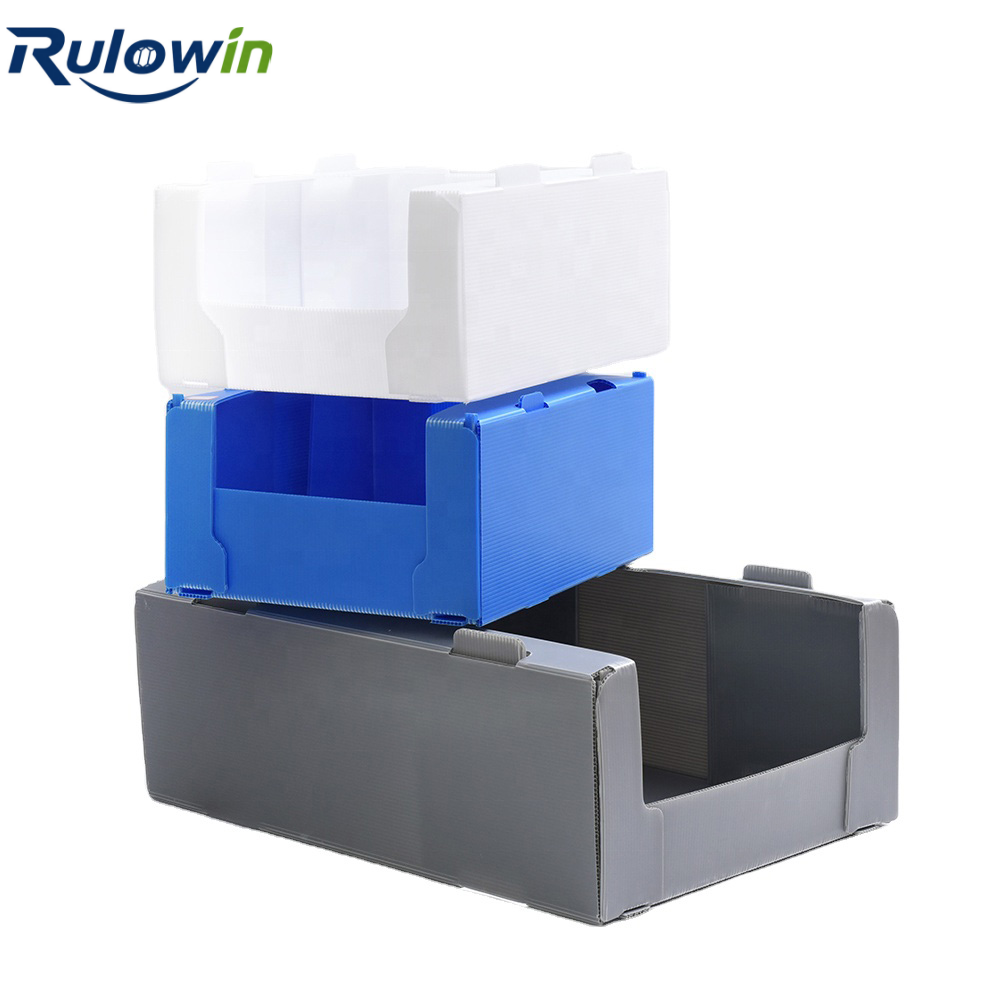
We build PP corrugated turnover boxes and supply them in colours that make destination grouping visible. Send us the part mix and the drop sequence, and we will suggest a layer layout that survives both. How those gaps behave in transit is set out in where gaps in a pattern start causing damage.