
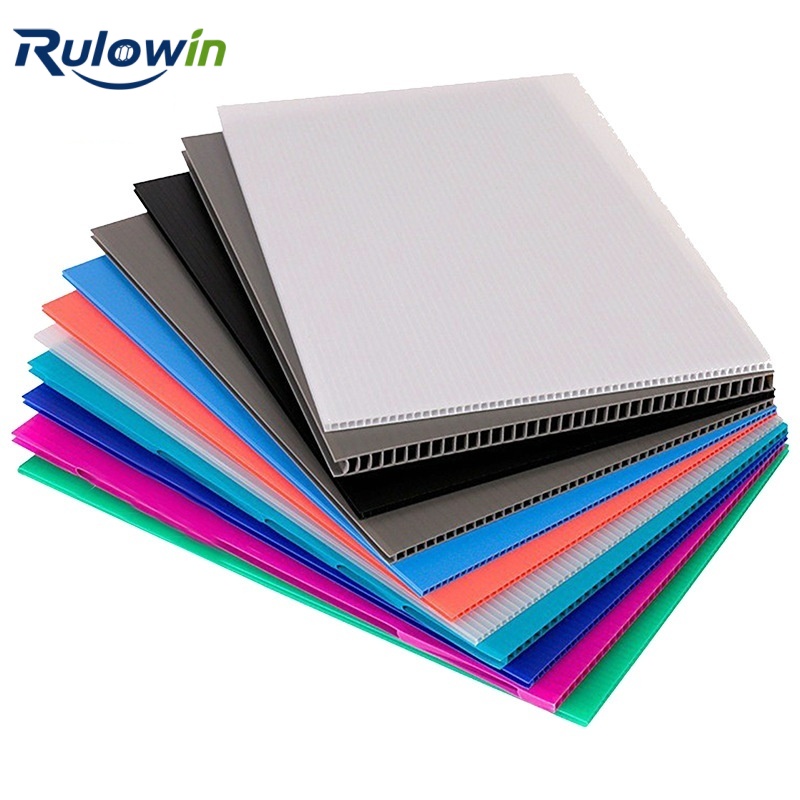
A hole in a PP sheet happens from a fork strike, a dropped tool, or a sheet being dragged over something sharp. Whether to patch it depends on what the sheet is doing, because a patch restores coverage and very little strength.
Why glue works badly here
Polypropylene has a low surface energy and most adhesives do not bond to it without treatment – flame, corona or a primer. In a workshop with a tube of general-purpose adhesive, the result is a patch that peels off within days.
This is the single most useful thing to know about repairing PP: it is not a glueable plastic in the ordinary sense. The workable options are mechanical or thermal.
What works: tape, both sides
A heavy-duty tape applied to both faces, covering the hole with a margin, holds well and takes minutes. It is not structural and it will not stop the sheet bending at that line, but it restores the barrier – which is what most sheet applications actually need.
Cloth-backed or reinforced tape performs much better than standard packing tape, which lifts at the edges almost immediately on PP.
What works: welding
PP can be heat-welded, and a welded patch is the closest thing to a real repair. It needs a hot-air welder and a PP filler rod, and it is a skill rather than a procedure. Worth it for a sheet in a structural or wash-down position; not worth it for a layer pad.
Whether sheet can be welded at all, and what that involves, is covered in can corrugated PP sheet be welded.
What works: replace the section
If the sheet is a layer pad or a liner, cutting a fresh one is often faster than patching, especially if you hold standard sizes in stock. Sheet is cheap relative to the time spent repairing it, and this is the answer more often than people expect.
Where a patch is not acceptable
Food-contact positions, because a taped patch cannot be cleaned to the standard the surrounding sheet can. And any position where the sheet carries load across the damaged area – the sheet will fold at the patch line under load, and a fold is worse than a hole because it changes the geometry.
Cut it out instead
For a hole near an edge or a corner, trimming the sheet down to remove the damaged area is usually the better repair. You lose some size and you keep a sheet with no weak line in it. That trade is nearly always worth making.
Find out why there is a hole
A hole is information. One in the middle of a sheet usually means a fork strike; one near an edge means the sheet was dragged; one at a consistent spot across several sheets means something in the process is catching it.
Patching without finding the cause means patching the same sheet again next month. The pattern across several sheets is the useful one – if the holes are all in the same place, fix the process rather than the sheet.
What we can do
We supply PP corrugated sheet cut to size so replacements are cheap enough to make patching unnecessary in most cases. Tell us your standard sizes – holding a few spares costs less than the labour of repairing.