
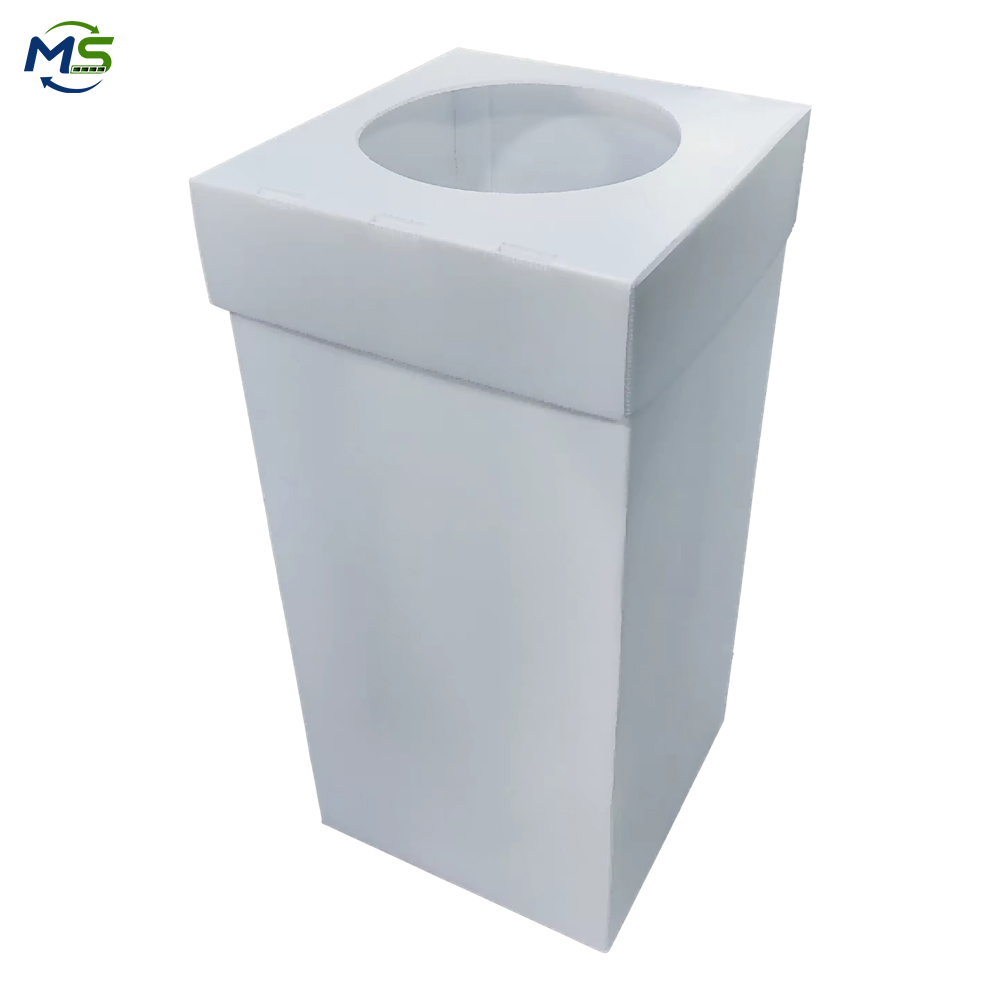
Packaging spend is tracked to the cent at most plants. Packaging volume is usually nobody’s job. That priority is the wrong way round on any lane where freight is billed on space, because the volume is what is actually being bought and sold.
How to work it out
Take the outer volume of one loaded box. Subtract the volume of the part inside it. What remains is board, dunnage and air, and it is all being shipped at freight rates. Multiply by the number of boxes per load and divide by the usable volume of the vehicle. That is your packaging share.
What the figure usually is
For a reasonably close-fitting box around a solid part, expect something in the twenties as a percentage. For a large, light assembly with generous dunnage, forties is common and fifties is not unknown. Most people guess low by ten points on the first attempt.
The three components behave differently
Board is the part you can engineer down, and it is usually the smallest contributor. Dunnage is the part you can lay out better, and it is often the largest. Air is the part you can design out entirely, and it is the one that gets overlooked because it does not appear on any bill of materials.
Where air hides
In footprints that leave a strip of unused deck. In headroom above the final layer. In boxes sized for the largest variant of a part family rather than the actual mix. And in internal clearances specified generously on a prototype and never revisited. None of these cost anything to identify.
Why it drifts upward
A part gains 10 mm and the box is not re-examined. A damage incident leads to thicker dunnage that stays forever. A second source supplies a box 15 mm larger. Each decision is defensible alone; over two years they can move the share by ten points without a single decision to make it happen.
What to do with it
Record it alongside freight cost per part, and re-check both whenever the part or the box changes. One number without the other does not tell you anything actionable: a cheaper box that wastes cube can cost more to run. Track them together and review them together.
What to do about the air
Footprint first: a size that divides the deck with less leftover strip. Then height: a stack that uses the vehicle clearance rather than stopping short of it. Then internal: a dunnage layout that allows a shallower box. In that order, because the first two are free and the third costs design work.
Where a family of parts shares a box, the largest variant sets the height and every smaller part ships the difference. Accepting two sizes rather than one is often the cheapest way to recover that, provided the second size also divides the deck.
Tracking it over time
Record the share whenever the part or the box changes, and review it alongside freight cost per part once a quarter. The value is not the absolute figure; it is noticing when it moves. A drift of a few points a year is invisible from month to month and expensive over a fleet life.
Where the figure has climbed, look at what changed rather than at who changed it. A part that grew, a dunnage set thickened after one incident, a different supplier’s box – each is reasonable alone and costly together.
What we can do
We build PP corrugated turnover boxes sized from the part, which is where most recoverable volume sits. Send us the part drawing and the lane and we will tell you what share of the vehicle your packaging is using. What an improvement is worth is worked out in what five points of cube is worth.