
Most packaging problems are visible on delivery and discovered in use, which is the expensive way round. Ten minutes at goods-in on the first pallet of a new order catches nearly all of them, and the ones it misses are usually the ones a photograph would have captured.
Count and condition, first
Count against the delivery note before anything is unpacked, and note any shortage on the carrier’s document rather than in an email later. Photograph the pallet as received, before breaking it down – wrapping intact, with any damage visible. That single photograph resolves most disputes.
Check the packaging of the packaging: crushed cartons, wet streaks, strap marks cut deep into the product. Transit damage is a carrier claim and the window for making one is short.
Dimensions on a sample
Measure three or four units from different parts of the load – not all from the top layer. External dimensions, and any critical internal dimension. Compare against the tolerance on the order confirmation rather than against the nominal size.
Out-of-tolerance dimensions are the most common substantive defect and the easiest to miss, because a few millimetres is invisible and fatal on an automated line.
Weight
Weigh a sample against the quoted unit weight if you have it. A shortfall means less material than specified, and it is a quick, objective check that does not require any judgement.
This is worth doing on every new supplier and periodically thereafter. Specifications drift, and weight is where the drift shows.
Visual and functional
Flash or sharp edges, short moulding, obvious warp, colour variation, delamination on sheet or panel, cracked welds. Then function: does it nest or stack as intended, does a lid fit, does a handle take a load.
Assemble a few units. Problems in assembly are rarely visible in the flat and always visible in use.
Documentation
Check what came with the shipment against what you asked for – test certificates, food-contact declarations, certificates of analysis. If documentation was a condition of the order, confirm it arrived before the goods go into use, because chasing it later is much harder.
And the deadline
Find out your supplier’s claim window and put it in your goods-in procedure. Most are short – days, not weeks – and a legitimate claim raised after it is a claim you will lose regardless of merit.
Retain samples. Keep three or four units from every delivery for a period, tagged. When a problem surfaces in month three, having the units from that batch settles the question quickly.
What to look for when assessing quality before ordering is in how to check corrugated sheet quality.
What to do when something fails
Stop unpacking, photograph, and tell the supplier the same day with the quantity affected and the nature of the problem. Do not use the goods and claim later – using a non-conforming delivery is usually treated as accepting it, and it weakens a legitimate claim considerably.
Ask whether they want samples or photographs before you send anything. It is their process and following it speeds the outcome.
How much to inspect
Everything on a first delivery from a new supplier; a sample thereafter. Inspecting every unit of every delivery is expensive and unnecessary once a supplier has a record. Inspecting none is how a specification drift goes unnoticed for a year.
A reasonable rule: full check on first delivery, sample check on the next three, then periodic – and a full check again after any change.
What we can do
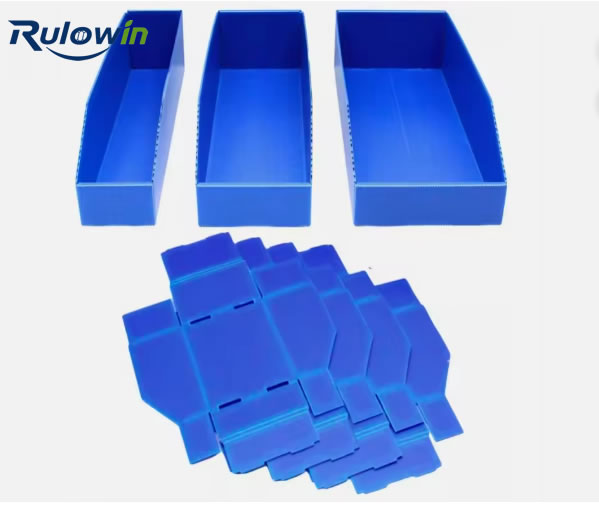
We supply PP picking boxes and state tolerances and unit weight on every order confirmation so you have something to check against. Tell us your goods-in procedure and we will make sure the documentation arrives with the load rather than after it.