
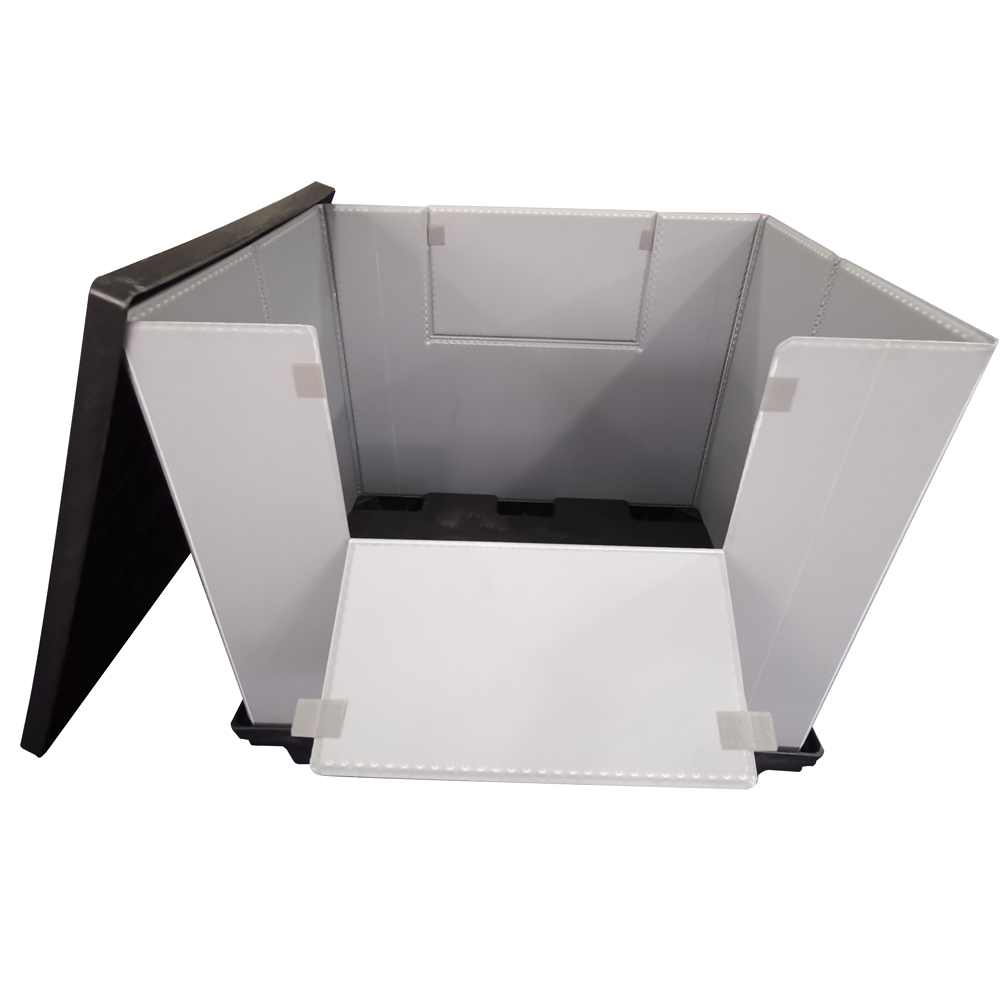
Every error caught at the dock is cheap and every error caught by the customer is expensive. The outbound check is the last point where the difference is available, and in practice it can only check what it can see: an identifier, a count, a condition. Where the container does not carry a readable identifier, the check becomes a guess, and the guess is usually optimistic.
Three things worth checking
Identity – is this the right container on the right vehicle. Completeness – does it hold what it should. Condition – is it fit to travel. Those three cover the failure modes that matter, and each one has a different cost when it is missed. Identity errors go to the wrong place; completeness errors short the customer; condition errors produce damage in transit and a claim.
Identity depends on the container
An outbound check can only confirm identity if the container states it, legibly, at that moment. A label worn by the handling route, or covered by wrap, or facing inward on a pallet, removes the capability. Where outbound scanning is planned, the identifier position has to be chosen so it is readable on a wrapped pallet – usually on two adjacent vertical faces, above the wrap line or read through it.
Completeness, and what a closed container hides
A closed container cannot be checked for completeness without opening it, and opening containers at the dock is slow. The alternatives are weight – fast, and only as good as the weight tolerance – or a check performed earlier in the process and trusted. Where completeness matters, the check belongs at the point the container is closed rather than at the point it leaves, and the container should be sealed after that check.
Condition, and the retirement question
A container with a cracked corner, a split wall or a base worn through should not travel, because it will not protect the contents and it may fail in transit. The check needs a criterion: how much damage is acceptable. A written criterion – a crack longer than a certain length, a corner broken through, a base worn to a visible layer – is checkable in seconds, and without one the decision becomes a judgement call made under time pressure.
Recording what was checked
A check that is not recorded is a check that cannot be improved. Recording what was checked, and what failed, produces the data that shows which failure modes are actually occurring, and that in turn shows where in the process the problem originates. Where outbound failures cluster on a particular lane or a particular container age, the data shows it within a few weeks.
What the container can do to help
Carry a durable identifier on two faces. Provide a flat area for a seal or a tamper indicator. Show damage visibly – a container that hides damage until it fails is worse than one that shows it early, because the failure happens in transit rather than at the dock. And be light-coloured enough or marked enough that a crack is visible during a quick walk-around. The marking durability question is in label wear and read rates.
Cost of the check versus cost of the miss
A check that takes fifteen seconds per container is affordable where the cost of a mis-shipment is a return journey and a lost customer. Where the cost of a miss is low – internal lanes, short distances – the same check is not worth running. Matching the check to the consequence is more useful than applying the same procedure everywhere, and it means the containers on the highest-consequence lanes get the most attention.