
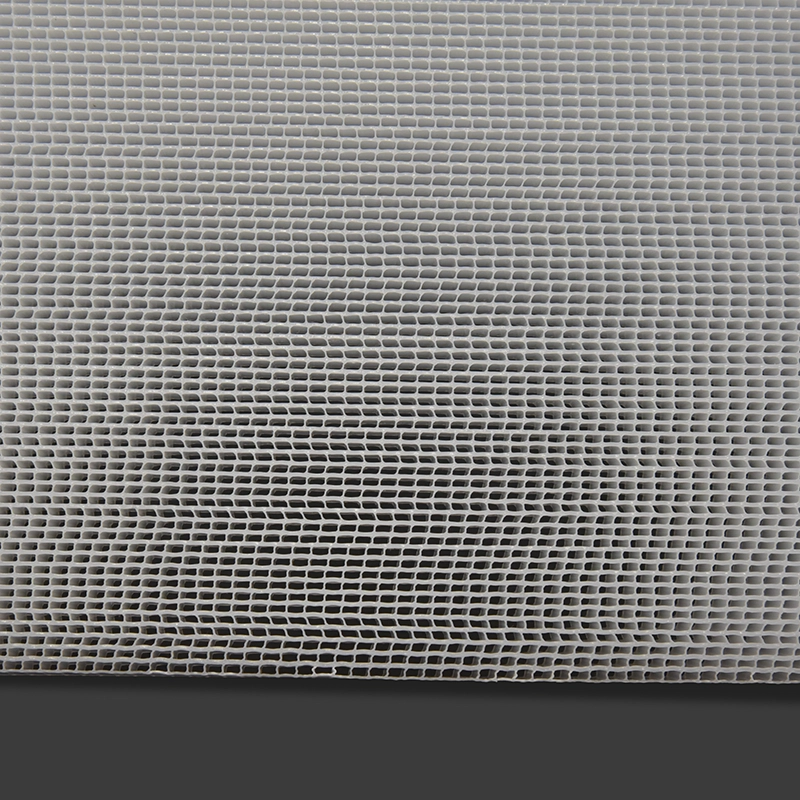
Two screens with the same mesh, the same material and the same frame can behave very differently in the same housing. When that happens and nothing else explains it, look at the open area.
What open area means in practice
Open area is the fraction of the screen face that is opening. A screen with 40 percent open area passes flow through 40 percent of its surface; the rest is wire presenting an obstruction.
The consequence for flow is roughly proportional. Halve the open area and you roughly double the pressure drop for the same flow, or halve the flow for the same pressure drop. That is not a subtle effect and it is not captured by mesh count.
Where it comes from
Open area is determined by wire diameter relative to aperture. Fine wire at a given spacing leaves a lot of opening; thick wire at the same spacing leaves much less. Since mesh count fixes the spacing only, the wire diameter is doing all the work.
The trade-off nobody can avoid
- High open area gives good flow, low pressure drop, and a screen that is easily damaged and quick to blind on fibrous material.
- Low open area gives strength, abrasion resistance and a longer service life, at the cost of flow.
There is no clever answer here – it is a genuine trade and the right position depends on your fluid. Clean liquids can run high open area and take the flow benefit. Fluids with solids, fibres or scale need the strength.
Why it matters more than the datasheet suggests
Pressure drop is not linear with fouling. A screen that starts with a high pressure drop has less margin before it reaches the change-out point, so it gets changed more often even though its open area is nominally adequate. The maintenance cost of a low-open-area screen is usually higher than the purchase saving.
Second-order effects
Blinding. Low open area means the wire occupies more surface for material to bind to, and the apertures are effectively narrower relative to their depth. Fibrous solids wedge more readily.
Cleaning. High open area screens are more delicate, so aggressive cleaning damages them. Low open area screens tolerate scrubbing and backwashing better.
Structural. With everything else equal, more wire means a stiffer screen that resists deformation under pressure or during handling.
How to check what you have
Hold the screen up to a light and look at it, or photograph it against a bright background and compare the visible opening to the wire. It is not a measurement but it will tell you immediately whether two screens that claim the same mesh are really the same thing. For a real number, your supplier should be able to state the open area as a percentage.
How open area affects cleaning
The trade-off continues into maintenance. A high open area screen has thin wire and large holes relative to the wire, which means it cleans more easily – there is less surface for material to bind to and less depth for it to wedge into.
A low open area screen has thicker wire and deeper relative apertures, so material that gets in is harder to remove, and backwashing is less effective. It will tolerate more aggressive mechanical cleaning as a result, which is the compensation.
Where cleaning is frequent and gentle is acceptable, high open area wins twice – better flow and easier cleaning. Where cleaning is infrequent and aggressive, the stronger construction is the better choice despite the flow penalty.
What we do
We quote open area on our filter screens because it is the number that predicts how the screen will behave in your housing. If you are comparing quotes and one of them does not state it, that quote is not yet comparable.