
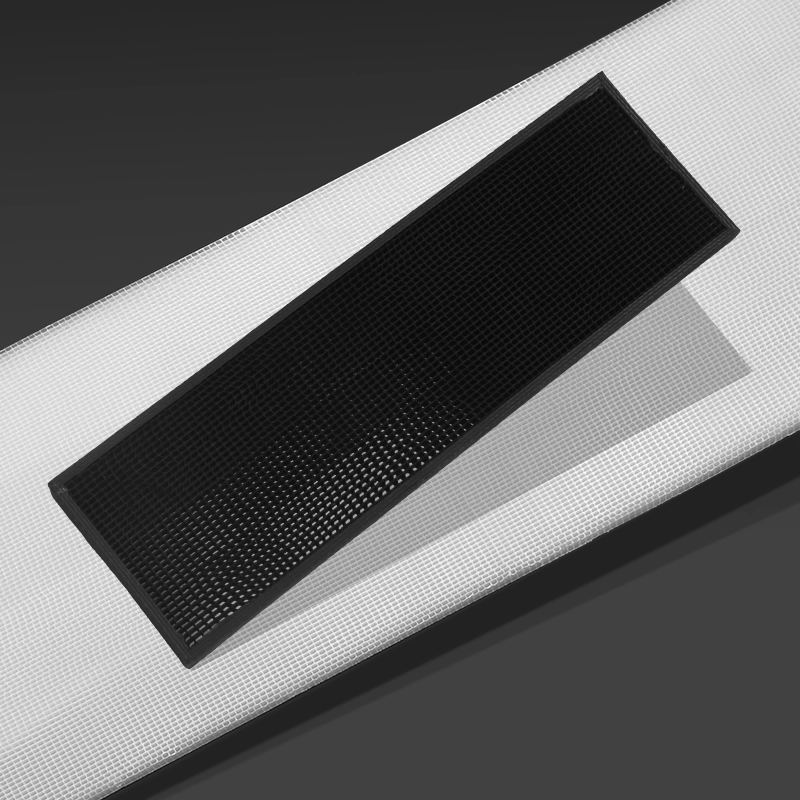
Minimum order quantities on custom filter panels are not an arbitrary hurdle. They exist because a custom size carries setup work that is the same whether you order twenty or two thousand, and below some quantity the setup dominates the price. Understanding that makes the number negotiable in the right way.
What the setup covers
Confirming the specification, setting up the cut, producing and checking a first piece, and retaining the setting for the next order. On a standard size none of this applies – the setting already exists. On a new size it applies in full, which is why a new custom size usually carries a higher minimum than a repeat of an existing one.
Once a size has been made once, the second order is cheaper to set up. This is worth knowing when planning: the first order of a new size is the expensive one, and consolidating sizes reduces how often you pay it.
Reducing the minimum
Three things genuinely help. Standardising on fewer sizes, so each is reordered more often. Ordering a longer run less frequently, if storage allows. And accepting a standard size close to what you need rather than an exact custom one – often the aperture can accept something slightly different with a minor adjustment to the frame.
What does not help is asking for an exception on the first order. The setup cost is real; it gets absorbed somewhere.
Repeatability after the first order
Once the setting is retained, subsequent orders should match. Ask specifically whether the setting is kept and for how long, because some processes are re-set from the drawing each time and some are not. Where it is re-set, small variation is normal and the tolerance you agreed is what governs.
Keep a retained panel from each delivery. Two panels from different batches side by side answer most questions about whether something has changed, and a shelf of them costs nothing.
Planning reorder points
Work backwards from the lead time. If lead time plus shipping is eight weeks and you consume a set every twelve, the reorder point is roughly when stock falls to two sets. Add a buffer for the peak season, because lead times stretch when everyone orders at once.
Where a size is used in several places, pool the demand before calculating – separate reorder points per location produce more orders of smaller quantity, and each one pays setup.
Consolidating sizes
The single most effective way to reduce cost on custom panels is to have fewer of them. Where apertures differ by small amounts, ask whether one panel can serve both – often a frame can accept a slightly different size, or a minor modification makes two positions share.
The saving is not only in setup. Fewer sizes mean simpler stock, fewer chances of fitting the wrong panel, and larger orders of each, which usually means better pricing as well.
When the minimum is worth meeting anyway
Sometimes it is better to order the minimum and hold stock than to order a smaller quantity at a worse unit price. Panels do not degrade in storage if they are stored flat, and holding stock removes a reorder from the critical path.
The exception is where a specification may change – a plant due for refurbishment, a product about to be revised. In that case a smaller order at a higher unit price is the cheaper decision, because the alternative is obsolete stock.
What we can do
We supply factory-direct honeycomb filter panels and will tell you the minimum for a new size separately from a repeat. Send us the sizes and the annual volume and we will suggest an ordering pattern that reduces the setup cost you pay.