
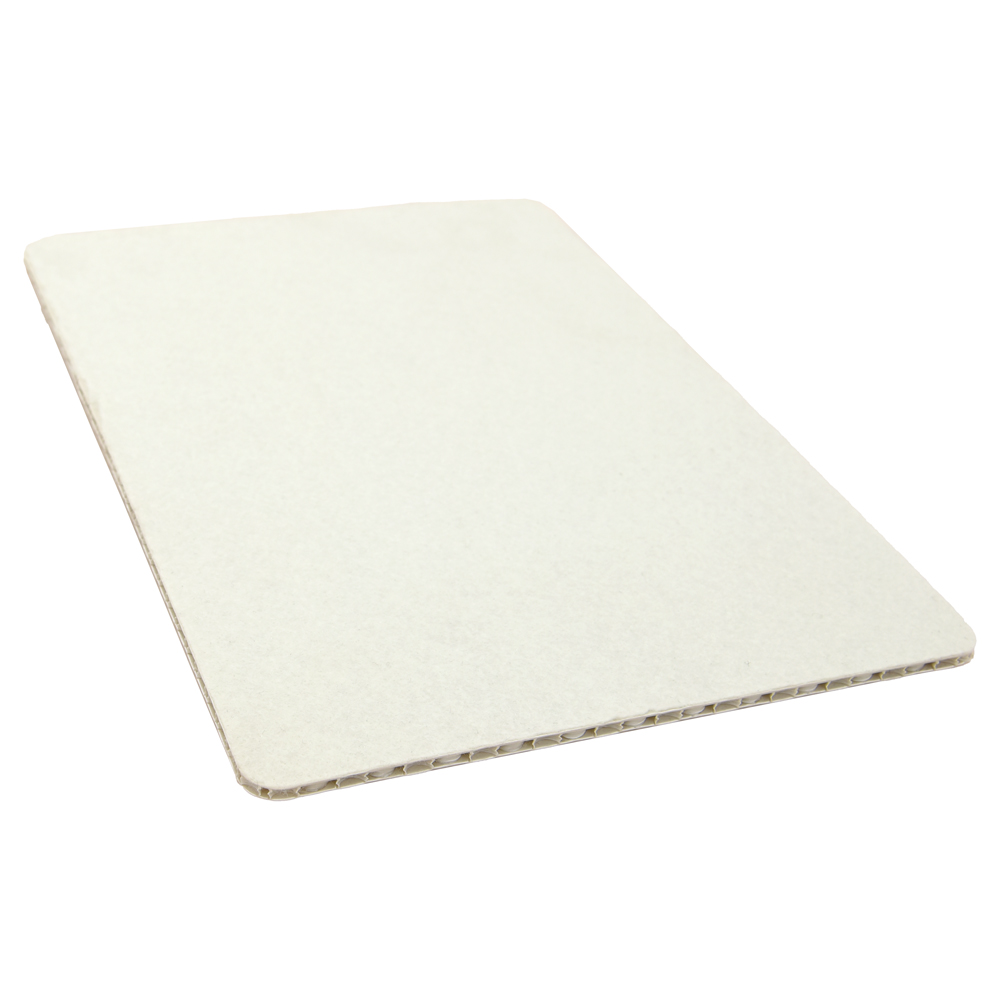
Protection board is priced the way most converted plastic products are priced: by area, by grade, and by how much of the production run your order occupies. Understanding which of those actually moves the number is the difference between a sensible order and an expensive one.
What the minimum order quantity is really for
A minimum order quantity exists because setting up a production run costs the same whether it makes fifty sheets or five thousand. Below a certain quantity the setup dominates and the unit price stops making sense. That threshold varies with grade – a standard stock grade has a low or no minimum, a bespoke grade has a real one – and it is worth asking which you are being quoted against.
Where the price breaks actually fall
Three places. Volume, obviously. Size, less obviously – a non-standard size may carry a premium regardless of quantity, because it wastes material off the standard sheet width. And grade, which is usually the biggest single driver: an anti-static or fire-retardant grade costs materially more than the standard one and no volume discount closes that gap.
Standard size is usually the saving
The cheapest board is the one that comes off the standard sheet with minimal waste. Where a job can be laid out in standard sizes – or where panels can be cut down from a standard sheet on site – the saving is often larger than any volume discount available on a bespoke size. Ask for the standard size list before specifying anything custom.
What to put on the enquiry
Area, grade, size, thickness, quantity and delivery schedule. Six pieces of information get an accurate quote; two get an estimate that will change. In particular, say whether the quantity is a one-off or a programme, because that changes whether it is worth holding stock for you.
When a bigger order is a bad idea
When the specification might change, when storage on site is limited, or when the programme is uncertain. Board is durable but it is bulky, and a pallet stored on site for six months is a pallet that gets damaged and a cost that was spent early. Buying to a realistic schedule usually beats buying to a discount.
Freight is usually the bigger variable
On orders below a full load, freight can be a larger share of delivered cost than any discount available on the board itself. Ask where the free-delivery threshold sits and whether consolidating two orders into one delivery is possible. That single question usually saves more than negotiating the unit price. Orders in this sector are rarely large enough to make volume the dominant term, which is why the delivery pattern matters more than the quantity break – a point worth checking against the cost per square metre per month for floor protection.
Why the minimum order quantity exists
An extrusion line has a setup cost – die, colour change, stabilisation – that is the same whether you run fifty metres or five thousand. Below a certain quantity that setup dominates the price, which is why a minimum order quantity exists and why the unit price drops sharply at the first break rather than gradually.
The practical question is whether the break point is worth reaching. If a price break sits at 500 panels and you need 380, buying the extra 120 is often still cheaper per panel and gives you a spare allowance you would have bought anyway. If the break sits at 5000 and you need 380, it is not. Ask for the break points rather than a single quantity-based price, and ask whether two colours can be combined to reach a break – usually the setup is per colour, so it cannot, which is worth knowing before you specify four colours. Where several projects draw from one order, consignment stock for multi-project contractors reaches the break without over-buying.
What we can do
We quote PP honeycomb protection board against area, grade and size, and will tell you where the breaks are rather than quoting a single number. Tell us the area, the phasing and whether the size is fixed, and we will show the difference between the standard and bespoke options.