
Every packhouse knows what it spends on cartons. Almost none can say what it spends to get rid of them. When crates replace cartons that line does not shrink gradually – it more or less disappears – and it is one of the easiest numbers to put in front of a board or a retailer.
What the waste stream actually contains
Used produce cartons are wet, they carry product residue, and a proportion of them have plastic liners, absorbent pads or produce bags still inside. That combination puts them outside the clean paper stream at most recyclers and into general waste or a contaminated-paper rate. A dry, clean, flattened carton is a recyclable with some value. A wet one with fruit in it is refuse.
Weight is the part that surprises
Corrugated absorbs roughly its own weight in water before it stops taking any more, and a packhouse carton is usually part-way there. So the waste is being charged at a weight that includes the water the produce gave up. Weigh a skip of used cartons on a wet day and the number is not the number on the packaging spec sheet.
Volume matters as much as weight
Collections are often by volume or by lift. A carton that is assembled and wet takes far more space than a flattened dry one, and in a busy season the bins are full before they are heavy. That is when the site pays for an extra collection, and it is the cost that shows up as a line item nobody connects to packaging decisions.
What to record before switching
Four weeks of data is enough: number of collections, charge per collection, and an average weight if it is charged that way. Add the labour of getting cartons to the bin – breaking them down, carrying them, dealing with a full bin. It is a small number per carton and a large one per season, and it disappears almost entirely with a crate fleet.
The reporting benefit
Retailers and buyers increasingly ask for packaging waste figures. A returnable crate fleet turns a large, awkward waste number into a small one, and it is a change that can be evidenced rather than asserted. Where a customer is asking for reductions, this is often the single largest available movement and the cheapest to prove. The wider reporting question is covered in extended producer responsibility and reusable packaging.
What crates produce instead
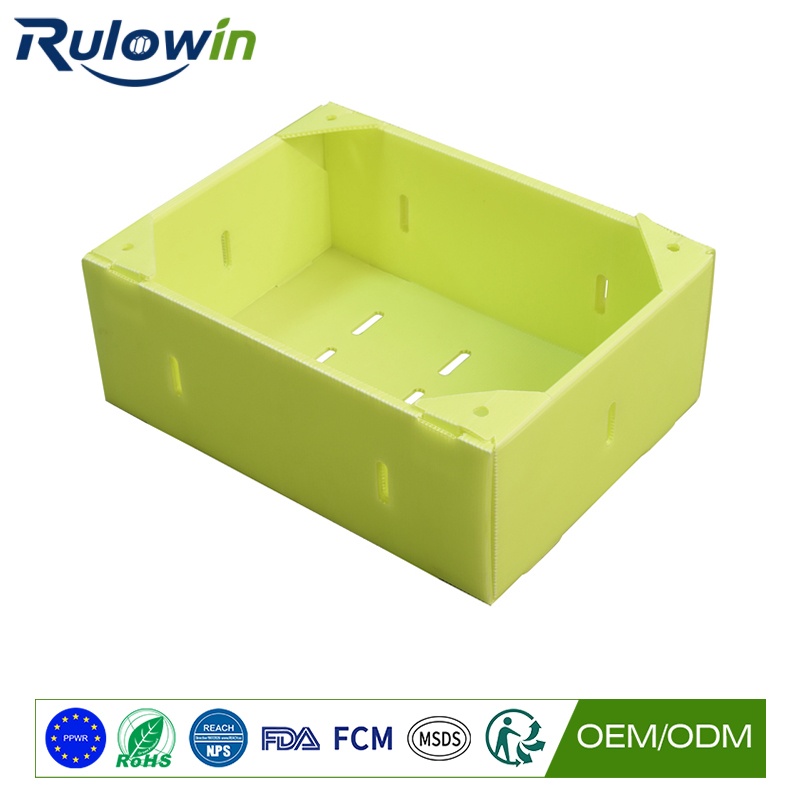
Much less, but not nothing. Crates do eventually break, and a broken crate is bulky plastic that has to go somewhere. Ask your supplier whether they take them back, because a crate that can be ground and re-extruded is a very different end-of-life proposition from a wet carton.
Getting the waste figure onto a customer report
Where a retailer is asking suppliers for packaging waste reductions, the switch to returnables is one of the largest movements available, and it is worth presenting with evidence rather than as a statement. The before figure is the carton tonnage from the last full season on cartons; the after figure is retired crates plus any remaining single-use items. Both are measurable and both are defensible at audit.
The timing matters. Switching mid-year produces a part-year figure that understates the change, and it is usually better to present a full season before and a full season after. Where a customer wants progress now, the forecast is acceptable provided the method is stated.
What we can do
We supply returnable produce crates and take back end-of-life crates for grinding where volumes justify it. If you are building a waste-reduction case, tell us your current carton volumes and we will help put the before and after numbers on paper.