
The honest answer to whether reusable packaging pays back is that it depends almost entirely on one number – how many trips you actually get – and on whether the empty packaging comes back. Everything else is detail. Buyers who skip those two questions end up either disappointed or pleasantly surprised, and neither is a plan.
The arithmetic, plainly
A reusable item costs several times a single-use one. That multiple is your break-even trip count: a panel costing five times a disposable liner has to make five trips to break even, and every trip after that is saving. This is the number to establish before anything else, and it is usually lower than people expect – reusable PP packaging routinely survives dozens of trips in a controlled loop.
The comparison is not unit price against unit price. It is cost per trip against cost per trip, and cost per trip is purchase price divided by trips achieved, plus any handling, washing or repair cost per cycle.
What kills the payback
Loss. If packaging leaves the loop – goes out with the customer’s product, gets scrapped at a site you do not control, disappears into a general waste stream – then your trip count is one and you have bought an expensive disposable. This is the single largest cause of failed projects and it is a logistics problem, not a product problem.
One-way flows. If there is no natural return leg, you have to create one, and that cost belongs in the calculation. A return that runs on a vehicle already making the journey is nearly free; a dedicated collection costs real money.
Over-specification. Buying a grade capable of a hundred trips for an application that will see twelve is spending money on capability you will never use. Ask what trip count you need and buy to that.
What improves it
Standardisation, so one item covers several applications and the fleet is fungible. Repair rather than replace, where damage is localised. And buying to a realistic life rather than a maximum one.
Also worth counting: the disposal cost you stop paying. Single-use packaging carries a handling and disposal cost that rarely appears in the unit price comparison, and in some regions a regulatory cost as well. Including it usually improves the case, and it is a real number rather than a rhetorical one.
Three cases where we say no
Very low trip counts with no realistic return. Applications where the packaging is contaminated and cannot be economically cleaned. And flows where the packaging becomes the customer’s property by design – if you are giving it away, buy the cheaper thing.
We would rather tell you that at enquiry stage than sell you the wrong item. The trip-count assumptions behind this are set out in how long PP honeycomb panels last.
How to establish your trip count honestly
Run a pilot with a counted, identified batch and measure two things: how many trips the average unit makes in a defined period, and what percentage leaves the loop in that period. A dozen tracked items over three months gives you a defensible number; a supplier’s marketing does not.
The second number is the one that decides it. Attrition caps your average trip count regardless of durability – a packaging item that survives a hundred trips but leaks at ten per cent a cycle averages ten.
What we can do
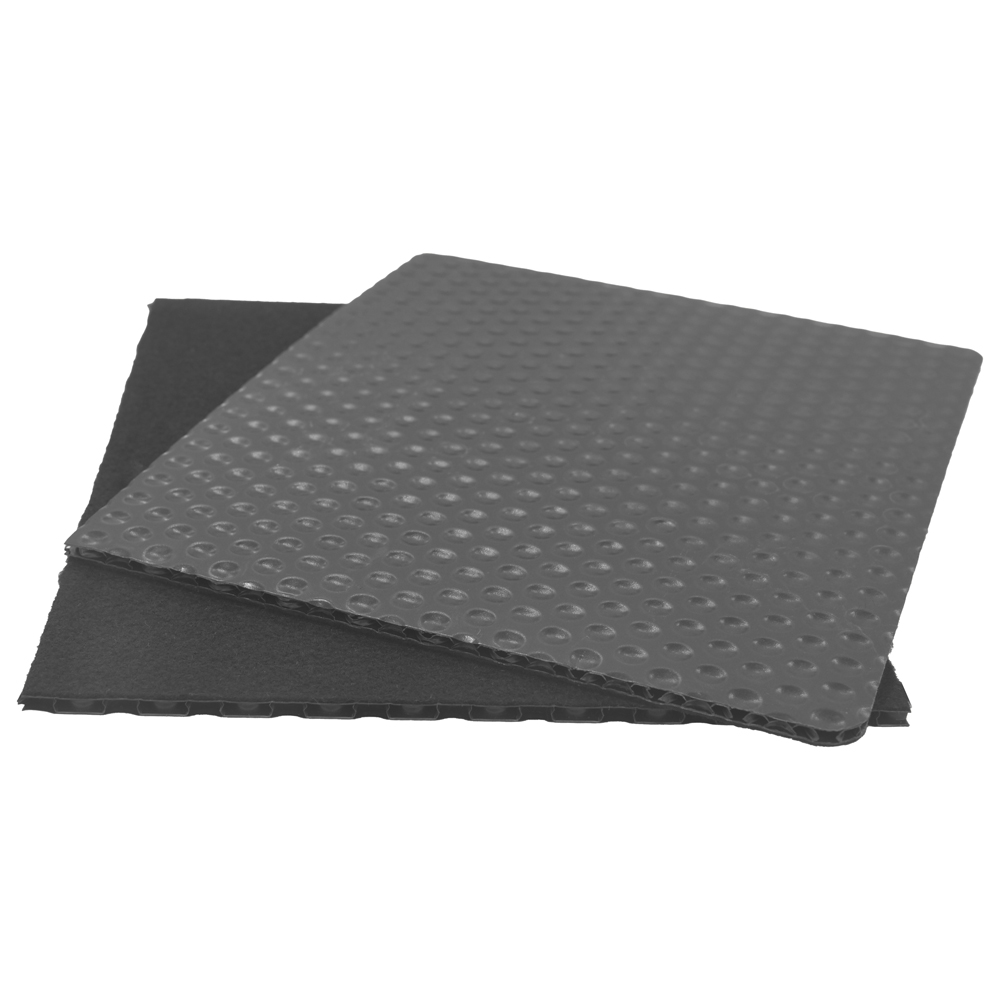
We supply PP honeycomb panels and will work the cost-per-trip arithmetic with your numbers rather than ours. Send us the single-use item you are replacing, what you pay for it, and how the empty packaging would come back – and we will tell you whether it pays, including when it does not.