
Floor damage claims are among the most common and most argued-over on a fit-out. They turn on a narrow question: was the protection appropriate for the risk, and was that specified in writing? Getting the answer right is mostly a documentation exercise done at the start.
How the argument usually runs
The client says the floor is damaged. The contractor says it was protected. The flooring contractor says the protection was inadequate. The insurer asks what was specified, by whom, and against what risk. Whoever has the written record wins, and it is usually nobody.
What to record
The floor finish, the specified protection and the reason for it, who signed it off, photographs before and after, and the condition of the floor at both ends. Five pieces of information, none of which take long, and the absence of any of which turns a short conversation into a long one.
Where the risk usually sits
On the party that chose the protection. If the main contractor specified it, the risk is theirs; if the client or the flooring contractor specified it, it moves. That is why a written recommendation from the supplier matters – it transfers the fitness question and it is the cheapest insurance available.
Excess and notification
Two practical points. Know what the policy excess is, because floor repairs often fall near it and a claim that costs more to administer than it returns is not worth making. And notify early – late notification of a known risk is treated much worse than early notification of a possible one.
What protection does to the premium question
Very little directly, and a great deal indirectly. Insurers care about claims history, and a contractor who can show a documented protection specification across their work has a materially easier time than one who cannot. It is a record-keeping benefit rather than a pricing one.
What to put in the subcontract
Two clauses are worth having. One stating who specifies the protection and on what basis, and one stating that the floor condition is recorded before the protection goes down and after it comes up. Both are short, both are standard, and between them they resolve most of the arguments that otherwise take months – which is the same ground covered in defects liability and protected surface handover.
Whose policy pays, and when
When a finished floor is damaged during works, the argument is usually about whether the protection was adequate rather than about who scratched it. Insurers look at whether a reasonable method was used and documented. A method statement that names the protection product, photographs of it in place, and a dated handover record shift that argument considerably.
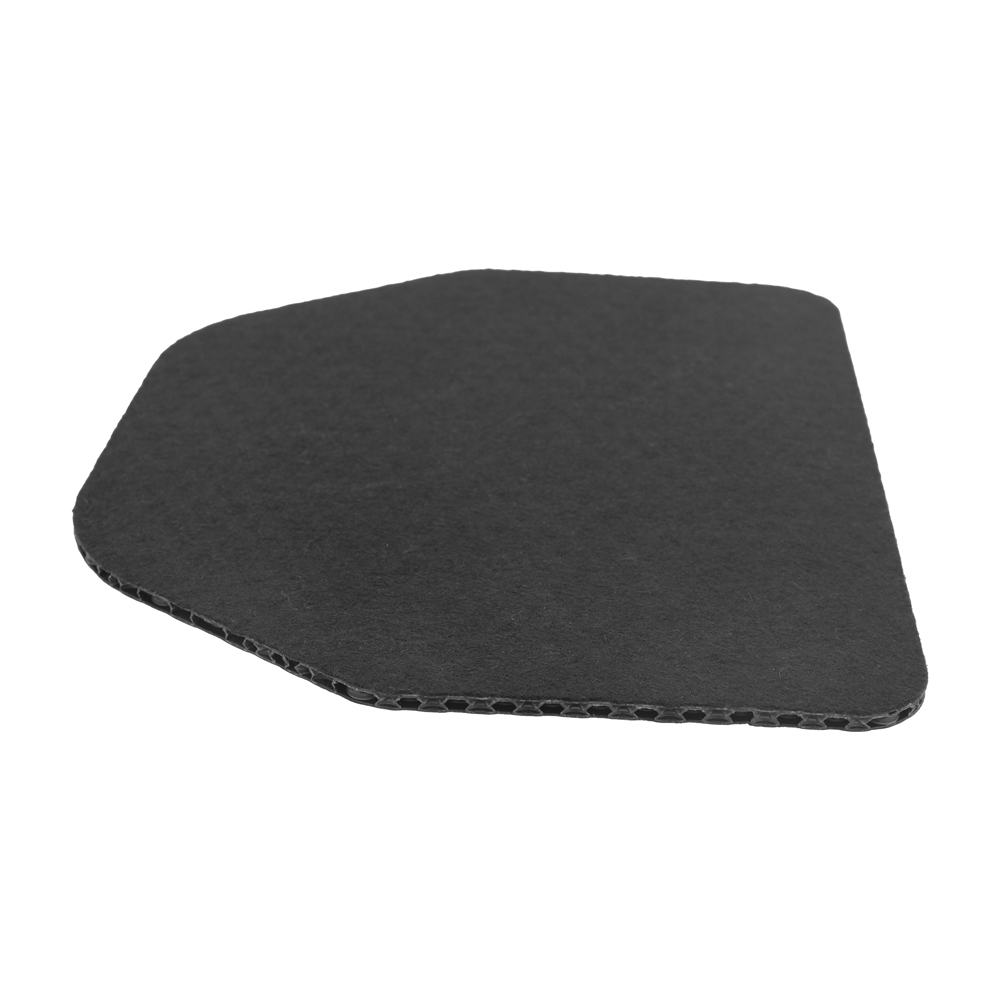
The second question is whether the protection itself caused the damage – adhesive residue on stone, moisture trapped under an impermeable sheet, or a panel edge that marked a polished surface. That is a different claim, and it usually lands on whoever specified the protection. Using a panel with a non-marking felt face and fixing it with a low-tack tape rather than a cloth tape removes the most common cause. The handover record is the part that decides most claims, and it is described in defects liability and protected surface handover.
What we can do
We supply PP honeycomb protection board and will put a written recommendation against a stated floor and risk, which is what the argument turns on. Tell us the finish, the traffic and the programme, and we will document it. Condition recording is covered in photographing floors before and after protection.