
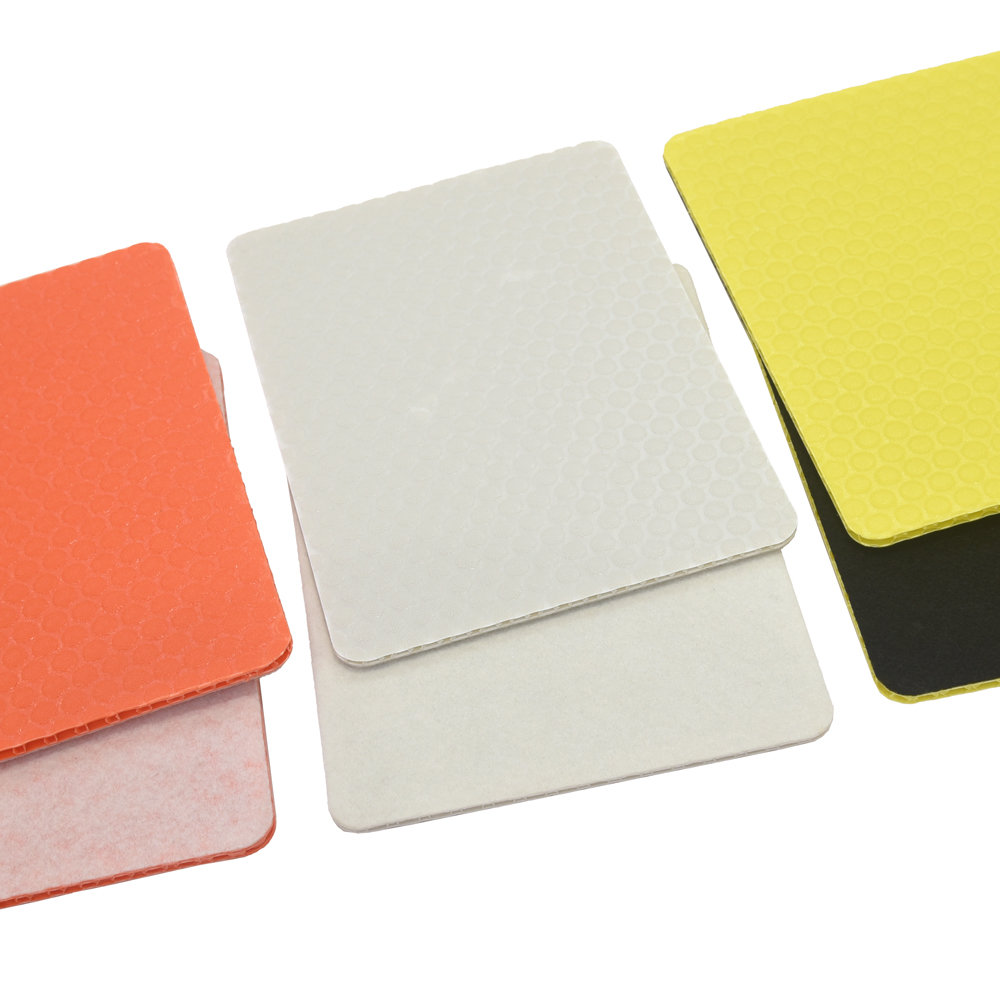
Panels come back from a loop looking worse than they are. Dust film, black scuff marks from pallet tops, the occasional smear of grease from a forklift or a conveyor. Polypropylene absorbs none of it, so every bit of that sits on the surface or inside the cells. Cleaning is less about effort than about not doing the two or three things that permanently damage the panel.
Start dry, not wet
Get the loose material out before any water touches the face. A honeycomb panel is open-celled; wet it first and the loose dust becomes a paste that settles in the bottom of the cells and needs a second pass to shift. A soft brush across both faces, or compressed air if the line has it, takes under a minute and removes most of what reads as dirt from a distance.
This matters more on panels used as pallet toppers or layer sheets than on anything standing upright. Horizontal surfaces collect, and what they collect is usually dry and fine.
What works on the residue
Lukewarm water with a pH-neutral detergent. Soft cloth or sponge on the face, soft brush on anything that has dried on. Rinse with clean water and stand it on edge. That is the entire procedure for the large majority of panels returning from a normal distribution loop.
Grease is the exception, and it is worth thinking about before reaching for something strong. A degreaser will shift it, but polypropylene is not indifferent to solvents – strong ones attack the surface and leave it chalky, and a chalked face collects dirt faster than the one you started with. If you are not certain what is in the bottle, test it on an offcut first. Most workshops have a stack of them.
The two things that actually damage panels
Pressure, held close. A jet at ten centimetres will fold the cell walls of a light-gauge panel, and a folded wall does not unfold. Keep the nozzle back, use a fan pattern rather than a pencil jet, and accept that it takes longer. The panel you save is worth more than the minute.
Heat. Polypropylene softens far below the temperature most people file under “hot”. A steam cleaner at close range, or a hot wash cycle in a cabinet, will take a flat panel and give it back warped. Warm water is the ceiling here. If your wash process has a heater, check what it is set to before polypropylene goes anywhere near it.
Drying, and the free inspection
Stand panels on edge in moving air. Stacked flat and wet, water sits in the cells, and in a warm store that becomes a smell and then mould feeding on whatever dust survived the wash.
While the panels are out and handled anyway, look at the edges. Crushed edges and faces starting to delaminate are the failures that end a panel’s life, and wash day is the cheapest moment you will ever get to find them. A panel with a split face keeps splitting. Pull it rather than washing it again. Panels that come back bowed are a separate problem – we have written about why honeycomb panels bow in the middle separately, because cleaning will not fix it.
What we can do
We supply PP honeycomb panels in the thicknesses that get used as toppers, layer sheets and dunnage, and we will tell you which gauge survives your wash process rather than which one sells best. Send us the panel size and how you clean at the moment; if your current method is going to wreck a lighter panel, we would rather say so before you order.