
Reusable spool programmes rarely fail on engineering. They fail because somebody ordered enough spools for one cycle and discovered, six weeks in, that there was no stock to wind onto. Production goes back to disposable packaging, the reusable spools drift into a corner, and the programme quietly dies.
The arithmetic is not hard. It is just unglamorous, and it is usually done optimistically.
The four places spools sit
At any moment, every spool in your fleet is in one of four states:
- Full, waiting to be shipped
- In transit to the customer
- At the customer — full, part-used, or empty and waiting for collection
- Empty, in transit back, or at your site available for winding
The fleet has to cover all four, plus a buffer. Only the last one is visible to you most of the time, which is why the number that feels right is usually too low.
A worked shape, not a formula
Take a line shipping 200 spools a week. Round trip — outbound transit, customer dwell, return transit — is, say, four weeks. That is 800 spools in the pipeline before you wind a single one.
Add dwell at your own end: spools coming back need inspection and possibly cleaning before they are wound again. Call that three days. Add a buffer for the fact that returns arrive in lumpy batches rather than evenly — another 10 to 20 per cent, depending on how disciplined the collection is.
What looked like 200 spools starts approaching 1,000. That gap is the single most common reason programmes stall.
Where the estimate goes wrong
Underestimating customer dwell. This is the big one. You can control your own transit and your own turnaround. You have much less control over how long an empty spool sits at a customer’s site before somebody puts it on a pallet. In our experience the honest estimate is usually longer than the one in the business case — ask the customer what they will actually commit to, in writing, rather than assuming.
Assuming even flow. Returns do not arrive evenly. A customer sends back sixty at once because their yard is full, then nothing for a fortnight. The buffer absorbs this, and the buffer is the part that gets cut first when someone looks at the budget.
Forgetting the attrition rate. Some spools will be damaged, lost, or simply not returned. Over a year this is a real percentage, and the fleet has to be topped up or it slowly shrinks. Build a replacement order into the plan rather than treating losses as a surprise.
Ways to need fewer
Fleet size is driven almost entirely by round-trip time, so shortening the round trip is more effective than any other lever:
- Collect empties on the next outbound delivery. The cheapest return leg is one that is already happening.
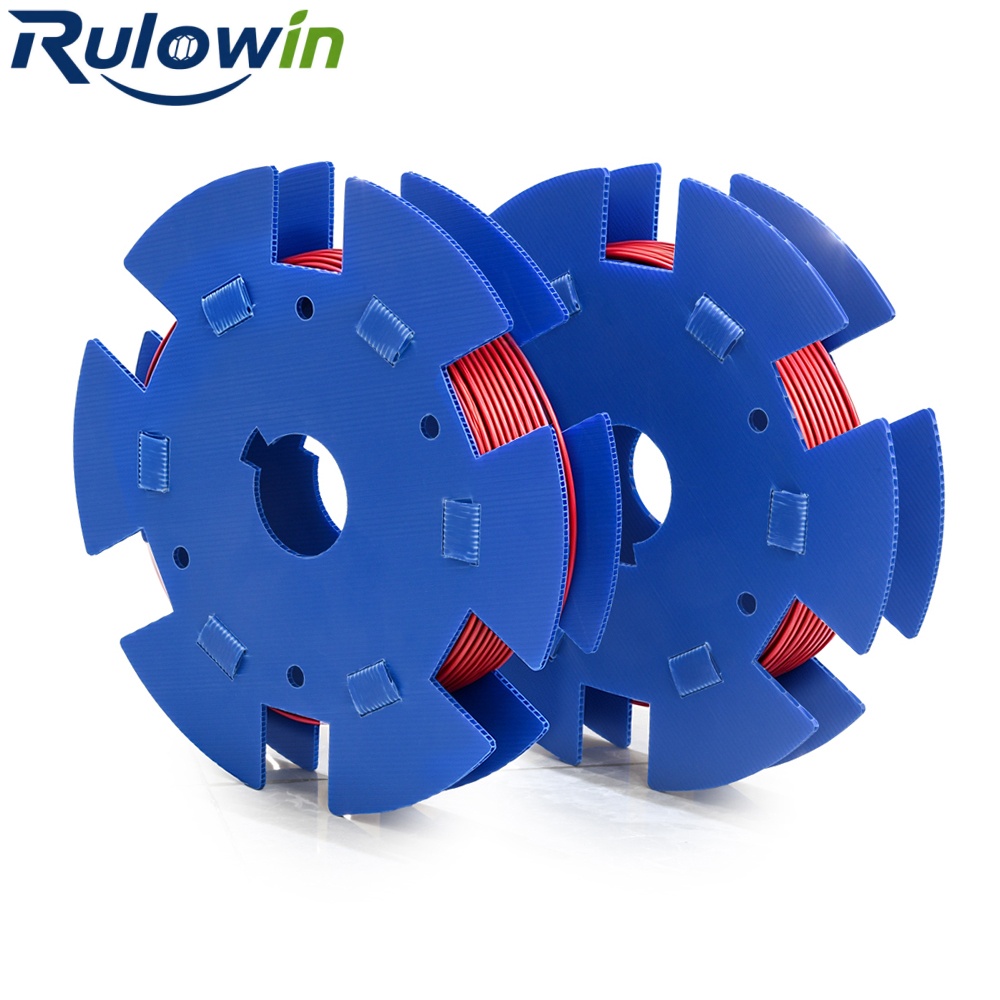
- Nest or stack empties. More per pallet means fewer return trips and less yard space at both ends. Our hollow board spools are designed so the flanges take stacking load; how many you can stack depends on the size, so ask for the figure for your specific spool rather than assuming.
- Agree a dwell limit contractually. Not popular, but a customer who has committed to 14 days behaves differently from one who has committed to nothing.
- Pool across customers. If several customers use the same spool, empties can be redirected between them instead of coming all the way back. This only works where the spool is genuinely standard across accounts.
When a smaller fleet is fine
If your product ships on short, predictable cycles to one or two nearby customers, the pipeline is short and you may need barely more than a cycle’s worth. Local, high-frequency, few-partner loops are the easy case.
The hard case — many customers, long distances, irregular orders — is where the fleet number gets large enough to threaten the business case. If you are in that situation, it is worth modelling it properly before committing, and worth being honest about whether the round trip can be shortened at all.
Send us your weekly volume, your destinations and your expected transit times and we will size the fleet with you. We would rather quote a smaller first order with a planned top-up than sell you a fleet that is too thin and watch the programme fail.