
A ward corridor used by patients, visitors and clinical staff while refurbishment happens is the hardest protection environment there is. Everything has to stay open, everything has to be cleanable, and the failure of a single panel can affect clinical operation rather than just the programme.
What moves down a ward corridor
Beds, linen trolleys, mobile equipment, cleaning machines and food service carts – often several at once, sometimes at speed, frequently with someone assisting a patient. Impacts are constant at bumper and trolley height, and any protuberance at that level will be struck repeatedly. That band between roughly 400 mm and 1.2 m takes nearly everything.
It has to be cleanable every day
Hospital corridors are cleaned constantly, sometimes several times a shift, with chlorine-based agents. Protection therefore has to tolerate daily chemical cleaning, have joints that can be wiped rather than penetrated, and allow the wall behind to be inspected at intervals. Anything absorbent or fibrous is a non-starter.
Nothing may obstruct
Access to fire equipment, call points, oxygen and suction outlets, and bed parking spaces all have to remain clear. A protection layout that complies on day one quietly stops complying when a panel shifts, so include those interfaces in the weekly inspection, not just the installation checklist.
Noise is a clinical issue
The one everybody forgets. A protection panel that rattles when a trolley passes, or lifts and clicks under foot, is a genuine problem in a ward where patients are trying to sleep. Secure fixings, tight joints and ramped edges matter more here than anywhere else – this is not a cosmetic requirement.
Strip-out around the ward’s own schedule
Ward decant and reoccupation dates move, and protection has to accommodate that rather than dictate it. Plan installation and removal in sections that can be executed within a single shift window, because holding a corridor closed for half a day is rarely available. The phased approach in phasing protection across a live building applies directly.
Appearance matters clinically
Scuffed, curling protection reads as infection risk to clinical staff regardless of whether it is one. Replacing the worst panels mid-programme keeps both the appearance and the relationship with ward managers, which is worth far more than the cost of the panels.
Night works and noise limits
Where daytime working is impossible, protection installation and strip-out move to night shifts, which changes the specification. Everything has to be installable quickly and quietly, without cutting on site, by a small team. That generally means pre-cut panels delivered to the corridor rather than material cut to fit outside the ward.
Confirm the noise limits with the ward manager before planning the sequence: some areas tolerate nothing during certain hours, and discovering this when a panel needs trimming is how schedules slip. Silence is a specification requirement here, not a courtesy.
Who is asked about it afterwards
Ask the ward manager for feedback mid-programme rather than at the end. Ward staff notice rattles, lifted edges and cleaning problems long before they escalate, and they are usually happy to point them out – mid-programme it is a five-minute conversation, afterwards it becomes a complaint in a lessons-learned document. The floor itself has its own set of requirements, set out in vinyl floor protection in healthcare fit-outs.
What we can do
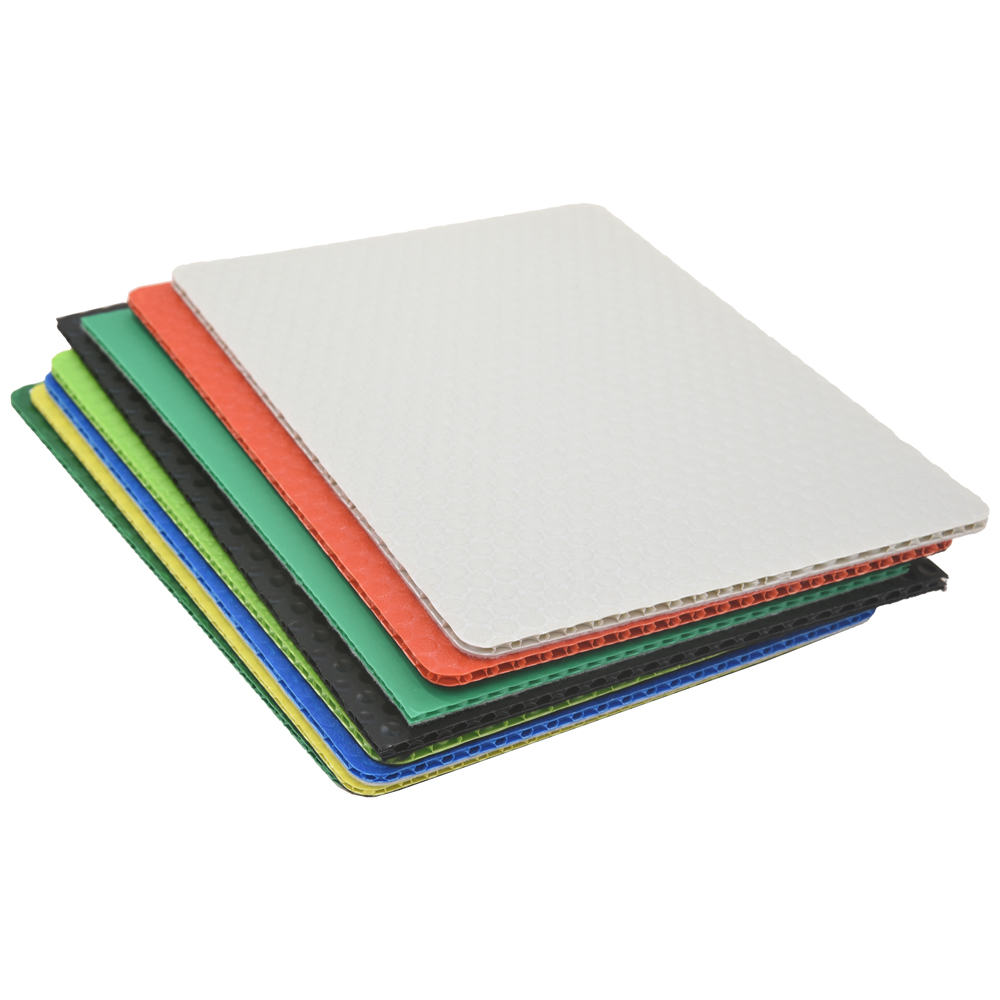
We fabricate honeycomb protection panels with tight, ramped joints suitable for daily cleaning, cut to sections that can be installed within a shift. Send the corridor uses and the cleaning regime and we will quote – including where we think full height guarding is unnecessary.