
Cleanroom packaging problems are almost never about the box being dirty when it arrives. They are about what happens at the airlock, what the box sheds once it is inside, and whether anybody can clean it without a chemistry degree.
The route, not the box
Draw the route first: outside store, transfer airlock, gowning area, production, and back out. Most contamination enters at the transfer points, where a box that was perfectly acceptable outside is wiped and passed through. A box with open honeycomb edges, exposed fixings and a deep groove pattern cannot be wiped effectively, no matter how well it is made.
Cleanable geometry
The requirement is not that a box be sterile, it is that it can be brought to a known condition quickly. That means smooth external faces, no blind holes, no exposed fasteners where dust can sit, and no deep recesses around the base. Where the design needs a joint, it should be a sealed joint rather than a line of small gaps. A box designed for washability is more valuable here than a box made of an expensive material.
What cleanroom grades actually demand
Different classes put different limits on particles and on the materials allowed. Before specifying anything, get the actual class and the customer’s own material restrictions, because the restrictions are usually stricter than the standard and are the things that cause a supplier change. A box that passes the class and fails the customer’s own list is a wasted order.
Outgassing and the plastic question
Polypropylene is generally a straightforward material in this context: low moisture uptake, no plasticiser to migrate, and easy to clean. The complications come from additives, from the inks used for printing, and from any adhesive. If a route is sensitive, print nothing on the inner faces, specify the ink, and avoid adhesive labels inside the box in favour of a clipped or printed card.
Dunnage is where the particles come from
In practice the container is rarely the source. Foam inserts, felt facings and open-cell materials shed, trap and slowly release particles every time they are loaded. Where a controlled route needs soft dunnage, closed-cell or cleanable facings are worth the extra cost, and they need a defined cleaning interval rather than a rewrite.
Cleaning method and the drying problem
Isopropanol wipes, aqueous wash and dry steam all appear on different routes, and each one dictates the design. A box with a closed base and no drainage cannot be washed and dried inside a shift. If the route washes, the box needs drainage and air paths. This is the same problem as washing boxes in a parts environment, with a tighter limit on how long the box can be out of service.
Transfer, airlocks and how many boxes you need
Every transfer step consumes a box, because a box that has been outside cannot simply be carried through. That means a cleanroom route needs more boxes than the volume alone suggests, typically one additional set per transfer point. It is a hidden multiplier in the fleet size and it is worth counting before ordering.
Starting with the transfer points
Map the transfers first. Most cleanroom packaging problems are created at a door rather than inside the room, and a route with three transfers has three times the contamination opportunity of one with a single transfer. Reducing the number of transfers, even at the cost of a different box size, usually beats improving the box that makes the journey.
Where a transfer is unavoidable, give it a dedicated box and a dedicated wipe, and keep that pair at the door rather than at the end of a corridor. Anything that has to be fetched will be improvised when the corridor is busy, and improvisation at a cleanroom door is exactly what the process exists to prevent.
What we can do
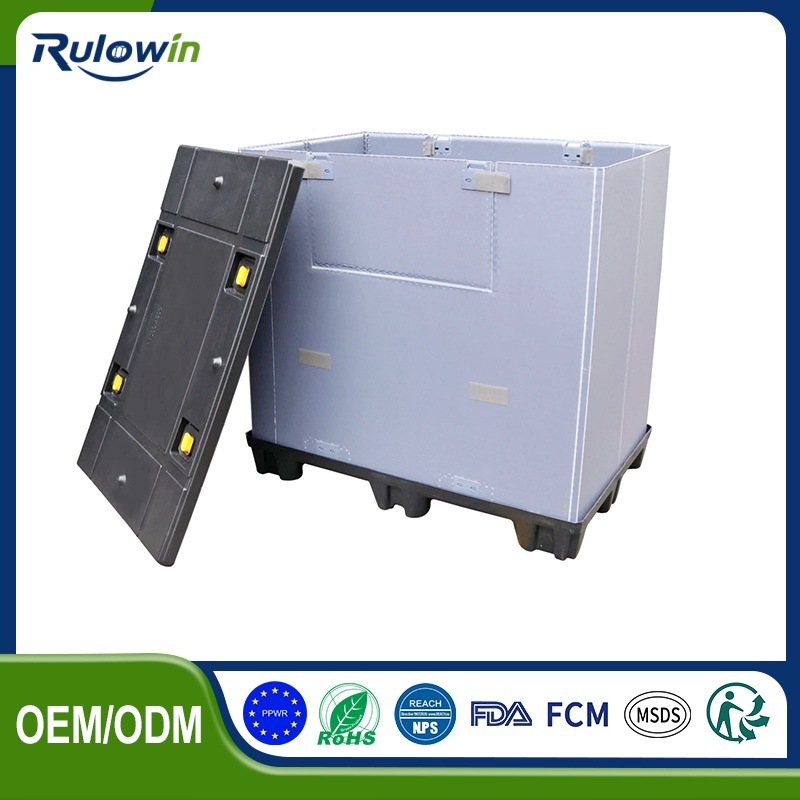
We build PP honeycomb board boxes with sealed edges, smooth faces and washable internals for controlled routes, and we will work to the class and the customer restriction list rather than to a generic specification. Tell us the route and the cleaning method.