
Anything longer than about two metres stops behaving like a part and starts behaving like a beam. It sags under its own weight, it whips when a truck brakes, and it takes a permanent set if it is stored unsupported for a season. A box for extrusions is therefore mostly a support system, and the walls are there to keep the weather and the forklifts out.
Support spacing is the whole design
The question is not how strong the box is, it is how far apart the supports can be before the section deflects unacceptably. Answer that and the internal layout falls out. Sections with thin walls and wide flanges need closer spacing; solid bar sections need less. Two or three supports over three metres is common, and getting it wrong produces a set that shows up as a scrap part at the far end rather than as a packaging complaint.
Vertical or horizontal
Storing extrusions horizontally is convenient and puts a bending load on every part. Storing them vertically removes the bending load and creates handling and stability problems. A box can do either; what matters is that the decision is made deliberately and the internal supports match. A box that is loaded horizontally without mid-span support is a box that will deliver curved parts.
Protecting the surface, not just the shape
Anodised, powder-coated and polished sections scratch. That means no metal-on-metal contact, no bare board edges against a machined face, and no strapping pulled directly across a finished surface. Felt-faced or foam-lined supports solve it, and the supports have to be replaceable, because they wear out long before the box does. This is the same wear-and-replace logic used on repairing a box that has been hit.
Handling a six-metre box
Long boxes are awkward for a counterbalance truck and almost impossible for a pallet truck. Four-way fork entry matters more here than on any other box, and so does stiffness in the long direction, because a long base will twist if the forks lift one end first. If the plant has overhead lifting, a spreader that picks up on four points is a better answer than forks, and the box should have lifting points designed for it.
Transporting long parts without a long trailer
Sometimes the answer is a box that breaks the part down: a smaller number of long sections in one box, rather than every section end to end. Sometimes it is a box sized to the longest part with everything else braced to it. Both are legitimate; the wrong answer is a box that is long enough for the longest part and empty for the rest of the time, because you pay for the volume on every trip.
Weather, condensation and long storage
Long parts often sit outdoors or in unheated stores. A closed box traps moisture and a section stored in a damp box for a season will show it. Ventilation at the base and drainage points matter here, and so does not sealing a warm part into a cold box. If the parts come out of a warm process line and go straight into an outdoor box, condensation is a certainty rather than a risk.
A short checklist before buying
Maximum part length, maximum unsupported span, surface finish class, handling method, storage location and expected time in store. Six answers, and they determine the internals, the wall thickness and the base. A supplier who only asks for the box dimensions will deliver a box rather than a solution.
Storing long boxes without a long building
Long boxes are awkward to store and are usually kept where they will not block an aisle, which is often a corner with no protection. That means the ends, which are the part most likely to be hit, are exposed and the box becomes a bumper. A simple end frame, or storing the boxes nose to tail with the ends protected between them, costs little and removes the pattern of damage that otherwise shows up within a year.
Stacking long boxes on their sides rather than flat also helps, because it puts the stiff direction in the vertical and reduces the sag that long boxes develop in storage.
What we can do
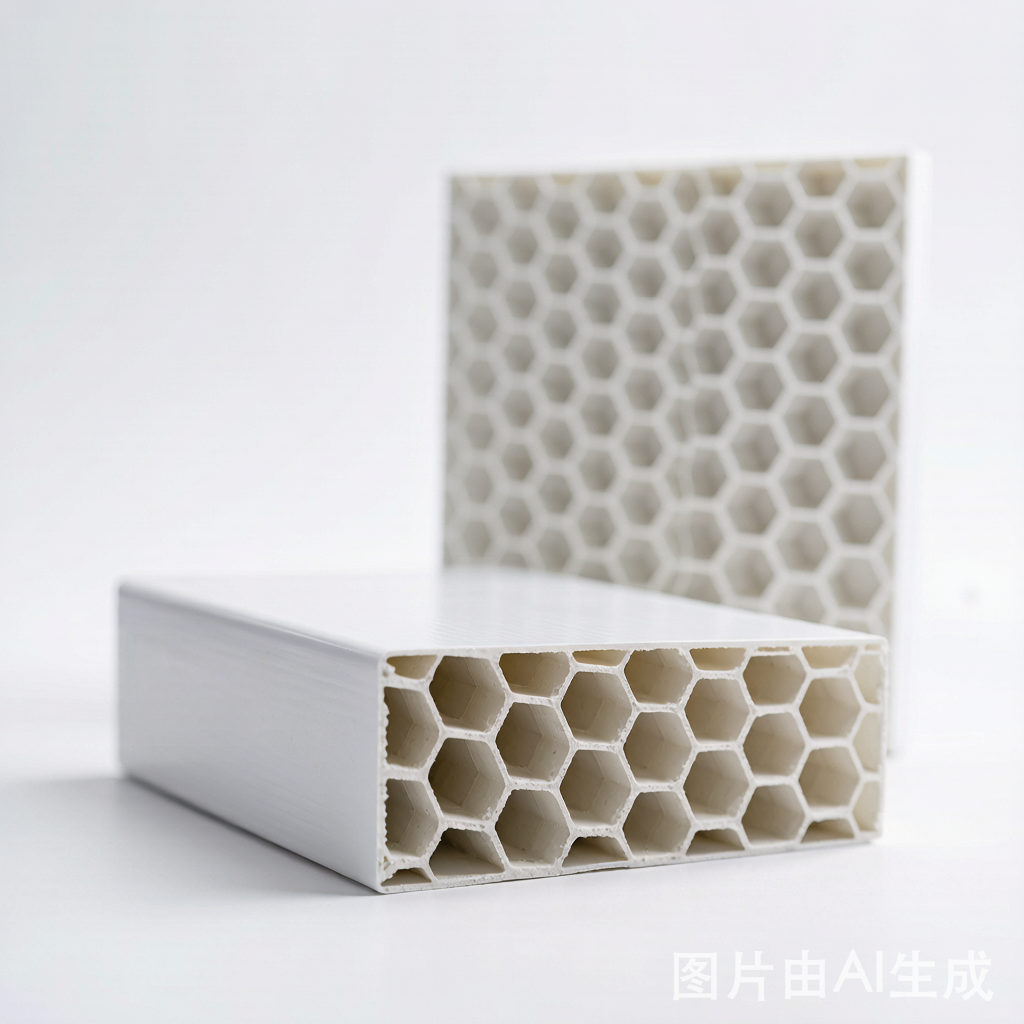
We build PP honeycomb board boxes with the internal supports designed to the section rather than to the crate size, including felt-faced and foam-lined versions for finished extrusions. Send us the section drawing and the lengths, and we will work out the support spacing.