
Some parts stack beautifully, fill a box edge to edge, and use every litre of volume. Others are curved, bracketed, asymmetrical or fitted with something that sticks out, and they use about half the volume they occupy. On those parts the packaging decides whether the freight is economic.
Volume utilisation is the number to start with
Measure the part volume, measure the internal volume of the container, and divide. Anything below about forty per cent means the container is mostly air and the freight is being paid on air. That calculation takes ten minutes and often changes the whole brief, because a part that cannot be packed densely needs a different route rather than a cheaper box.
Nesting is a design decision, not a fact
Many parts that appear not to nest do, if one of them is rotated. Curved parts especially: two identical curved parts facing the same way waste a lot of space, and two facing opposite ways can nest like spoons. If the operator has not been shown the rotation, it does not exist in practice. Sometimes the fix is a training note and a marked box floor, not a new box.
When the fixture lives in the box
A fixed internal fixture that follows the part profile gives the densest packing and the fastest loading, and it only works when the same part runs for months. It is the right answer for a high-volume dedicated loop, and it is the wrong answer for a plant that changes part numbers weekly.
When the fixture travels with the part
A cradle or frame that clips to the part and goes with it removes the need for a bespoke box and allows a standard container to carry a whole family of parts. The trade is that the fixture has to come back, which means the return leg now contains fixtures as well as boxes. On a well-managed loop that is fine; on a loop with no reconciliation it is how fixtures disappear.
Accepting the air and paying less for it
Not every awkward part needs a density project. A box that carries half air but returns knocked down can still be cheaper than a dense one-way pack, because the return leg is the cheaper leg. Before designing an elaborate internal fixture, check whether simply accepting the volume and fixing the return leg solves the cost problem. It often does.
Labelling and identification on odd shapes
A box with an unusual internal layout cannot be read from the outside, so the label and the box number are doing more work. Mark the part number and orientation on the box, not only on the paperwork. It is the same marking discipline that lets a team read a box at a glance in counting a box fleet.
Prototyping an internal layout cheaply
Before committing to a moulded or machined fixture, build the layout in board and foam and load it twenty times. Most first-attempt layouts have a part that is hard to lift out, a position where the operator instinctively puts a hand on a finished surface, or a corner where two parts touch. Those appear within a day of use and are invisible on a drawing.
Standardising the part instead of the box
The most effective answer to an awkward shape is sometimes to change the shape. Adding a temporary locating feature, a transit bracket or a stackable base that comes off at the far end can turn an awkward part into a dense one, at the cost of one component that has to travel. Where a product family is being redesigned anyway, it is worth asking the design team whether a packaging feature could be added at no cost to the part.
That conversation happens rarely because packaging is consulted late. Raising it during the product design review rather than after the first shipment is where the largest savings in this category are found, and it costs nothing but being in the room.
What we can do
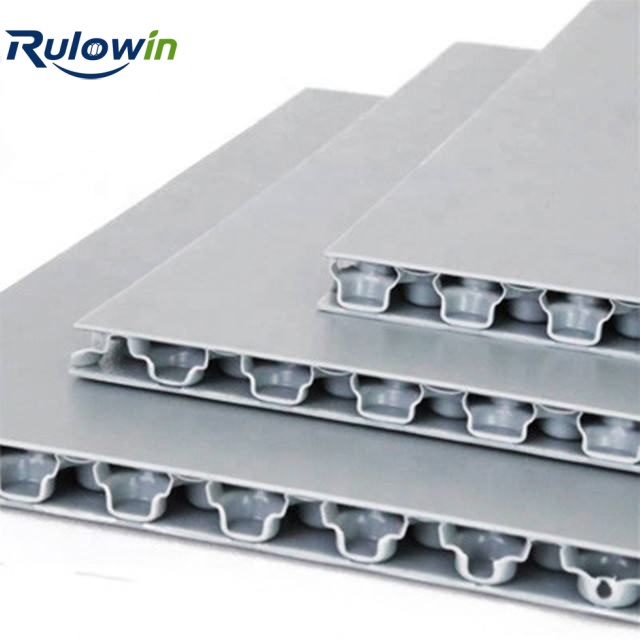
We build PP honeycomb board boxes with internal layouts designed around the part profile, and where the part family is wide, around a cradle that travels. Send us drawings or a sample part and the annual volume, and we will tell you which of the two approaches fits.