
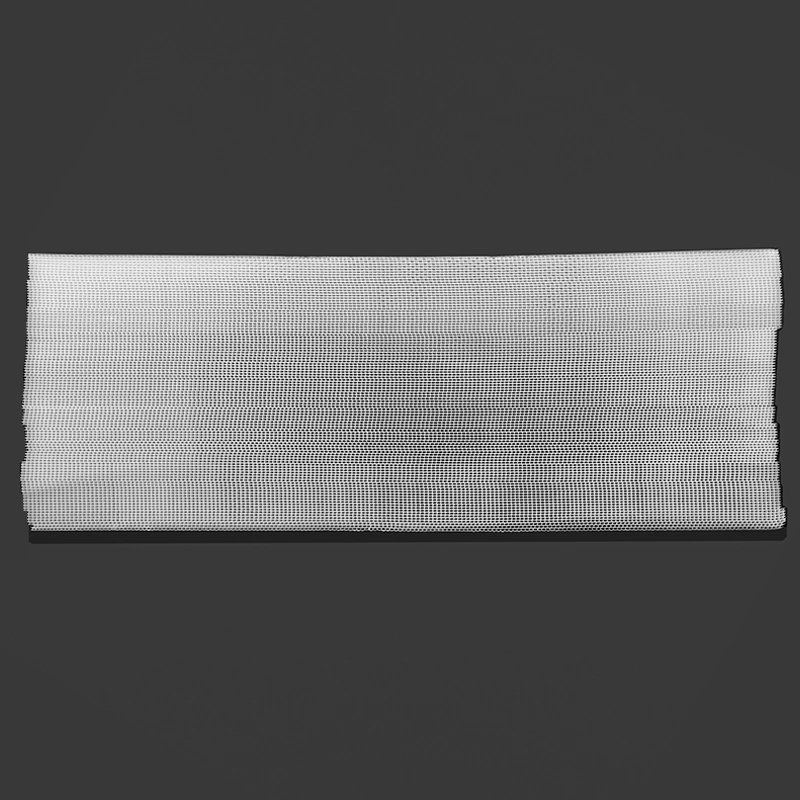
Standard HVAC filter frames are designed around a disposable panel with a cardboard or metal boundary that compresses slightly to seal. A rigid washable screen does not compress, so it has to be made to the aperture and given a seal the frame can provide. Most problems with washable screens in existing plant come from that difference, not from the media.
What the frame gives you
Three things to establish: the clear opening, the depth behind it, and the sealing surface. The sealing surface is the one usually assumed. Some frames have a flat face the filter presses against; some are a channel that relies on the filter’s own compression; some have neither and leak whatever you put in them.
If the frame has no sealing face, a rigid panel will bypass unless it is given a flange or a gasket. That is an addition, and it is worth making rather than hoping for a close fit.
Depth
Rigid honeycomb panels are thicker than the disposable panel they replace. Measure what is actually available behind the opening at the tightest point – brackets and the curve of a housing intrude. If the available depth is less than the panel needs, the choice is a thinner panel with a shorter service interval or a frame modification. Forcing a thicker one in distorts it, and a distorted panel does not seal.
Orientation and support
A rigid panel is self-supporting, which is one of its advantages, but a large panel in a horizontal airflow path should still be supported on its downstream side if the frame offers it. Unsupported panels in high-volume plant can flex under fan pressure, and flexing eventually shows up as edge wear and bypass.
Orientation matters less than people expect for a symmetric honeycomb structure, but it matters for washing: fit it so the dirty side faces the way it will be rinsed from, and so whoever removes it can see which side is which.
After fitting
Feel around the frame edges with the plant running. Escaping air is obvious to the hand and this check catches most bypass before it turns into a performance complaint. Record the clean pressure drop at the same time – it is the baseline every later reading needs.
Where the frame itself is the constraint, see retrofitting reusable panels into existing frames.
Orientation and washing access
Fit the screen so the loading face is the one that gets rinsed from, and mark it. A screen hosed from the wrong side drives material into the structure rather than out of it, and over repeated washes that is the difference between a screen that stays clean and one that slowly clogs.
Access decides whether the screen is ever washed. If removing it needs tools and twenty minutes, it will be washed rarely. If it slides out with the grille, it will be washed when it should be. Where access is poor, that is the thing to fix – and sometimes the honest answer is that this position is better served by a disposable.
A sealing detail that works
Where the frame face is flat but slightly uneven, a compressible sealing strip on the panel’s perimeter is the cheapest reliable fix. It bridges the unevenness, it does not need the frame to be modified, and it is replaceable when it perishes.
Fit it on the downstream face so airflow presses the panel onto it rather than trying to lift it off. It is a small detail and it is the difference between a retrofit that works and one that leaks.
What we can do
We supply reusable dust filter screens made to standard HVAC frame dimensions, with a sealing edge where the frame needs one. Send us the clear opening, the depth at its tightest point and a photograph of the empty frame, and we will confirm what fits before cutting.