
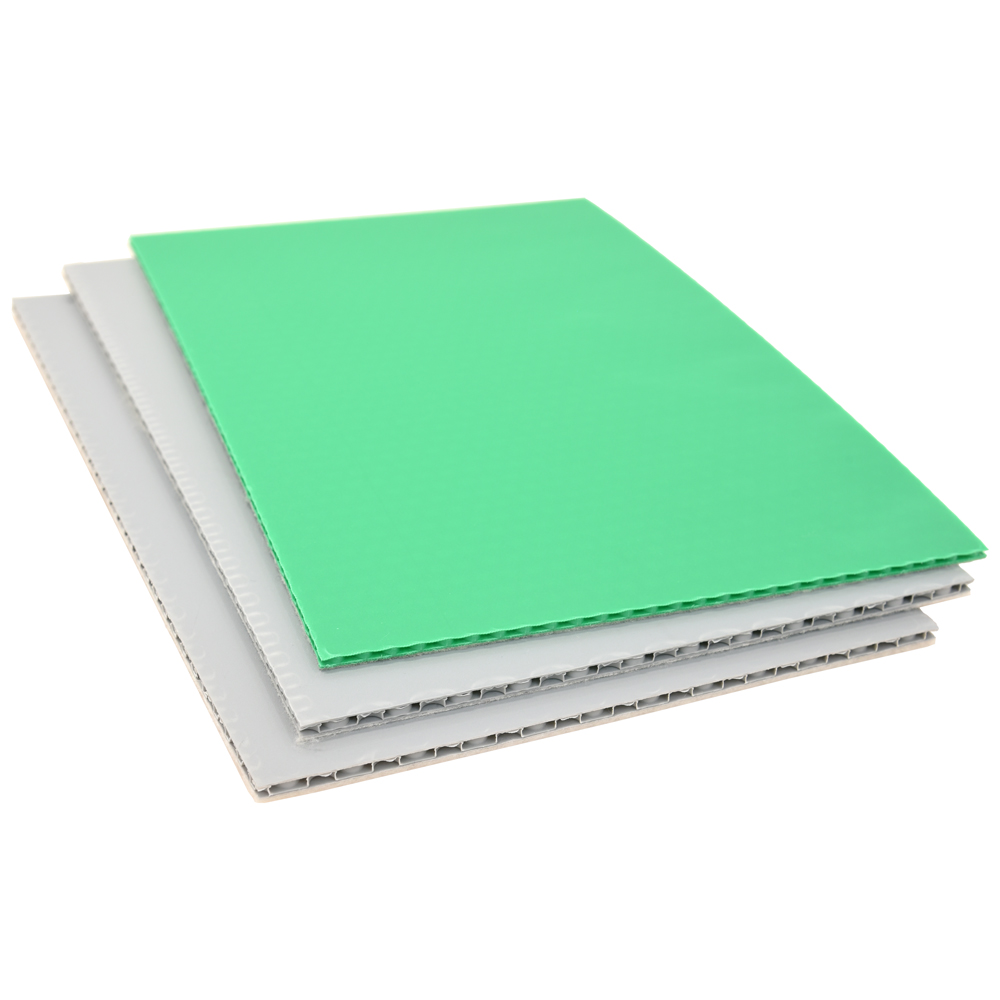
Reusable protection board is one of the few construction consumables that produces a clean sustainability number: a quantity of single-use material avoided, per site, per year. It is genuinely useful for ESG reporting and it is only credible if the underlying counts are real.
The number
Square metres of floor protected, times the number of uses, minus what was replaced, against the single-use equivalent. That is waste avoided, and it can be turned into a mass or a carbon figure with a conversion factor. It is a defensible line in a report, and it is one of the easier ones to substantiate.
What makes it credible
Counting. How many panels went out, how many came back, how many were replaced. Without that, the claim is an estimate dressed as a fact, and ESG assurance is getting better at spotting the difference. The counting is also what makes the reuse programme work commercially, so the two reinforce each other.
Scope 3 and where this sits
For a contractor, protection is a purchased good and service – upstream Scope 3. Reducing it by reusing rather than rebuying is a genuine reduction rather than an offset, which is the kind of item a client’s procurement team can use. Worth stating that explicitly in the submission.
What not to claim
That the board is carbon neutral, or that reuse eliminates the impact. Manufacture, transport and washing all carry a footprint, and a report that ignores them will not survive scrutiny. The honest claim is the avoided waste from not buying single-use material repeatedly, and that is a good claim on its own.
Practical steps
Standardise on one reusable board across the programme, count deliveries and returns, use recycled content where available, and arrange end-of-life recycling. Four things, none difficult, and together they produce a reportable figure.
What the number needs to be defensible
Delivery records, return counts and replacement orders, kept per site. Three documents that already exist on a well-run programme and that turn an estimate into an auditable figure. Without them the reuse claim is an assertion, and ESG assurance is getting better at telling the difference between the two.
The numbers auditors will ask for
An ESG report needs quantities, not adjectives. For temporary protection the two figures that hold up are: kilograms of material placed on site, and kilograms recovered at the end. Everything else – carbon, waste diverted, circularity percentage – is derived from those two. If you cannot produce the second number, the report has a hole in it, because single-use film and cardboard generate the same first number with a near-zero recovery figure.
Reusable PP honeycomb panel is heavy enough to be worth counting and light enough to move in quantity, which is why it is one of the few site consumables where a recovery rate above 80% is realistic. What kills the number is not damage, it is boards never being collected. Agree the collection route before the panels go down. Our team can supply panel weights per square metre so you can convert area to kilogram without guessing, and the same data supports taking protection panels back for reuse or recycling at the end of the programme.
What we can do
We supply reusable PP honeycomb protection board with recycled content options and can help with the figures a report needs. Tell us the area and the programme, and we will work out the avoided-waste number honestly rather than flatteringly.