
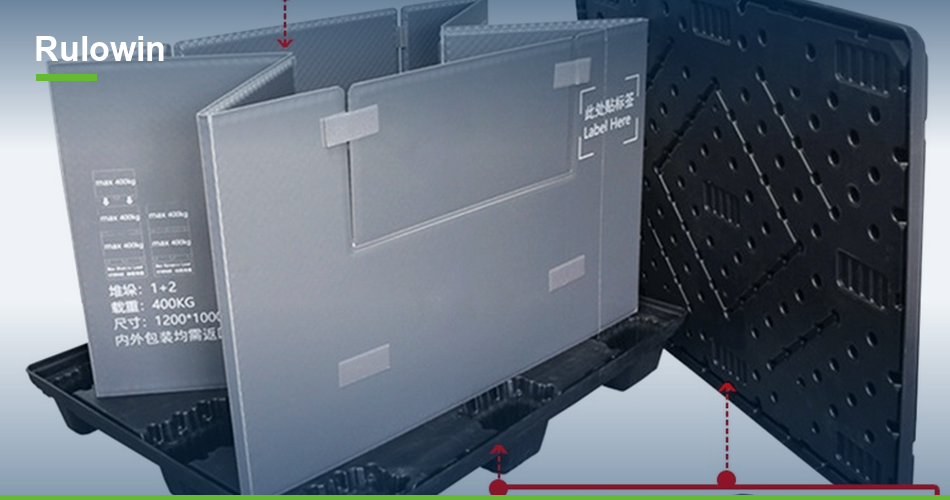
Moving populated boards between assembly lines is the application ESD packaging exists for, and the box is the part everyone specifies. The protection is only as good as the weakest link in the chain, and in most operations the box is not it.
What the box has to do
Present a surface resistivity in a defined range, so charge does not accumulate and does not discharge abruptly through a component. That is the whole requirement, and it is worth stating as a range with a test method rather than as “anti-static”.
Then the ordinary things: it has to hold the boards without them touching each other, and it has to stack or fit wherever it goes.
The part that is usually missing
The path to ground. A board in an ESD box on a non-conductive trolley, pushed by someone in standard footwear across a floor that generates charge, is partly protected. The box is doing its job and the rest of the chain is not.
Which means the money is often better spent on conductive trolley surfaces, footwear and flooring than on a higher specification of box. It is worth auditing the chain before upgrading the packaging – the answer is frequently cheaper than expected.
What ESD packaging actually has to do, and what is genuinely required versus assumed, is set out in what ESD packaging actually needs to do.
How long the property lasts
This is the question that matters and the one least often asked. Some anti-static properties are built into the material and last the life of the box. Others are topical and wear off with handling and cleaning.
Ask which you are buying. A topical treatment that has worn off is not protection, and it looks identical to one that has not.
Cleaning
Standard cleaning can remove a topical treatment. If boxes get washed, say so when specifying – the grade has to survive the cleaning regime or the protection disappears after the first wash.
Segregation
ESD boxes for sensitive areas and standard boxes elsewhere, kept separate. Mixing them is how a standard box ends up carrying boards, and it is worth a colour difference or a mark so the distinction is visible.
How to check, and how often
A surface resistivity meter is not expensive and it turns a claim into a measurement. Test new boxes on arrival and then periodically – quarterly is common – and record the result.
The periodic test is the one that matters, because it tells you whether the property is wearing off. A box that measured correctly on arrival and measures wrong six months later has a topical treatment that has gone, and you need to know that before your boards do.
What kills the property
Cleaning with the wrong agent, abrasion, and time. In that order. Ask what cleaning regime the property survives and then use only that.
And one common gap
Boards stacked in an ESD box still touch each other unless they are separated. A divider or a compartment insert is what makes the box do its job for populated boards, and it is the part most often missing.
What we can do
We supply ESD corrugated boxes and will state the resistivity range and whether the property is permanent, in writing. Tell us what you handle and how the boxes move – we will tell you if the box is actually where your risk is, including when it is not.