
Furniture arrives damaged at the edges for one simple reason: edges are what gets touched, dragged and knocked. Protection exists in abundance for this and it mostly fails in one predictable way – it comes off somewhere between the factory and the customer.
Why protectors come off
Friction-fit corners fall off under vibration. Tape fails in cold or heat. Shrink wrap tears at the first sharp edge and then everything downstream unravels. Each of these is a retention problem rather than a protection problem, and it is why rushed suppliers see damage rates that vary wildly between lanes for no obvious reason.
The single most reliable improvement we know is making retention independent of adhesion: straps, bands or interlocking geometry rather than tape.
Straps concentrate load, so pad them
Strapping holds protection in place and crushes whatever it crosses unless the load is spread. A strap over a bare corner protector either cuts it or presses it into the finish. A simple spreader under the strap solves this and costs almost nothing – and it is forgotten nine times out of ten.
Reusable protection needs a return path
For business-to-business furniture moves – contract furniture, hospitality fit-outs, retail fixtures – reusable edge protection pays back quickly because there is a defined return. For direct-to-consumer there usually is not, and pretending otherwise creates a pile of protectors at a distribution centre that nobody will pay to ship back.
The installer is the last handler
Contract furniture gets unpacked on site, often by people working fast, sometimes in a finished room. Protection that is quick to remove without knives reduces damage during unpacking itself, which is a real share of total damage. Tear-open designs beat anything that needs cutting.
Stacking them in storage
Flat-pack and knock-down furniture sits in warehouses before it ships, and stacking damage there is invisible until delivery. Corner protection that doubles as a stacking aid – locating the next item consistently – pays for itself before it ever leaves the building.
Where another material genuinely wins
For very heavy items with extreme point loads at corners, moulded protectors or moulded pulp outperform anything made from sheet. We would rather say this than sell sheet into a duty that will not hold it – the same honesty we try to apply in advising against over-specifying reusables.
Protection that becomes damage
Edge protection occasionally causes the damage it was meant to prevent. A hard protector that shifts becomes a hammer inside the pack; a protector with a sharp moulded edge abrades the finish under vibration; a protector that traps grit against the surface grinds it. All three are common and all three are blamed on handling.
Check recovered protectors for grit and for displacement. If they are consistently dirty or consistently out of position, the protection is contributing to the problem and the design needs changing rather than the handling.
Plan the unpacking
Protection that needs a knife damages product during unpacking. Tear-off or clip-off designs are marginally more expensive and remove a real share of site damage, which is where most claims actually originate.
What we can do
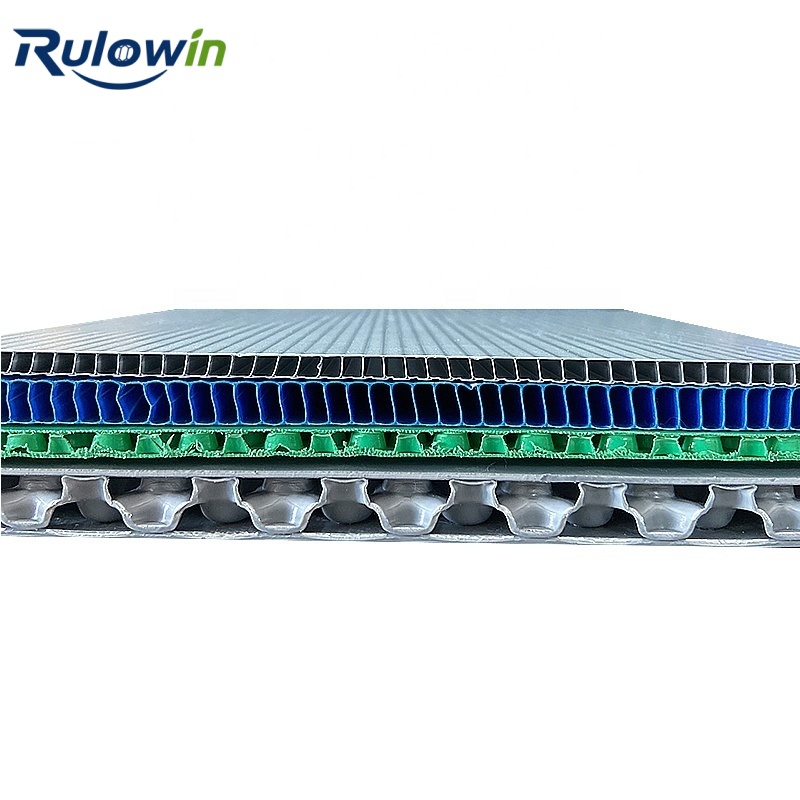
We cut edge and corner protection from corrugated PP sheet with strap-friendly profiles. Tell us the item weight, the lane and whether there is a return flow, and we will recommend a retention method first – because that is what determines whether the protection is still there on arrival.