
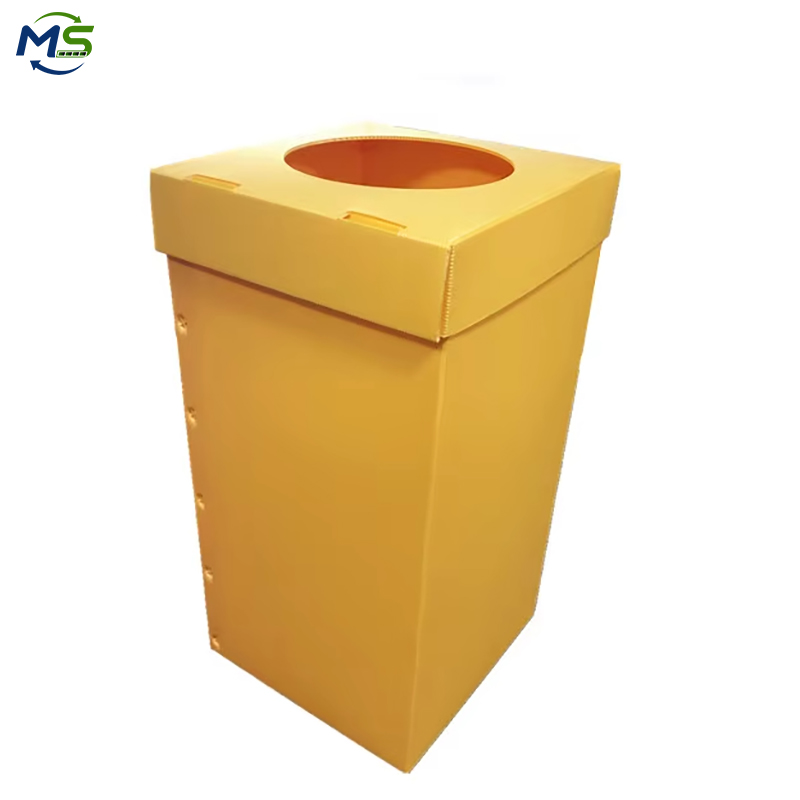
A wash process removes contamination and leaves water behind. Where a container goes from the wash into service still wet, it carries that water into the next load – and since the whole point of washing was usually to protect the next load, an incomplete dry partly undoes the wash. Drying is the least glamorous stage of a wash process and the one that most often determines whether the process achieved anything.
Where the water stays
In the base recesses, in corner radii, under any rib or lip, and in the texture of the surface. A container tipped upside down drains most of its water and retains the rest in exactly those places, and it is the retained fraction that matters. Where a container has drainage designed in, this is much better; where it does not, the retained volume can be substantial. The design side of this is in drain holes and a draining base.
How much is enough
The standard is not “no water visible” – that is easily met and still leaves a film. It is that the container does not raise the humidity of the next enclosed load, which in practice means surfaces dry to the touch everywhere including the recesses. Where a container is going to be closed with sensitive contents, that is the standard; where it is going back to a non-sensitive duty, standing water is the standard and a film is fine.
Air drying, and how long it takes
Air drying works and it is slow, particularly in a humid building and particularly for nested containers, which shield each other. A stack of nested wet containers can stay damp in the middle for a day. Where air drying is the method, the containers have to be separated or at least spaced, and the drying area has to have air movement – still air in a corner dries nothing.
Forced air and heat
A blower removes standing water quickly and a heated stage removes the film. Both cost energy and both work. Where a wash line has a drying stage, it is usually the most expensive part of the line and the easiest to justify on a sensitive application. Where it does not, the alternative is time – space, racking and a defined dwell before containers return to service.
What wet containers do in storage
A container stored wet and closed grows mould or at least develops an odour, and in a warm building that happens in days. Where containers are washed and then put away rather than returned to service, they need to be dry before they are stored, or stored open. That sounds obvious and it is the most common cause of a wash programme that produces clean containers with a smell.
The interaction with corrosion control
A wet container going into a closed load is a moisture source, and it is often the largest one. Where a corrosion problem persists on a lane with washed containers, the wash is frequently the cause rather than the cure. Measuring the internal humidity of a container loaded straight from the wash settles it quickly. The wider moisture picture is in where moisture gets into a closed box.
Checking whether the drying works
Wipe the inside of a base recess with a dry cloth an hour after the process and look at the cloth. A damp mark means the drying stage is not complete. That is a five-second test and it is the only one needed – a container that passes it will not raise the humidity of the next load.
Where to put the drying step
In line, if the volume justifies it. In a defined drying area with racking and air movement if it does not. And with a defined dwell time, written down, so that the step is not shortened when the line is busy – which is exactly when it gets shortened.