
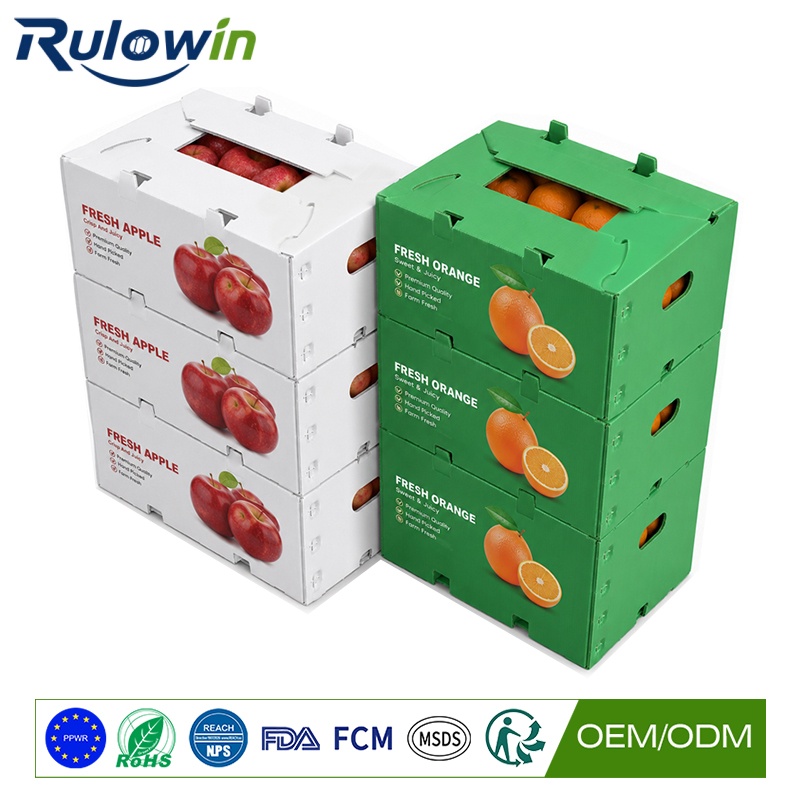
Wash a crate properly and it is hygienic. Stack it wet and put it in a warm corner and by the time it is used again it is not. Drying and storage are unglamorous, cheap, and the point at which most reusable packaging hygiene programmes quietly fail.
Why damp storage is a problem
Three mechanisms, and they compound.
Biofilm. Residual moisture plus any remaining organic film is the condition microbial growth needs. Once a biofilm forms it is considerably harder to remove than the original soil, and it protects what is underneath from the next wash.
Water in the structure. On a corrugated PP crate, water that entered the flutes at a cut edge or a vent sits there, adds weight, and carries residue. It also freezes and can split the structure in a cold store.
Odour and staining. Damp crates in an enclosed space develop a smell that transfers to product, and some residues stain permanently.
Getting the drying right
- Air movement matters more than heat. A fan is more effective than a warm room with still air. The air has to carry the water away.
- Drain before stacking. Crates stacked wet trap water between them. Give them a drained position first – ideally upside down or on edge, so the lowest point of every cavity can empty.
- Do not dry in a way that recontaminates. Drying crates next to a waste area or under a dusty roof undoes the wash. Position the drying area with that in mind.
- Check the crates that are hardest to dry. Deep ones, those with label pockets, and those with damaged edges where water has entered the structure. These need longer or need retiring.
Storage that does not undo the work
- Off the floor. On a rack or a pallet, never directly on concrete where water and dirt pool.
- Covered. Empties stored outside collect debris, and open tops collect it fastest. If outdoor storage is unavoidable, cover the stacks and inspect before use.
- Away from chemicals, waste and pest activity. Segregation is a real control, not a formality.
- Nested or stacked so they can breathe. Tightly nested stacks hold moisture between surfaces for a long time.
- Labelled or recorded so the oldest stock is used first. A stock rotation rule prevents the “crate at the back that has been there three years”.
How to tell whether it is working
Swipe or visually inspect crates as they come out of storage, not as they come out of the wash. That is the condition that matters, because it is the condition product sees.
If crates pass a post-wash check and fail a post-storage check, the wash is fine and the drying or storage is not. That distinction tells you where to spend.
The design contribution
Some of this is fixed at purchase. A crate with drainage at its lowest point, raduised internal corners, no absorbent material and no deep water-trapping recesses dries faster and stores better for its whole life. That is a specification decision made once and lived with for years.
We supply produce boxes with drainage provisions and cleanable geometry, and we will ask how they are dried and stored before recommending a construction – because a box designed for a properly draining wash line can be simpler and cheaper than one designed for a wash line that leaves it full of water.