
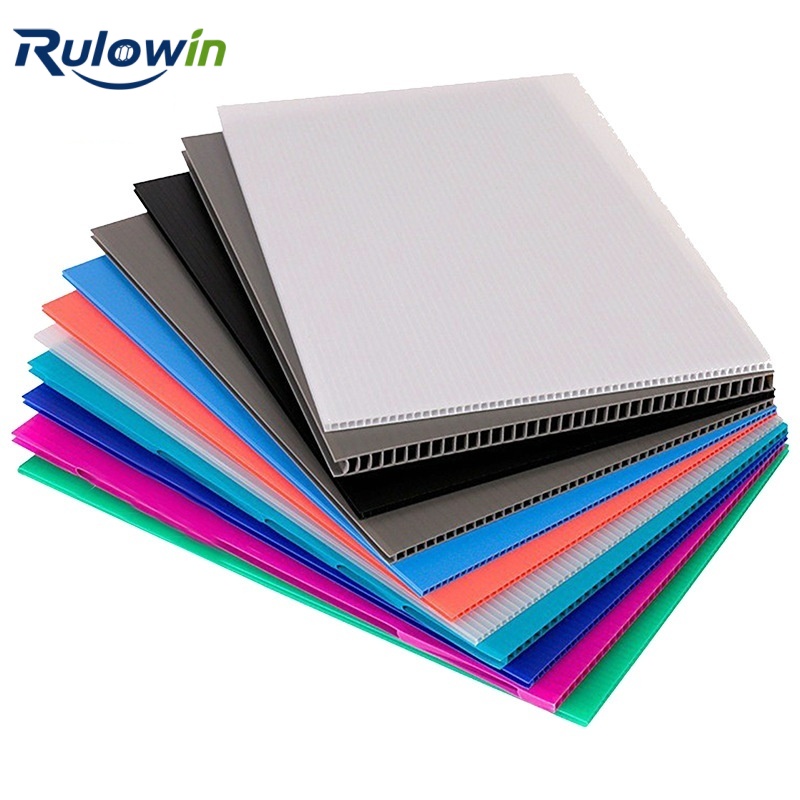
Holes in corrugated polypropylene have three obvious jobs – drainage, ventilation and fastening – and one less obvious one, which is that they are also the place most panels eventually fail. Cracks spread from hole edges. So the hole-making method deserves more thought than it usually gets.
What punching gives you
A punch shears the material cleanly and fast, and in volume it is far cheaper per hole. The edge is consistent, there is no swarf to clean, and hole position repeatability is good. For drainage and vent patterns in high quantity this is the obvious choice.
The catch is that punching work-hardens and stresses a narrow ring around the hole. In polypropylene under load, that ring is where cracks start, especially if the hole sits near an edge or in a loaded zone. Sharp punch-to-die clearance keeps this to a minimum; worn tooling makes it much worse.
What drilling gives you
Drilling leaves a lower-stress edge and, with the right bit geometry for thermoplastics, less heat-affected material. It handles thick stacks and low quantities well, and it is what you use for holes that will carry a fastener load. It produces swarf and it is slower.
For polypropylene specifically, the bit matters. Standard twist drills intended for metal grab and can crack the sheet on breakthrough. Bits ground for plastics, slower feed on exit, and backing the sheet are the three things that stop that.
Hole edge distance
The most common cause of a failed panel is not the method, it is the edge distance. A hole too close to a panel edge leaves a thin land that tears under surprisingly small loads. Keep sensible clearance from edges and from other holes, and where fasteners are involved increase it because the fastener bears against that land.
This applies doubly to holes near a fold line. Fold strain and hole stress in the same place fails quickly.
Fastener holes need reinforcement
Anything bolted through corrugated PP benefits from a reinforcing washer on both faces, spreading the bearing load. Without it, the fastener pulls through over time as the material creeps. Where the joint is dismantled repeatedly, a moulded insert or bushing is worth its cost – the topic comes up often around threaded bushings for panels.
Deburr, even when it looks fine
Punched holes carry a small lip and drilled holes a feather edge. Both interfere with sealing faces and both catch on textiles and gloves. Removing them costs seconds and prevents a surprising number of complaints.
Quantity decides most of it
Below a few hundred holes, drilling wins on tooling cost. Above several thousand, punching wins on everything except fastener-loaded holes, which stay drilled or get reinforced. In between, ask what the hole does. Ventilation holes are structural nonentities; lifting holes are not.
Ventilation patterns need the same care
A vent slot is a long, thin hole, and it behaves like one: cracks start at the ends. Rounding the ends of any slot costs nothing and removes the most common origin of tears in vented panels – sharp slot ends are the classic failure point in crates that crack at the vents.
Keep slots clear of the load path and clear of corners. Ventilation placed where the structure wants to be continuous is the reason some vented designs crack early, and moving the pattern is usually cheaper than thickening the panel.
What we can do
We punch and drill corrugated PP board and ask what each hole is for before choosing. Send the pattern with loads marked and we will tell you which holes should be punched, which drilled, and which should move – because often a hole placed ten millimetres differently removes the problem entirely.