
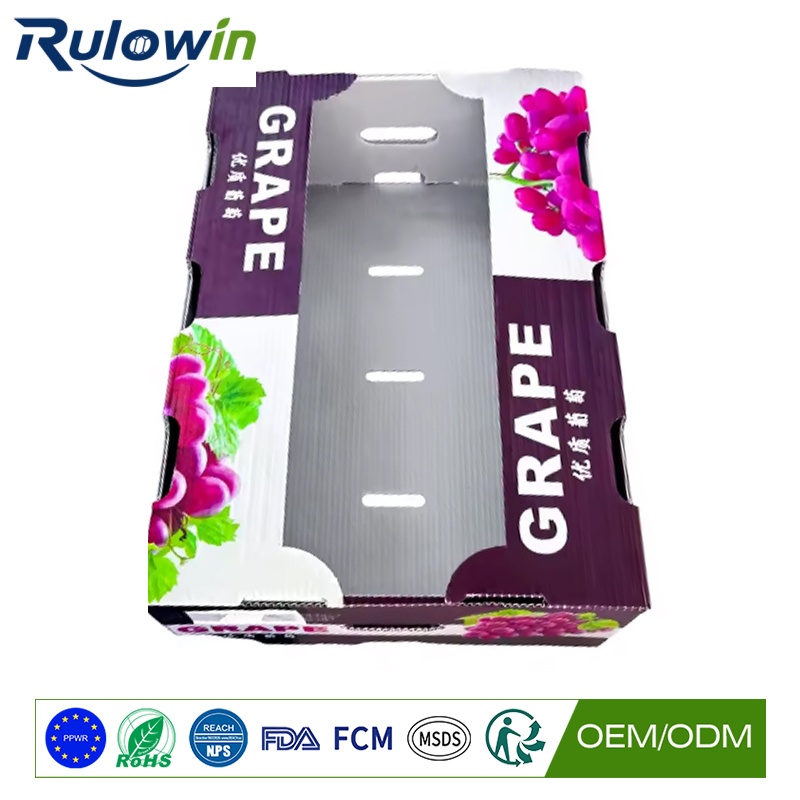
Dairy plants clean to a standard most industries never approach, and the chemistry that achieves it is designed for stainless steel. Returnable crates are not stainless steel, and the gap between what the process assumes and what the crate tolerates determines how long the fleet lasts.
Alkaline and acidic stages
Standard dairy cycles run a caustic stage to remove fat and protein, then an acid stage to remove mineral scale. Polypropylene handles both well at typical concentrations and temperatures – it is chosen for exactly this reason – but the temperature, not the chemistry, is usually what limits service life.
Sustained high temperature accelerates everything: loss of impact strength, additive migration, print degradation and joint fatigue. A crate that would survive a decade at fifty degrees may not survive three years at eighty.
Fat is the easy part
Milk fat and protein residues come off readily with the caustic stage, and unlike seafood they leave no persistent odour once properly removed. Dairy crates are genuinely more forgiving than fish crates in that respect.
What makes dairy harder is throughput. Crates go through the wash far more often than in most sectors – sometimes several times a day – so exposure accumulates quickly even though each cycle is mild.
Hardware corrodes first, again
In any wash-intensive application the metal components set the life of the assembly. If the crate has spring handles, rivets or reinforced corners containing steel, those fail before the polymer shows any meaningful wear. Designing metal out is the single biggest life improvement available, and it is why many dairy crates are all-polymer.
Check for stress cracking rather than wear
Crates in this duty rarely wear out visibly. They develop fine cracks at stress concentration points, accelerated by whatever survives in the wash water. Look at handle roots, corner radii and drill points. A crate with several hairline cracks is finished even though it looks nearly new.
Drying, again, is the recurring theme
Wet crates stored nested grow biofilm and develop odour, and nothing about dairy’s otherwise excellent hygiene standard prevents this. Storage matters as much as washing; see the checks in hygiene release and adapt them to your cycle count.
Record the cycle count, not the calendar
A dairy fleet is better managed on trips through the wash than on years in service, because the two diverge wildly between a crate on a daily route and one that sits in the store. A simple trip count, even a rough one, predicts failures far better than age.
Ask for the wash specification, in writing
Crate life cannot be estimated without the actual wash parameters: stage temperatures, chemical concentrations, cycle duration and cycles per week. Four numbers, available from the wash plant controller, and they determine whether a crate lasts two years or eight.
Getting them in writing also settles internal arguments. Where engineering says the crates are failing early and hygiene says the process has not changed, the controller log ends the discussion in either direction, and it is usually more informative than anyone expects.
What we can do
We supply returnable crates for wash-intensive loops and can build them metal-free for exactly this duty. Give us your caustic concentration, stage temperatures and cycles per week, and we will tell you honestly whether our standard construction is right or whether you need the heavier section.