
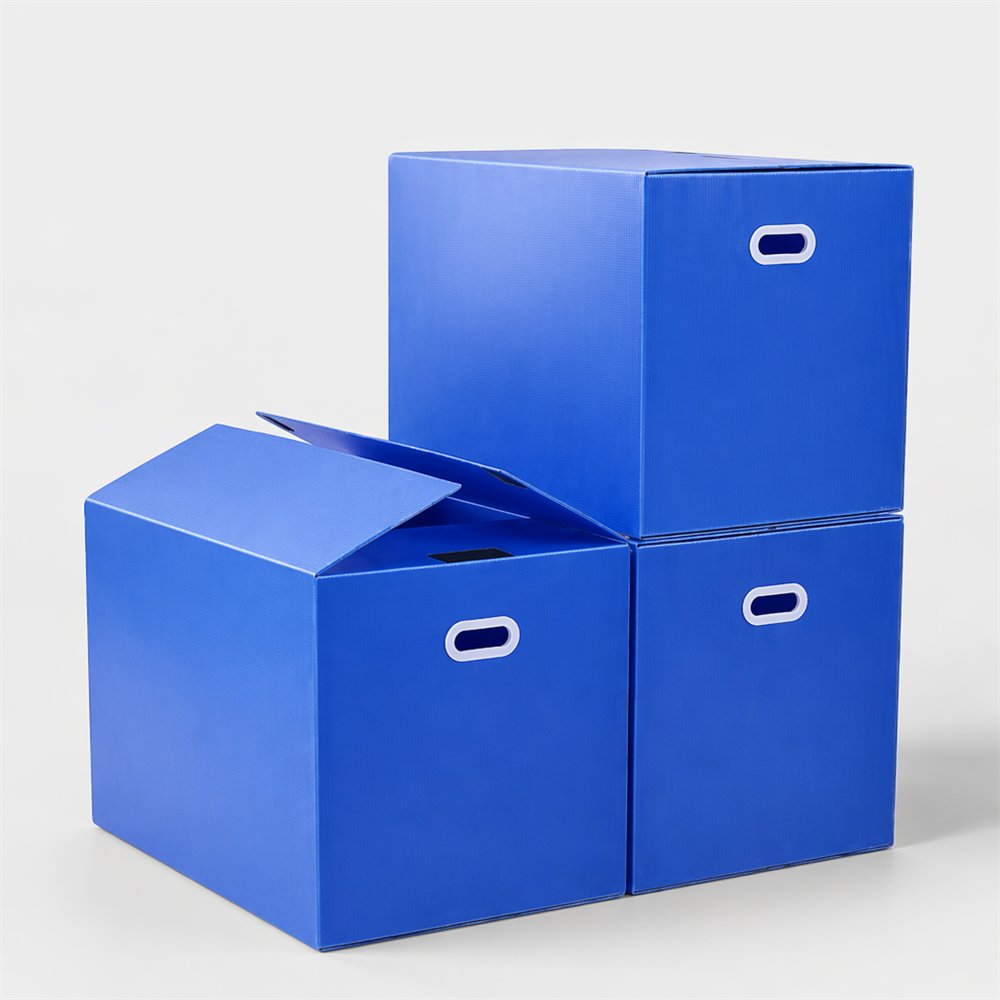
A semi-automatic process has a machine at one end and a person at the other, and the container has to suit both. The machine wants tolerance, flatness and a defined pick feature; the person wants a reachable opening, a comfortable weight and something they can identify at a glance. Those requirements are not in conflict, but they are rarely all considered at once, and the usual outcome is a container that suits one end well.
Where the two ends differ
The machine end is sensitive to footprint, base flatness and stack geometry, and indifferent to the opening. The person end is sensitive to opening, weight and identification, and indifferent to a millimetre of footprint. A container can satisfy both, because the requirements are largely on different features – but only if both are written into the specification rather than one being assumed.
Weight is the shared constraint
Both ends care about weight. The machine cares because it has a payload limit and a cycle time that depends on mass; the person cares because they lift it. Where a container is sized for volume alone, it ends up too heavy for the manual end and too slow for the machine end, and reducing it helps both. Weight is the one specification item that improves both halves of a semi-automatic process.
Handles, and whether the machine can still grip
A handle that a person needs is in the way of a gripper that closes on the same face. Where both are required, the handle has to be recessed or placed so the gripper engages elsewhere, and that is a design decision rather than an accessory. Where handles are added after the container is chosen, they frequently end up exactly where the machine wants to grip.
Openings for people, structure for machines
A drop front helps the person and removes wall area that a gripper or a stack needs. Where a container has to do both, the compromise is usually a partial drop front – low enough to help the reach, high enough to leave structure at the top for stacking and handling. That is a specification detail and it is worth stating rather than leaving to the standard design.
Identification that both can read
A person reads a large mark at a distance; a scanner reads a bar code in a specific field. Both can be satisfied with a single label area carrying both, placed where the person can see it and where the scanner’s field covers it. Where they cannot be satisfied together, two labels on different faces is the answer, and it is cheap. The placement logic is in which face should carry identification.
Planning for the stage to end
A semi-automatic stage is usually a step towards full automation, and the containers bought for it will still be in service afterwards. Specifying for the eventual automated process is the same argument as for a phased rollout, and it applies with more force here, because the semi-automatic stage is where the fleet is usually replaced. Buying for the end state at this point costs very little extra.
How to check a candidate
Run it through the machine end twenty times and through the manual end twenty times, with the people who will actually use it, and note anything that has to be adjusted or worked around. A container that needs an adjustment at either end will need it thousands of times a year. Where a candidate is acceptable at both ends, it is usually obvious within the first ten cycles.