
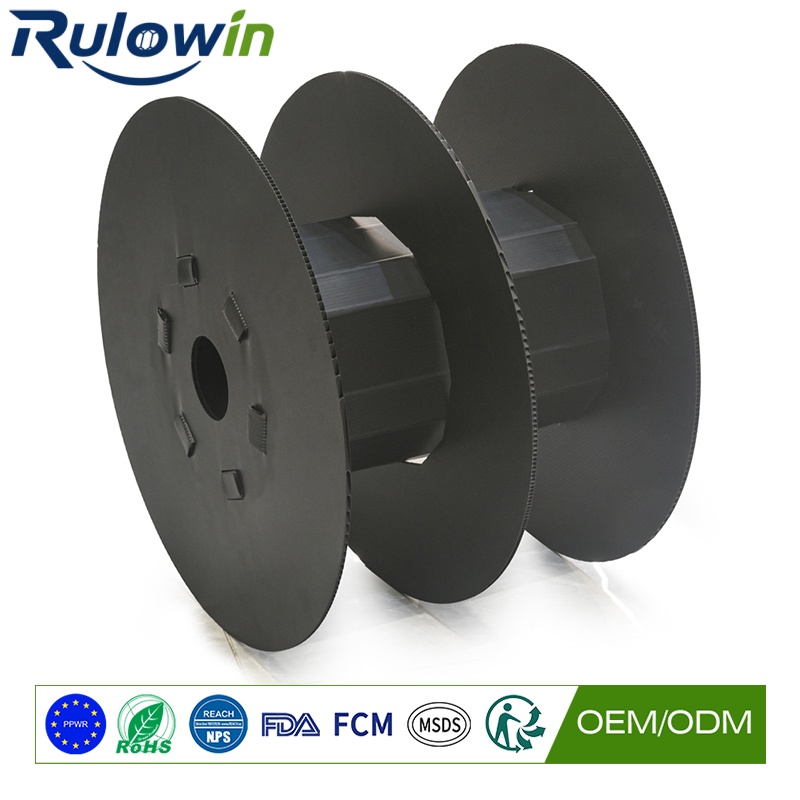
A reel that wobbles on the payout stand gets blamed on the reel. In roughly half the cases the reel is fine and the problem is the arbor, the stand, or the way it was loaded. Sorting them out needs very little equipment.
What runout actually is
Two different things get called runout. Radial runout is the bore not being concentric with the flange outer diameter – the reel turns but its rim describes a small circle. Axial runout, or wobble, is the flange not being square to the bore, so the rim moves side to side. They have different causes and different consequences.
Axial wobble is the one that damages tension control and cable; radial unevenness mostly matters at high speed.
The basic measurement
Mount the reel as it is normally mounted, on its actual arbor. Fix a dial indicator so its tip bears on the flange rim, either radially or axially depending on which you are checking, and rotate slowly by hand. Total indicator movement is your runout. Repeat at the other flange.
Using the actual arbor matters enormously. Measuring on a precision mandrel in a workshop gives a different and much better number than the equipment the reel actually runs on.
Separate arbor error from reel error
Rotate the arbor alone with the indicator on it. If the arbor itself shows runout, that is your problem and it is not the reel. Then refit the reel and note the high spot; rotate the reel on the arbor by half a turn and measure again. If the high spot moves with the reel, the reel is out. If it stays in the same place, it is the mounting.
Two-location readings
Take readings near the hub and near the rim. A large difference between them means the flange is dished or bent rather than the bore being off-centre – a different problem with a different cause, usually overloading or impact rather than manufacture.
How much is acceptable
It depends on speed and on what is wound on it. Low-speed payout of heavy cable tolerates several millimetres; high-speed payout of sensitive fibre tolerates much less. State the process speed when asking, because “is this reel acceptable” has no answer without it. This is the same reasoning we used earlier looking at damaged reel hubs.
Log it
Record reel number, reading and date. A reel drifting across successive measurements is telling you something is progressing – usually hub wear or a developing flange crack – long before it fails. Bore and arbor fit is the other half of the same problem, set out in reel bore sizes that fit common payout stands.
What to do about a reel that is out
Modest runout can be tolerated by slowing the payout, which is often enough for a reel that is otherwise serviceable. Larger runout, or runout that is increasing between checks, is a reason to retire the reel rather than accommodate it – particularly where cable tension control matters.
Before condemning the reel, check it is not simply mounted badly. A reel that reads well on one stand and badly on another is telling you about the stand, and swapping stands is far cheaper than replacing reels. The retirement criteria we set out in quarantine rules for damaged reels apply here too.
What we can do
We supply industrial cable reels to concentricity tolerances and can tell you the figure for the specific design. Send your payout speed and cable type and we will state a limit rather than hiding behind a drawing tolerance.