
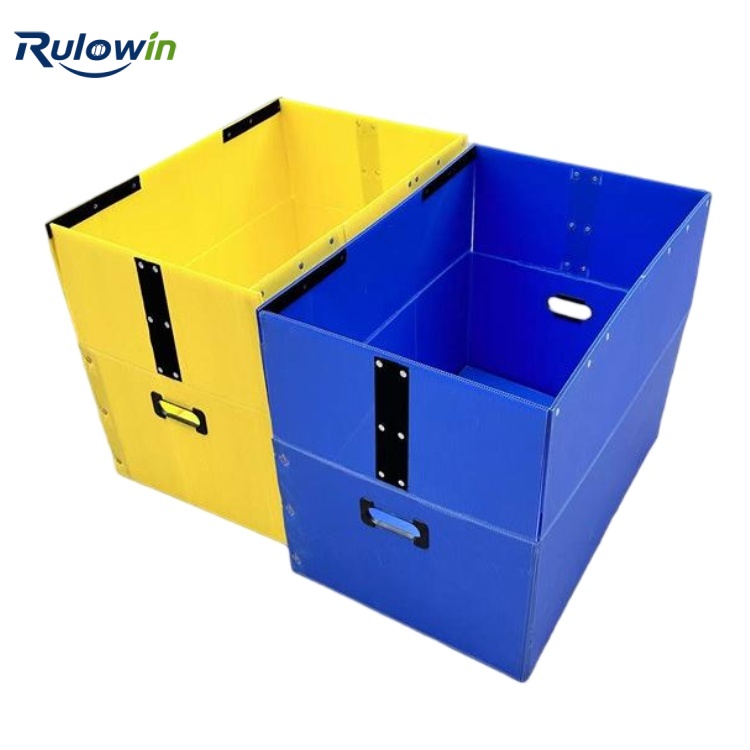
Single-sourcing a box fleet is a risk and dual-sourcing it is a project, because two suppliers’ boxes will not automatically interchange. Boxes have to stack together, fit the same racks and run through the same wash. Getting a second source to genuinely match is a specification exercise, and it is worth doing properly or not at all.
Which dimensions actually have to match
External envelope to the tolerance the racking allows. Stack interface – the rim and base geometry that make one box locate on another, which is the one most often missed and the one that stops two suppliers’ boxes stacking in the same stack. Handle position and size, because operators lift by habit. And any feature that interacts with equipment: conveyor bearing surfaces, label panel position for a fixed scanner, or a locating feature in a rack.
Which do not
Internal details can differ within reason – divider layout, colour shade, drainage hole pattern – provided they do not affect the interfaces above. Wall thickness can differ if the stack and load requirements are still met. Cosmetic differences are fine and actually useful: a slightly different colour makes it obvious which supplier’s boxes are in which stack, which makes any performance difference visible.
Run them side by side before committing
Buy a small quantity from the second source and put them into service alongside the incumbent, in the same stacks and the same loop. Mark them, and check after a month: stack behaviour, damage rate, wash behaviour. Side-by-side service is the only test that catches an interface problem, because a dimensional check will not reveal that one box’s rim sits two millimetres proud and stops the stack locating.
Manage it as two fleets
Practically, dual-sourced boxes should be identified and counted separately. That keeps the damage-rate comparison honest and stops the two populations being mixed in a way that hides a problem. It also makes the annual negotiation simpler, because you can show both suppliers their own performance rather than a blended number. The change-control discipline is set out in changing suppliers safely.
Keeping the incumbent honest without a second source
Dual sourcing is not always possible: the volume may be too small, the tooling may be supplier-owned, or the box may be genuinely bespoke. Where a second source is not available, the alternative protections are a specification that belongs to you rather than to the supplier, and a service-life record you can hold them to.
Own the specification: dimensions including tolerances, corner and handle construction described in writing, material grade and any performance figures. If the specification is a supplier’s drawing number, moving is impossible by definition. And record performance: damage rate, retirement age, and any drift in dimensions across deliveries. A supplier who knows you are measuring will hold a tolerance more tightly than one who assumes you are not, and the record is what makes an annual conversation factual rather than anecdotal.
What the incumbent can do to make matching hard
Where tooling belongs to the supplier rather than to the buyer, interchangeability is not a specification question at all – it is a commercial one, and the incumbent holds the stronger hand. Two things protect against it. Own the tooling from the first order and have that stated in the purchase terms, even where it means a slightly higher unit price. Or keep the drawing and the interface definition in house, so that a second supplier can quote against geometry rather than against a competitor’s part number.
Where neither is possible, the honest position is that the fleet is single-sourced and should be managed as one: negotiate hard on price and service life, and keep a larger buffer against a supply interruption rather than pretending a second source exists. A dual-source claim that cannot survive a real interruption is worse than an acknowledged single source, because it removes the pressure to hold stock.
What we can do
We build PP corrugated turnover boxes to an existing specification where the interfaces are defined, and we will tell you which dimensions we can guarantee to match and which we cannot. Send us a sample box and we will tell you honestly whether we can second-source it – sometimes we cannot, and that is a useful answer too.