
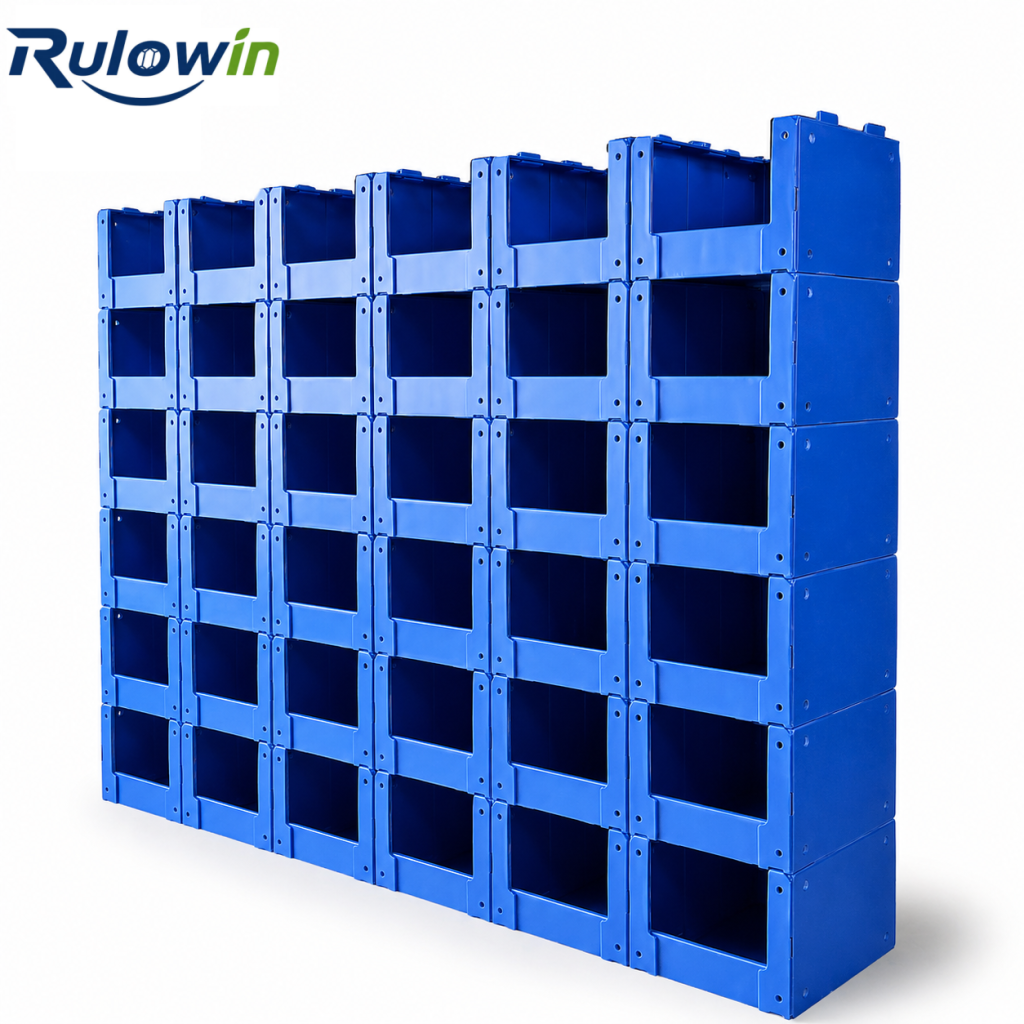
Every carton that arrives at a plant leaves it again as waste. That sounds obvious and it is rarely costed. What gets noticed is the cardboard line on a facilities invoice, which is small. What is not noticed is the chain around it: the baler or compactor, the space it occupies, the skips, the collections, and someone’s time moving material from the point of unpack to the point of collection.
The visible line and the invisible chain
The visible line is the rebate or charge per tonne from the waste contractor, and it is usually favourable enough that cardboard reads as a revenue item rather than a cost. The invisible chain is everything before that. A baler costs capital and floor space and needs a cycle run. A compactor needs a collection schedule. In a plant unpacking at line side, someone walks the empty cartons to a bin, and in a plant unpacking at goods-in, someone breaks them down first because a made-up carton eats a skip in about ten minutes.
Breaking down is the hidden labour
Flattening a carton takes a knife and about fifteen seconds. Across four hundred cartons a week that is an hour and a half of someone’s time, done at the worst possible moment – during goods-in, when the same person is supposed to be booking stock. It is not enough time to justify a headcount so it gets absorbed, and absorbed labour is the hardest cost to see. A box fleet has no equivalent step: empties get nested or stacked and moved on a trolley in one action.
Space is the one people forget
Waste handling occupies floor area near a door: the bin, the baler, the staged pallet waiting for collection. In a plant where the constraint is internal space rather than headcount, that is the most expensive square metre in the building, and it is being used to store air and folded board. Removing two thirds of the incoming one-trip volume usually takes a bin position and often a baler cycle out of the week.
What actually leaves when you switch
Be precise about this, because the claim gets oversold. A returnable box fleet does not eliminate waste – it produces no routine waste, which is different. Damaged boxes still retire, and at end of life they are a plastic stream rather than a fibre stream, which is a different container and a different contractor conversation. The routine weekly volume goes, the exceptional volume stays, and the ratio between them is the honest number to quote internally.
How to build the number
Three figures, a week each. Weigh the fibre stream leaving the site for a week. Count the labour minutes spent getting it from unpack to collection. Cost the equipment and the collections per month and divide by the weeks. Add them and divide by the number of movements in the week, and you have a waste cost per movement that can sit next to the carton price. That is the number that makes the case, and it is the one missing from most comparisons – including the carbon side, which is set out in cartons versus returnable crates in a footprint calculation.
What to do with the space and the labour you get back
Removing the routine fibre stream frees three things that are worth naming, because they are what makes the change stick internally. Floor area near a door, which in a constrained plant is worth more than the waste contract. Baler or compactor time, which in a shared facility is often a booked slot that other departments want. And the labour minutes currently spent walking empties to a bin, which are returned to the people who are supposed to be booking stock.
None of these appear as a cash saving, and all of them show up as a plant that runs slightly better, which is usually how these decisions actually get supported. The caution is not to bank them twice. If the baler time is counted as a saving in the business case, do not also count the floor area as available for something else unless it really is being released, and do not count the labour minutes if the same people are still doing the same round with fewer cartons in it. One honest line beats three optimistic ones when the numbers get checked in month six.
What we can do
We supply returnable PP corrugated turnover boxes sized to your movements, and we will help you build the waste-per-movement figure from your own numbers rather than an industry average. Averages are how these business cases lose credibility in the first meeting.