
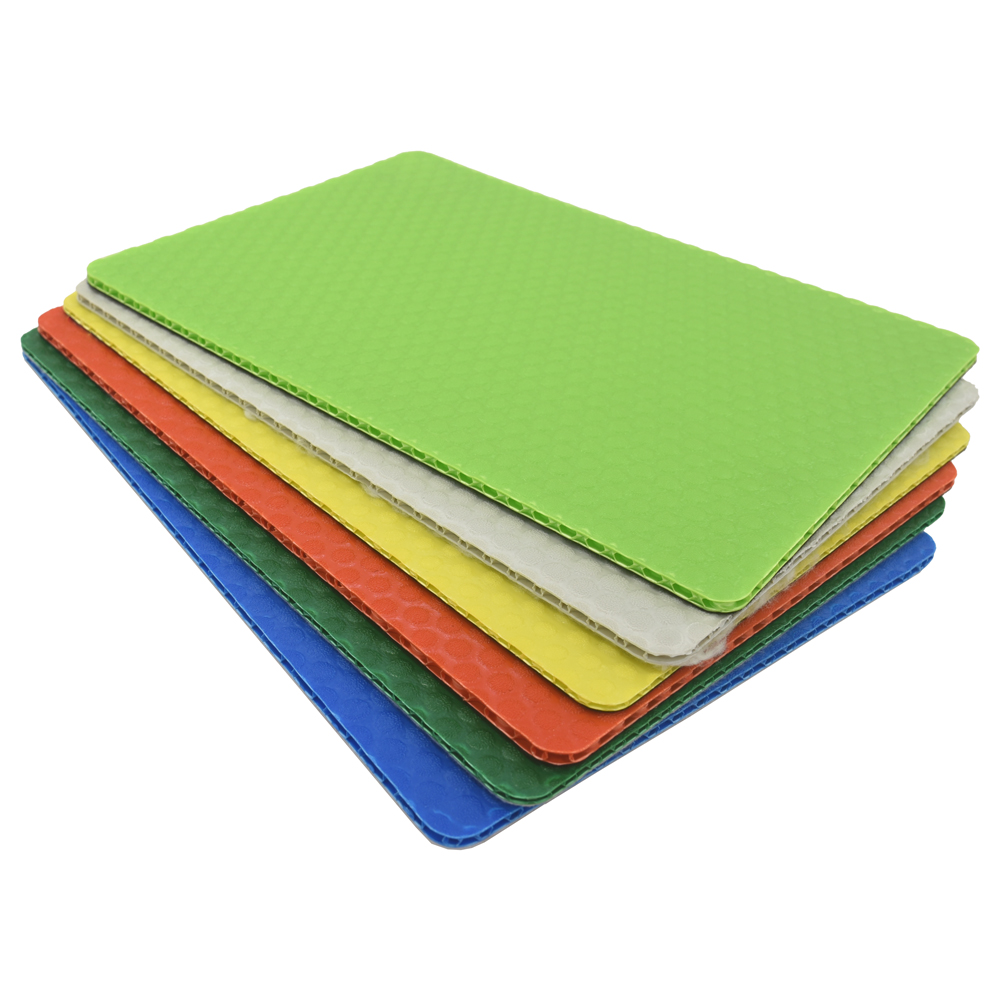
Weight is the least glamorous property of a protection panel and the one that decides whether the protection actually gets laid. If a panel needs two people and a route planned around it, it gets laid once and left. If one person can carry four of them up a flight of stairs, it gets moved as the work moves, which is what protection is supposed to do.
What the numbers look like
A 1200 x 2400 honeycomb panel in a typical protection grade weighs somewhere in the range of four to eight kilograms depending on thickness and skin weight. A sheet of plywood the same size and nominally the same stiffness is in the twenties. Hardboard is lighter than ply but has no stiffness and no impact resistance. That four-to-one difference is the entire reason plastic panel gets specified on jobs with stairs, lifts or long carries, even where the material cost is higher.
Why it matters more than it sounds
Three knock-on effects. One person can carry several panels at once, so laying a floor is a single-op job rather than a two-op one. Panels can be moved between phases without needing plant or a second pair of hands, which is what makes reuse realistic rather than theoretical. And manual handling risk drops substantially, which matters on sites where a repetitive two-person lift of a heavy sheet is a genuine issue.
Where lightness works against you
A light panel lifts in wind, which is a problem on external runs and in buildings that are not yet weathertight. A light panel also slides more easily on a smooth floor if the face against the floor has no grip, which is one reason a felt face earns its keep. And a light panel can feel insubstantial to somebody who equates weight with quality, which is a real objection on site and not one to dismiss – the answer is to show stiffness, not weight, by standing a panel across two supports.
Stiffness per kilogram is the real measure
What a protection panel needs is not mass, it is bending stiffness: it has to span small hollows and carry a wheel without dishing. A honeycomb core gives stiffness at low weight because it puts material at the top and bottom skins where bending stress is highest and removes it from the middle where it does nothing. That is the same reason an I-beam looks the way it does, and it is why a heavier solid sheet of the same thickness loses on both counts.
Carrying and storing without damaging them
Panels carried on edge and dropped on a corner crack the skin, and a cracked skin lets water into the core, which ends the panel. Carry them flat or on edge but set them down on the edge rather than dropping the corner. Store flat if there is room; storing on edge is fine for short periods and causes bowing if left for months. Storage is covered in more detail in storing honeycomb panels flat or on edge.
What we can do
We supply lightweight PP honeycomb protection panels and will give the actual weight per panel rather than a thickness and a shrug. Tell us what the access is like – stairs, lifts, long carries – and we will size panels so one person can move them, which sometimes means a smaller panel rather than a lighter one.