
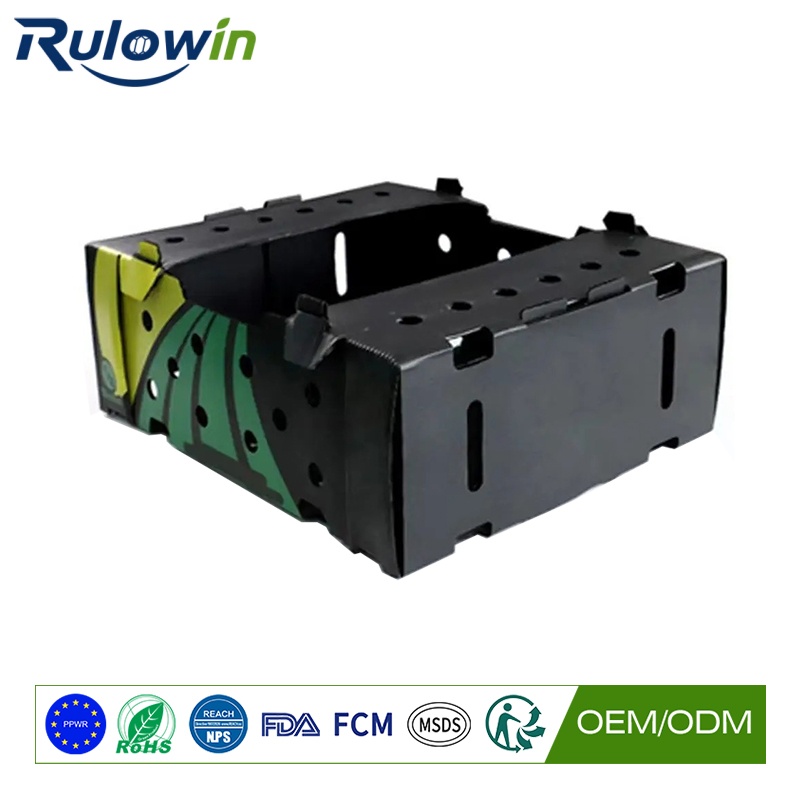
Crates go through wash tunnels routinely, and crates come out of wash tunnels warped equally routinely. The difference is almost always temperature, and it is worth understanding why before you put a pallet of new crates through a cycle that was set up for something else.
The temperature ceiling
Polypropylene softens at a temperature that is lower than most people expect – well below the boiling point of water, and inside the range an industrial wash cycle can easily reach. A crate that has softened and then cooled in a distorted position keeps that distortion. It does not come back.
So the first thing to check is the wash temperature, and the second is the drying temperature, which is often higher than the wash. Drying cabinets are the usual culprit when crates come out fine from the wash and warped from the dryer.
Detergent, and the chemicals that matter
Mild alkaline detergents are fine. Strong solvents and some sanitisers attack the surface and leave it chalky, and a chalked surface picks up dirt faster than the original. If you are using a sanitiser, check it against polypropylene rather than assuming.
Chlorine-based sanitisers at normal dilution are generally acceptable. It is the concentrated and solvent-based products that cause the trouble, and they are usually the ones used for a periodic deep clean rather than the daily cycle.
Mechanical points
Jets at close range can deform thin walls and open vents. Racking that holds a crate by one edge while it is hot will let it sag. And crates should be allowed to drain – a crate that goes into a dryer full of water takes longer and gets hotter than it needs to.
None of this is exotic. It is mostly a matter of checking that the cycle was designed with the crate in mind, which in a lot of plants it was not.
What to check on the way out
Look at the first crate out of the first run. Check that the base is still flat – sit it on a known flat surface and see if it rocks. Check that the walls have not bowed inward. Check the handle roots, which is where distortion shows up first. If the first run comes out right, subsequent ones will too.
If crates are going into cold storage after washing, note that cold handling is a separate risk. We covered it in why PP crates crack in cold storage.
Rinsing and drying, the half people skip
Washing is the easy half. Rinsing removes the detergent, and detergent left on a crate leaves a film that holds dirt – so a crate can come out of a wash looking clean and get dirty faster than before it went in. Check the rinse stage actually removes what the wash stage applies.
Drying matters for a different reason. Crates going into storage wet, or into a cold room wet, carry water into places you do not want it, and in a chilled environment that becomes ice. Give the cycle enough drying time, or stand crates to drain before they go anywhere.
What we can do
We make PP crates for produce and we will ask what wash cycle they are going into before quoting. Tell us the wash and dry temperatures and the detergent, and we will tell you whether our standard crate will take it – and if not, what needs to change, which is usually the cycle.