
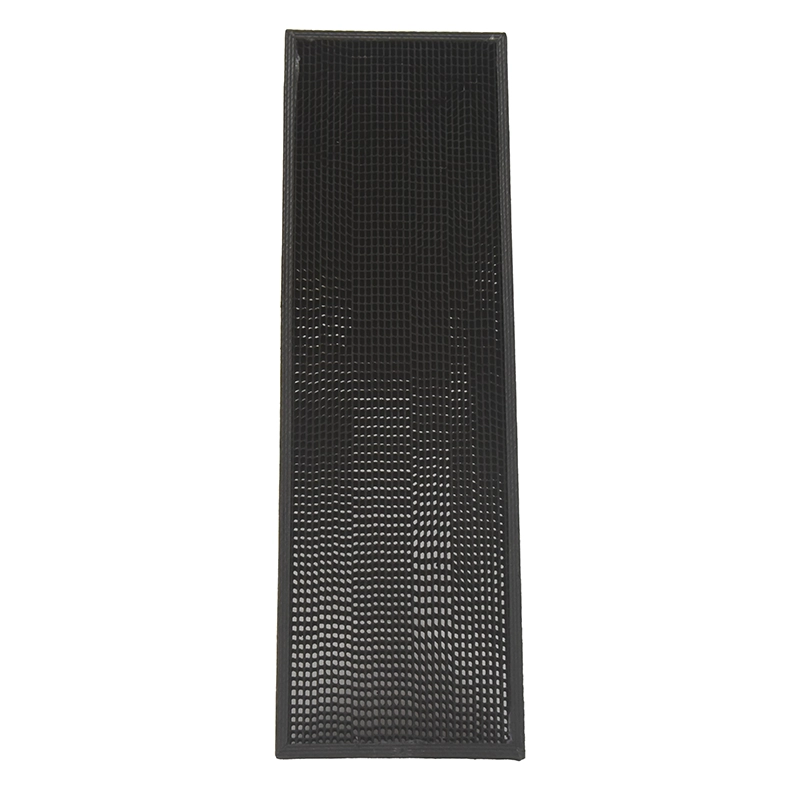
Polypropylene honeycomb filter media is supplied two ways: as finished panels cut to a stated size, or as board in sheet form that is cut on site. The material is the same. What differs is where the cutting happens and who carries the risk of getting the size wrong.
When board is the better buy
If you cut many different sizes, board removes the lead time on every new one. A sheet on the shelf becomes any panel you need the same day, which matters when equipment arrives in odd sizes or when a retrofit turns up an opening nobody measured.
Board also suits low volumes. Ordering two finished panels in an unusual size often carries a setup cost that makes the unit price uncomfortable; the same two panels cut from board do not.
When finished panels are the better buy
Repeat sizes, mostly. If the same dimensions come round every six months, a finished panel order is one line, the panels arrive ready to fit, and the specification is on file so the next batch matches. Board means someone cuts, every time, and every cut is a chance to vary.
Finished panels also suit sites with no fabrication step at all. If there is no workshop and no one with a saw, board is not cheaper – it is unusable.
What cutting involves
Polypropylene honeycomb cuts cleanly with a fine-toothed saw, a sharp knife on lighter gauges, or a hot knife where the edge needs sealing. The cut edge is open cell, which is fine structurally – a honeycomb panel does not need its edge bound to hold shape, unlike a flexible media that needs framing.
Dust extraction is worth having. Cutting thermoplastic produces fine swarf and, with a hot knife, fumes. Neither is a reason not to do it; both are reasons not to do it on a bench where food is handled.
Storage and shelf life
Polypropylene board has no meaningful shelf life, which is one of its advantages over paper media – it does not absorb moisture in storage and it does not degrade on a shelf. What it does do is deform, so the storage requirement is about shape rather than age.
Store sheets flat, supported across their full area if stacked more than a few deep. Leaning sheet against a wall is the common failure and it produces a permanent curve. A curved sheet cuts into a curved panel, and a curved panel does not seal.
How much board to hold
Enough to cover the largest unplanned replacement plus a margin, and enough that a rush job does not mean an emergency order. For most sites that is two or three sheets. Holding more ties up money and space for little benefit – board is a stock item with a short lead time, not something that needs buffering against a long supply chain.
Worth asking about
Whether the board is stocked in a thickness that suits your frames, because thickness drives both fit and performance and is the least flexible dimension once you have bought a sheet. Whether offcuts from a previous job can be used, which is often possible for smaller panels. And what the lead time is on a repeat sheet, because a board that takes eight weeks to replace is not really a stock item.
None of these are difficult questions, and the answers usually determine whether board is genuinely convenient or just appears to be.
What we can do
We supply polypropylene honeycomb filter media as cut-to-size board or finished panels, and will tell you which works out cheaper for your volumes. Tell us your sizes and how often they repeat and we will quote both.