
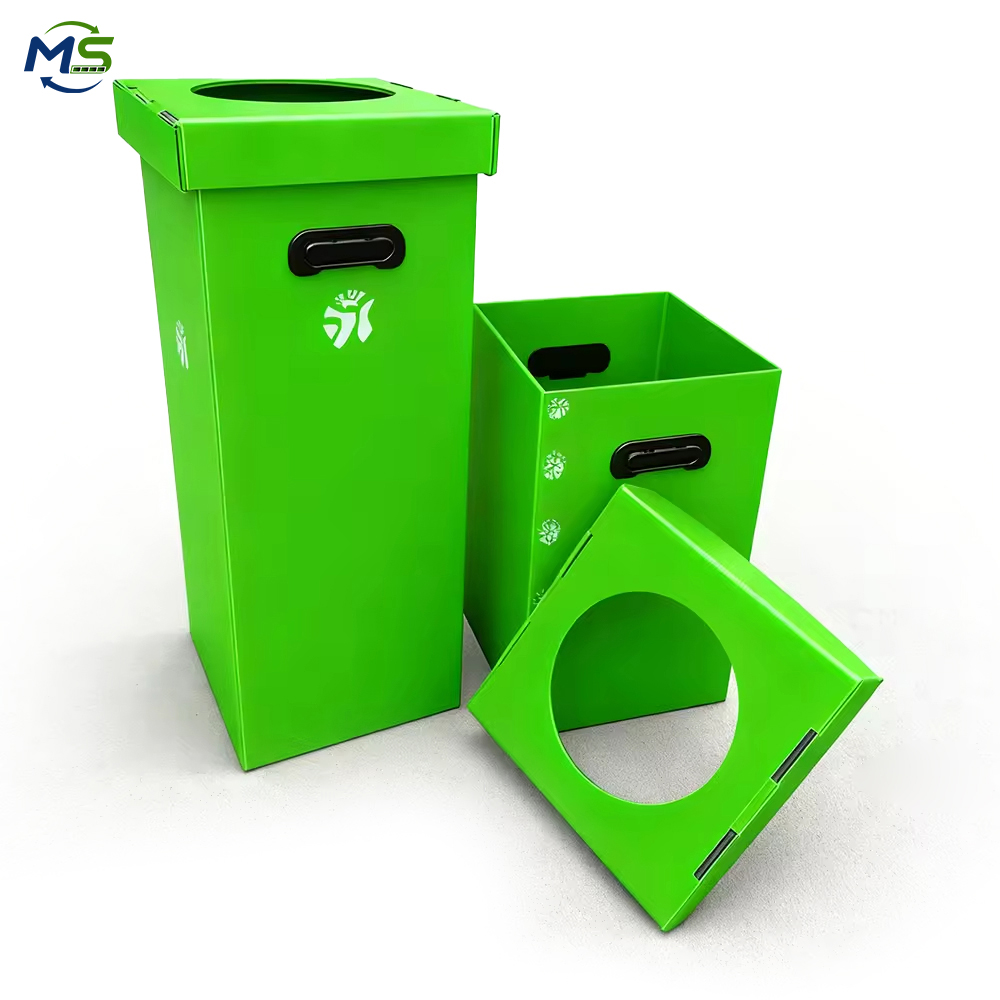
A barcode is read by measuring the widths of dark and light bars. That measurement assumes the bars are on a flat plane perpendicular to the reader. Where the surface curves, the bars are foreshortened at the edges and the widths are no longer what the decoder expects. Where the surface bows under load, the same thing happens while the box is full and recovers when it is empty. Both produce intermittent read failures that look like a scanner problem and are a surface problem.
How much curvature is too much
A gentle curve over the width of a symbol is tolerable; most decoders cope with a few degrees. What they do not cope with is a curve that changes as the load changes, because then the symbol that read yesterday does not read today. A box wall that bows outward when loaded is the classic case, and it produces a read rate that is good on empty boxes and poor on full ones – which is exactly the wrong way round, since full boxes are the ones that matter.
Finding a flat area
Most containers have flat regions even when the overall shape is not: a recessed panel, an area between ribs, a section of the rim. A label sized to fit within the flat region reads reliably even on a curved box. The mistake is sizing the label to the available visual space rather than to the available flat space, and it is the most common cause of a container fleet that scans at ninety-five per cent instead of ninety-nine point nine.
Quiet zone and where it gets eaten
Every symbology requires a clear margin around the symbol. On a container that margin is frequently consumed by something else: a rib that runs through it, a handle that overlaps it, a second label placed next to it, or the edge of the box itself. Where a symbol reads on the bench and fails on the line, the quiet zone is the first thing to check, and it is usually being infringed by a feature of the box rather than by another label. The full order of checks is in why scanners miss boxes.
Contrast and the colour of the container
A red-bar reader needs a large difference in reflectance at its wavelength; a camera-based reader needs luminance contrast. A dark container with a dark mark fails the second test, and a red container with a red mark fails the first. Where containers are coloured for identification – which is useful and worth keeping – the label has to be chosen for contrast against that specific colour, and a label that works on a grey box may fail on a blue one.
Print method and the surface energy of PP
Polypropylene has low surface energy and adhesives do not bond to it well without treatment. A label applied to untreated PP can lift at the edges within weeks, and a lifted edge is both a read problem and a snag problem on a conveyor. Where labels are applied to PP containers, either the surface is treated, or the label is specified for low-energy surfaces, or the container is supplied with a label area that has been prepared. All three work; ignoring the issue does not. The wear question continues in label wear and scan read rates.
Where to place it for a fixed reader
A fixed reader sees a band of space at a particular height as the box passes. The symbol has to be inside that band, on the face that passes the reader, with its bars oriented correctly relative to the scan line. Where boxes can arrive in two orientations, either the symbol goes on two faces or the line has to orient them. This is the same decision as in which face carries the identification, and it should be made with the reader’s mounting position in front of you.
Testing before committing
Take twenty boxes, half loaded and half empty, and run them past the actual reader at the actual line speed. Count the reads. A rate below ninety-nine per cent on new boxes will be worse after a year of handling, and the gap between the bench test and the line test is where most barcode projects are decided. Send us the symbology and the reader geometry and we will specify a flat label area that suits it.