
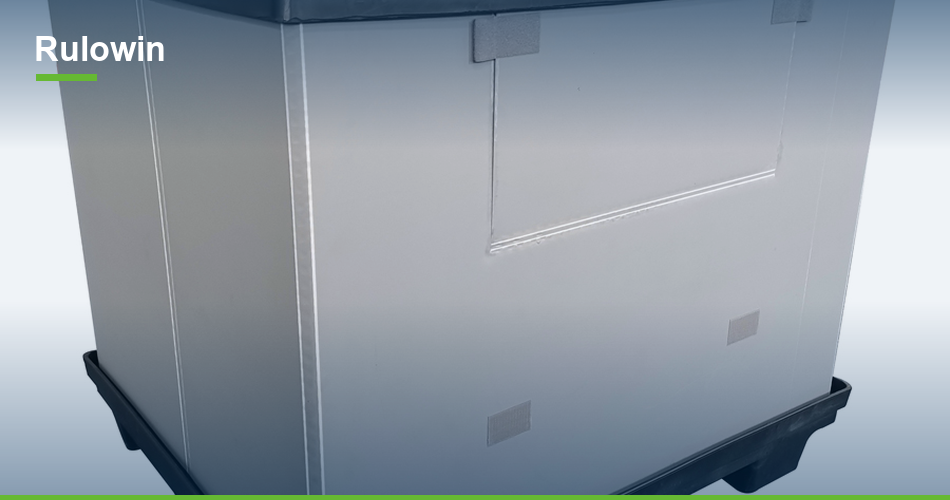
A polypropylene container cannot corrode, and yet containers come back from service with orange staining on the base and the lower walls. The staining is from the contents, not from the container, and it raises two separate questions: whether the container is still serviceable, and whether it is clean enough for what goes in next. Those have different answers and they are usually conflated.
Where the stain comes from
From parts that were rusting when they went in, or that rusted during the trip. The loose oxide transfers to the container surface, and where moisture is present it stains into the texture of the plastic. A stain on the base is from parts resting on it; a streak down a wall is from water carrying oxide downwards. Neither indicates any degradation of the container.
Does it indicate damage
Almost never. Rust staining on polypropylene is surface contamination, and the material underneath is unaffected. Where a container is being assessed for serviceability, staining alone is not a reason to retire it – the checks that matter are structural, and they are described in the damage modes that end a container. Retiring stained-but-sound containers is a common and expensive error.
Does it matter for the next load
Sometimes. Where the next load is sensitive to contamination – a clean assembly, a food-contact application, a painted or plated part – residual oxide is a real problem. Where the next load is raw steel going into further processing, it is irrelevant. The decision is per application, and a fleet that serves several applications needs a rule about which containers go where rather than a blanket standard.
How it comes off
Most of it comes off with detergent and water. What remains in surface texture usually responds to a mild acid cleaner – the sort sold for removing rust staining – and that is safe on polypropylene at the dilutions supplied. Abrasive cleaning removes the stain and the surface texture with it, which makes the container harder to clean next time, so it is worth avoiding as a routine method.
Preventing it rather than cleaning it
Dry the parts before they go in, and separate the container fleet by application so that containers carrying rusty raw material do not also carry finished parts. Both are process measures rather than container measures, and both are cheaper than a cleaning operation. Where a container has to carry both, a liner or a tray keeps the container itself clean.
Colour choice, and why grey is popular
A light grey or mid-grey container shows staining less than a white one and more than a dark one, and it hides neither damage nor contamination entirely. A white container shows every stain and every scuff, which is a genuine drawback in a dirty application and a genuine advantage where cleanliness has to be demonstrated to an auditor. The choice should follow the application rather than the availability.
What to write into the inspection rule
Separate appearance from structure. A container with rust staining and no structural damage is serviceable for the same duty and not serviceable for a cleanliness-critical one. A rule that says so, with the two applications named, prevents both the waste of retiring sound containers and the risk of using a stained one where it matters.
When staining is a warning sign
Where containers come back stained consistently, the load is corroding in transit, and the staining is the visible evidence of a problem that is also affecting the parts. That is worth investigating as a moisture problem rather than as a cleaning one – the container is reporting the fault, not causing it.