
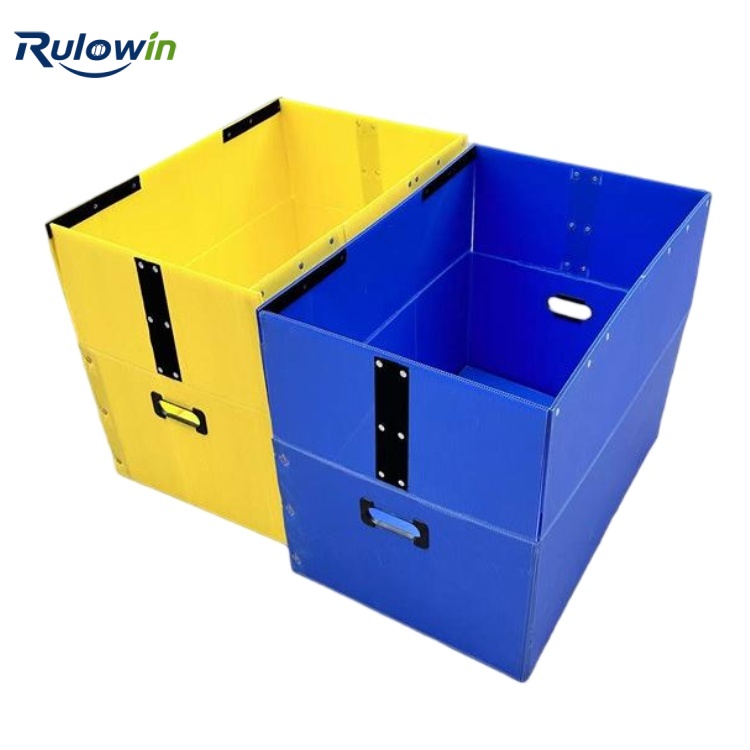
Order picking puts a variable number of lines into a container, and the container has to suit the distribution rather than the average. Too small and large orders need two containers, which creates a consolidation problem and a matching problem at packing. Too large and small orders travel in mostly-empty containers, which wastes transport volume and makes the contents rattle. The right answer is usually two sizes, not one.
The distribution, not the average
Order line counts are skewed: most orders are small and a few are very large. A container sized for the mean will be too small for the tail and too large for the bulk. Where the fleet has one size, the tail causes the problems – split orders, extra containers, consolidation errors – and the bulk causes the waste. Two sizes, one for the bulk of the distribution and one for the tail, handles both and is the standard resolution.
What splitting an order costs
An order that does not fit one container becomes two containers that have to travel together, be packed together and be identified as one order. That is a consolidation step, a matching risk and a labelling problem, and it happens for exactly the orders that are most valuable. Where a fleet is sized so the ninety-fifth percentile fits, the split rate falls to a level that can be handled as an exception rather than as routine.
Volume versus line count
Orders vary in line count and in volume, and they do not vary together – an order with many lines can be small in volume and one with few lines can be bulky. A container sized by volume will be wrong for line count, and a container divided for many lines will be wrong for bulky items. Where both vary, the fleet usually needs a compartmentalised container for the many-line-small-volume case and an open one for the bulky case.
Compartments and when they earn their keep
A divided container keeps lines separate, which removes the need for bagging and speeds up packing. It costs capacity, because the dividers take space and because lines rarely fill their compartment exactly. Where the average line is small and the line count is high, compartments pay for themselves. Where lines are bulky, they cost more than they save. The calculation is per operation, and it is worth doing rather than assuming. More on this in kitting box compartment design.
How the picker carries it
A picking container is carried, pushed on a cart, or conveyed. A container sized for the order may be too heavy or too awkward to carry when full, which slows the picker and creates a manual handling issue. Weight, not just volume, caps the useful size, and on a pick-by-foot operation that cap is lower than any volume constraint. Where pickers carry containers, the empty weight matters as much as the capacity, because it is carried either way.
Standardising the footprint across sizes
Two sizes that share a footprint work on the same cart, the same conveyor and the same rack position. Two sizes that do not share one force the operation to handle both geometries, which costs time at every station. Where a second size is needed, deriving it from the first by changing height rather than footprint is almost always the better choice, and it costs very little in flexibility.
What to measure
The line count distribution and the volume distribution, separately, over a representative month – including the tail. A fleet specified from those two distributions fits the work; one specified from the mean fits nothing in particular. Where the distributions are not known, a week of recording order sizes at the pick face is enough to establish them, and it is the best-spent week in the project.