
The cheapest point at which to find out that a box does not palletise well is before the box exists. That sounds obvious and is routinely ignored, because the pattern is drawn after the size is fixed rather than before. Reversing the order costs an hour and removes the most expensive class of packaging error.
What to draw
The pallet footprint to scale, with the deck boards and their gaps. The usable internal height of the vehicle. And the box footprint, placed in both orientations. Three drawings, none of them detailed, and the pattern falls out of them.
What to test
How many boxes fit across and deep. What the leftover strip is on each axis. Whether the stack height lands inside the vehicle with room to load. And whether a part pallet – the usual case – packs as well as a full one. Four questions, all answered from the drawing.
Beyond the rectangle
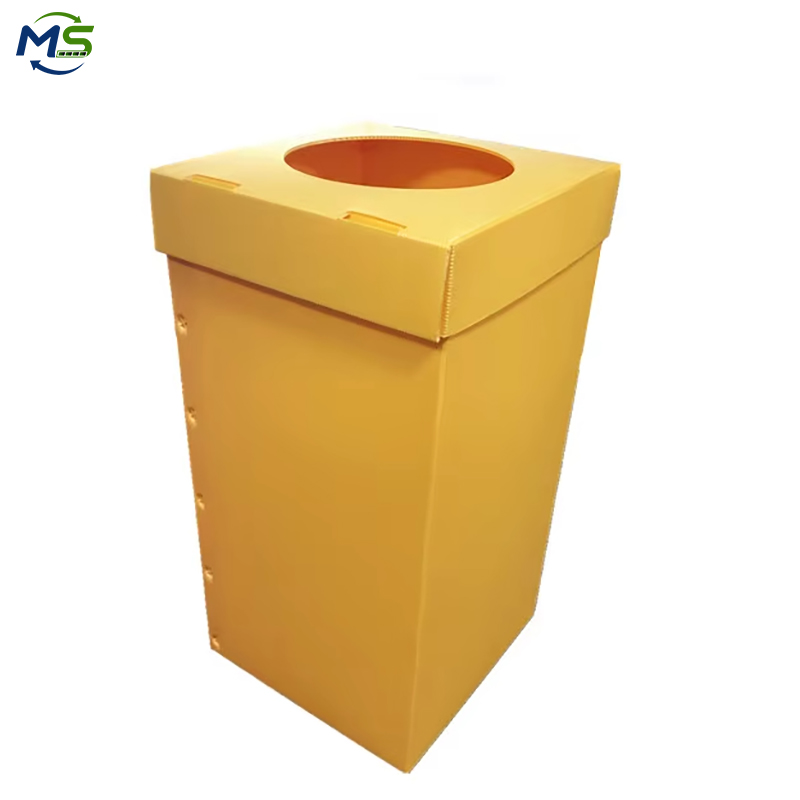
Real boxes have features that break the rectangle: handles, latches, reinforced corners, a lid overhang. Where the pattern depends on boxes sitting flush, those features have to be on the drawing. Where they are not, the plan is optimistic by the width of the feature.
The mixed-load version
Where one pallet carries several part numbers, draw a layer diagram with the part number in each position, and check it against the unload sequence. A pattern that packs well and unloads badly is not an improvement, whatever the utilisation figure says.
What to record
The chosen footprint, the integers on each pallet format, the layer count and the stack height. One page, kept with the box drawing. Where the part or the pallet changes, that page is where the check starts.
What to check physically
Build one pallet to the plan and measure it. Drawings miss the spring in a folded panel, the thickness of a seam and the way a packer actually places a box. One physical pallet catches all three, and it is faster than a second round of drawing.
What the drawing will not tell you
A drawing shows nominal geometry. It does not show the spring in a folded panel, the thickness added by a seam where two panels overlap, or the way a packer actually places a box when the line is running. All three change the real outer dimension, and only one of them appears on the drawing.
Which is why the model should be checked against one physical pallet. Build it, measure it, and correct the drawing from the measurement rather than the other way round. One pallet is enough, and it is faster than a second round of drawing.
Turning it into a specification
The output of the exercise is the four numbers the rest of the fleet depends on: outer length, outer width, outer height, and the maximum tolerance on each. Those go into the enquiry, into the drawing, and into the acceptance check. Everything else can be developed later; the envelope cannot, because it is what the freight is priced on.
What to do with the model afterwards
Keep it with the box drawing and reissue it when the part, the box or the pallet changes. A model that is not maintained becomes a second, wrong specification – which is worse than none, because it looks authoritative.
Then check it physically once. Build one pallet to the plan, measure it, and correct the drawing from the measurement. One pallet catches the spring in a folded panel, the thickness of a seam and the way a packer actually places a box.
What we can do
We build PP corrugated turnover boxes and will draw the load plan for your pallet formats before a size is fixed. Send us the part and the lane. What the model needs to be checked against is drop and vibration testing a loaded box.