
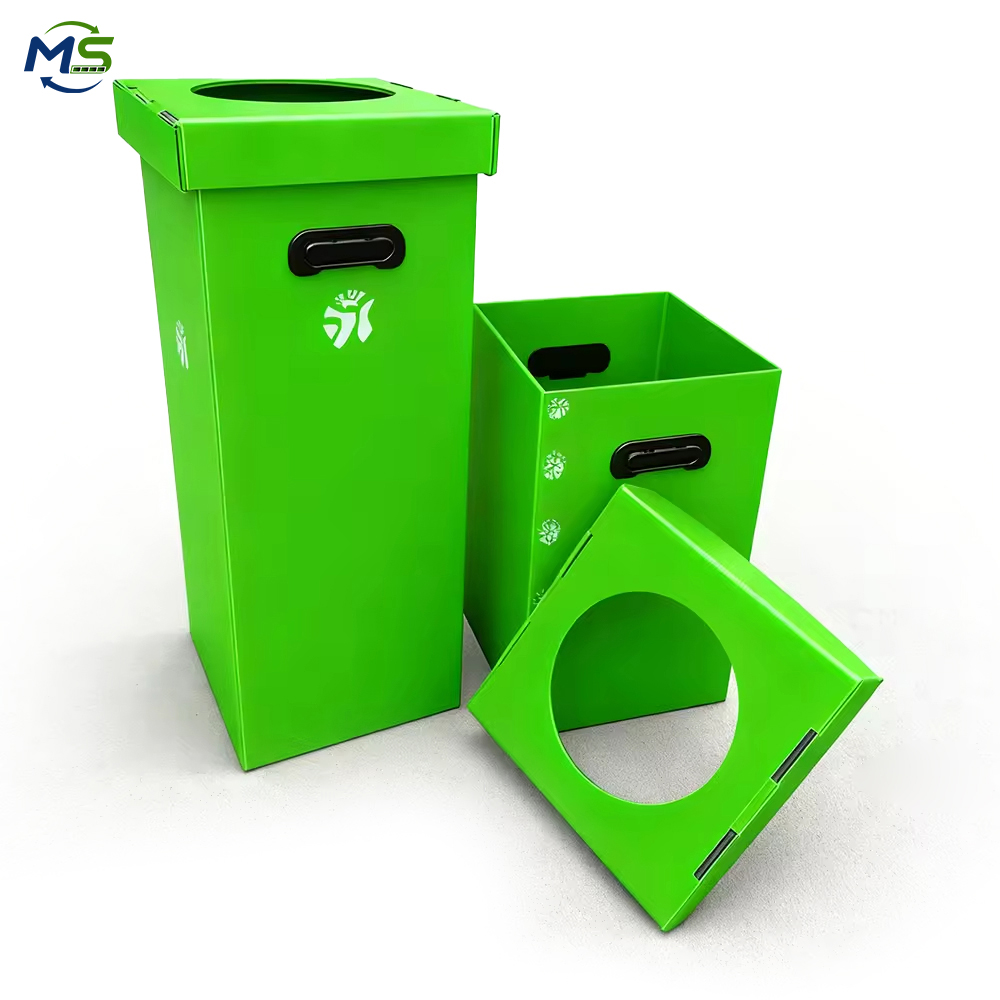
The default advice is to standardise box footprints so they tile the pallet, and it is good advice for the majority of parts. It is bad advice for a specific and common category: parts that are long, flat, or awkwardly shaped, where a pallet-friendly box carries a lot of air and the trailer fills up with nothing.
When standard footprints waste money
A 600 mm shaft in a 600 x 400 box fits diagonally and wastes most of the volume. Twenty of them in a standard-size box fleet is a trailer half full. The same applies to flat panels, extrusions, hose coils and anything with one dimension much larger than the other two. For these, a bespoke footprint carries more parts per pallet and per trailer, and the pallet penalty is smaller than the volume gain.
The calculation
Two numbers: parts per pallet with the standard box, and parts per pallet with the bespoke one. Multiply the difference by annual movements and by cost per pallet movement. Against that, set the cost of a non-standard box – higher unit price, no inter-changeability with the rest of the fleet, and a second size to manage. For high-volume awkward parts, the bespoke box wins comfortably; for low-volume ones it rarely does.
Manage it as a controlled exception
The risk of bespoke sizes is proliferation: one becomes four and the fleet becomes unmanageable. Keep it to a rule – one bespoke size per genuinely awkward part family, reviewed annually, identified by colour so it cannot be confused with the standard boxes. If a bespoke box is not carrying at least an order of magnitude more volume than the standard alternative, it is not earning its place. The starting point either way is knowing what the box is actually used for. The starting point either way is knowing what the box is actually used for.
Where the standard box is still right
If the part fits a standard footprint with reasonable fill, use the standard box. Interchangeability is worth a lot: any box works at any station, empties are fungible, and the fleet can be rebalanced between lines without a planning exercise. Standardisation is a real operational benefit that does not appear in a volume calculation, and it is worth giving up only when the volume difference is large.
Interchangeability is worth real money
The case for bespoke sizing is a volume calculation and it is usually right on its own terms. What it omits is the operational value of every box being the same: any box works at any station, empties can be rebalanced between lines without planning, a shortage in one area can be covered from another, and the store only manages one item. That value does not appear in a parts-per-pallet comparison and it is large.
The way to have both is to keep the standard box for everything that fits it reasonably and to allow one, or at most two, bespoke sizes for parts where the volume difference is extreme. Colour the bespoke sizes differently so they cannot migrate into the standard fleet. Review them annually against the volume they actually carry, and withdraw any that is not earning its place. A bespoke size that was justified by a projected volume that never materialised is a permanent drag on the fleet.
The awkward-part categories worth a bespoke size
Three categories consistently justify a bespoke footprint. Long parts – extrusions, shafts, ducting – where a standard box carries the part diagonally and wastes most of its volume. Flat parts – panels, sheet, trim – where a standard box is mostly air above the stack. And coil or loop products – hose, cable on a small drum, wound material – where the natural shape is a cylinder and a rectangular box always wastes the corners.
In each case the test is the same: parts per pallet with the standard box against parts per pallet with the bespoke one, at realistic volumes. A two-to-one improvement justifies a bespoke size. Anything less usually does not, once the loss of interchangeability is counted. Where a bespoke size is justified, make it fold-flat or nestable if at all possible, because the empty return on a large bespoke box is otherwise disproportionately expensive.
What we can do
We make PP corrugated turnover boxes to standard footprints and to bespoke ones, and we will run the parts-per-pallet comparison before recommending either. Send us the part envelope and annual volume and we will tell you whether the part should win – including when it should not.