
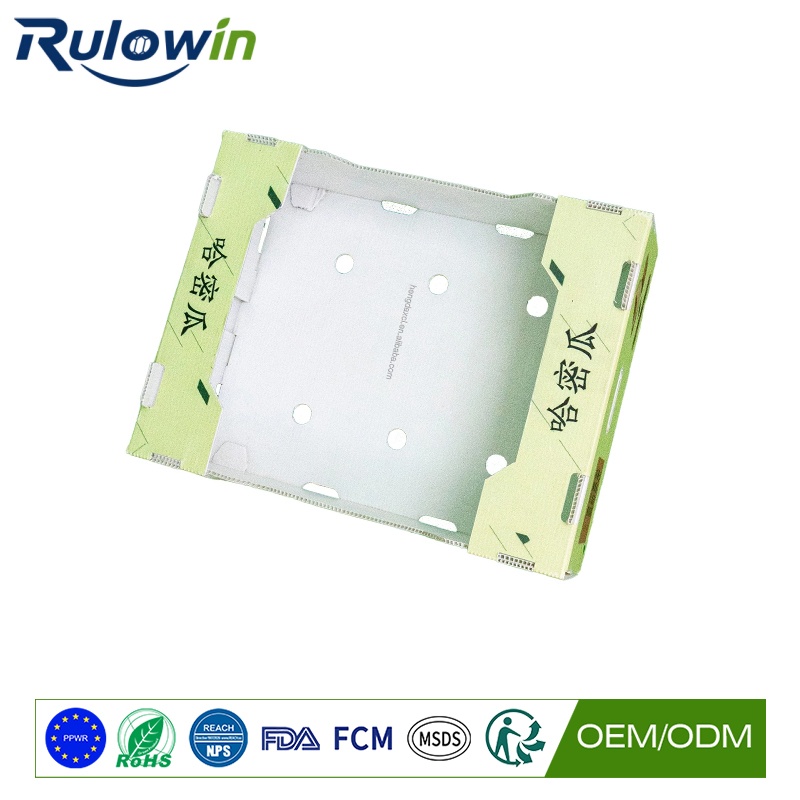
A crate loop works beautifully when the grower and the distribution centre are an hour apart and the same trucks run both ways. It works much less well when the produce travels eight hours and the return has to be arranged separately. Distance is the variable that decides whether a returnable scheme is viable, and it is worth running the number rather than assuming.
What distance does to the loop
It adds an empty leg that cannot share a vehicle with a loaded one. It lengthens the cycle time, which increases the fleet size needed for the same throughput. And it increases the loss rate, because the further a crate travels from the owner the more hands it passes through and the more opportunities there are for it not to come back. All three costs scale with distance, and none of them are obvious at the start.
Fleet size scales with cycle time
The working fleet has to cover every crate that is out of the yard at any moment. Doubling the round trip roughly doubles the crates in transit, and the fleet has to grow to match. On a long loop that can be the difference between a fleet of three thousand and a fleet of eight, and it is a capital cost that usually gets discovered after the order is placed. The sizing method is in working out crate fleet size for a season.
Consolidation points
The standard answer to distance is a consolidation point – a place near the retail end where crates are accumulated until there is a full load to send back. That converts many small, expensive returns into one cheap one. It needs a location, someone to manage it and an agreement about who pays, which is why consolidation usually happens through a pooling operator rather than being built by a single grower.
When pooling beats owning
On a long-distance, multi-party loop, a pooled fleet run by a third party is usually cheaper than owning, because the pool operator already has the consolidation points, the wash sites and the tracking. The crate costs more per trip and the logistics cost substantially less. For a grower whose crates are going to several retailers in different regions, that trade is usually worth making. The comparison is set out in pooled produce crate systems versus owning your own.
When distance does not matter
When the return carries something. A loop where the vehicle that delivered produce brings back crates plus something else – packaging, inputs, another grower’s produce – has a shared cost and the distance argument weakens considerably. Finding a backhaul is the single highest-value thing a long-distance loop can do, and it is worth looking for before concluding the loop will not work.
The honest boundary
For a high-value crop with a long shelf life and a premium price, a long-distance returnable loop can still work because the packaging cost per unit is small relative to the value. For a low-value, high-volume crop moved a long way, single-use often wins and it is better to say so. The calculation is not complicated, it just has to be done with real numbers.
What we can do
We supply produce crates for both owned and pooled fleets, and we will help size a fleet against a realistic cycle time rather than a best case. Tell us the distances and the number of drop points.