
An audit is worth doing before a large or long-term order and unnecessary before a small one. What it tells you is not whether the factory is tidy – it is whether the product is consistent, and consistency is the thing that fails silently on site.
What to look at
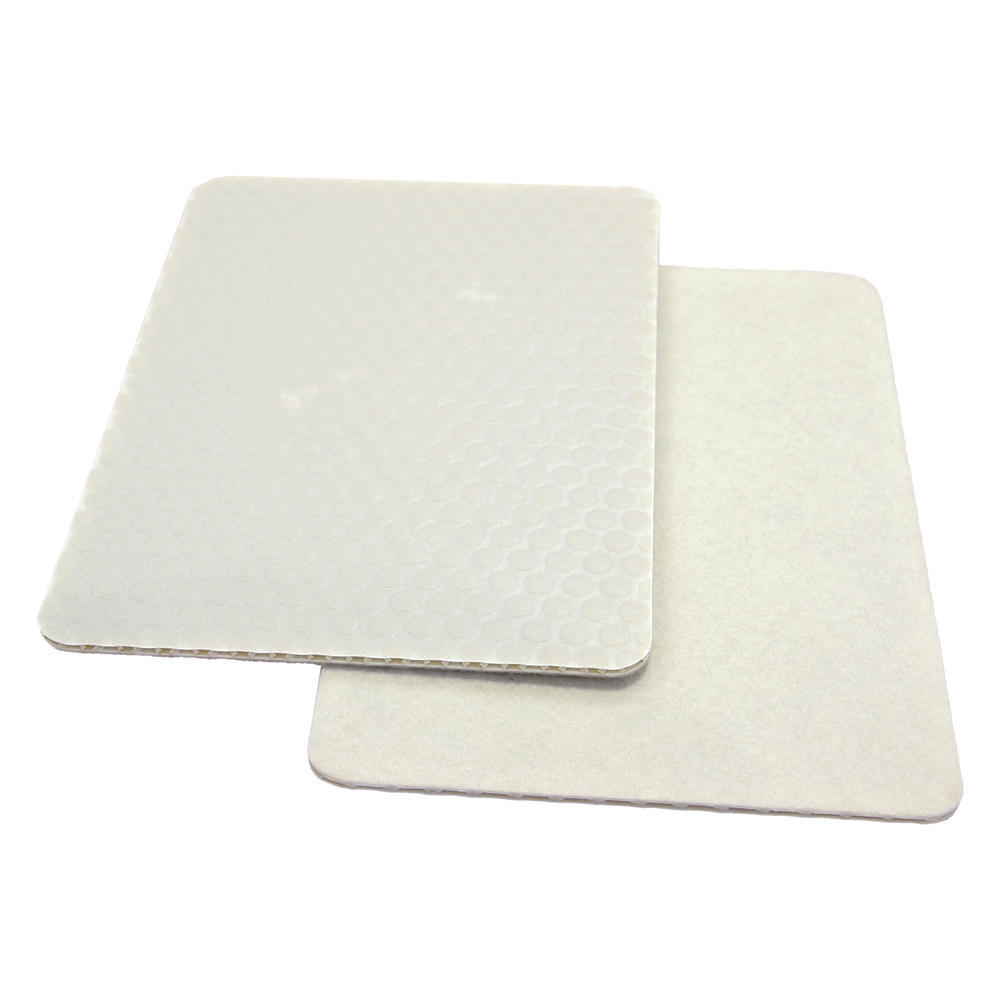
Three things. The cut edge: open a sample and look at whether the cells are consistent and whether the skin is properly bonded to the core. The face: whether it is a needled industrial felt or a lightweight decorative fleece, which determines how much grit it holds. And the flatness: lay a panel on a flat floor and see whether all four corners touch.
Consistency between batches
Ask how thickness and weight per square metre are controlled and what the tolerance is, and ask to see records. A factory that measures and records will show you happily; one that does not will talk about experience. The difference shows up on site as panels that do not butt properly.
Capability questions
What grades can they actually make, as opposed to what is on the website. Can they weld edges, cut to drawing, print, and hold stock? Where a specialist grade is outsourced, ask who makes it – that is where the lead time and the consistency risk sit.
Traceability
Where does the polymer come from, and is recycled content certified if it is claimed? For ESG reporting this matters more than anything else on the visit, and it is the item most factories are least prepared for.
When to skip it
For a small order, for a stock grade, and where the supplier has a track record with you. An audit is for large volumes, long frameworks and specialist grades – not for a one-off purchase of a standard board.
What to ask about the felt face
How much it weighs per square metre and how it is bonded. A needled industrial felt bonded thermally behaves completely differently from a lightweight fleece stuck on with adhesive, and the two look similar in a sample book. Ask for the number rather than the description, and check whether the bond survives washing.
What to look at on the floor, not in the meeting room
Certificates tell you a factory passed an audit once. The floor tells you what happens on a normal Tuesday. Three things are worth ten minutes each: the edge of a freshly cut panel, the storage area for finished goods, and the regrind bin.
Sealed edges on a sample that has been handled a few times show whether sealing is done properly or rushed. If cut edges are open, water gets into the flutes and the panel softens from the inside – you will see it as a bulge months later, not at delivery. Finished goods stored flat and under cover is the second tell; panels stacked on their ends or left in the sun arrive curved. The regrind bin is the third: if off-cuts from production go straight back into the melt without being washed, contamination shows up as black specks in the sheet. Ask what percentage of regrind goes into a structural panel – a small amount is normal, a large amount is a strength problem. The specification question is covered in what to put in a protection panel specification.
What we can do
We supply PP honeycomb protection board and welcome factory audits on larger orders. Tell us the volume and what you need to verify, and we will show you the process rather than a presentation. Incoming checks are listed in incoming inspection for PP honeycomb panels.