
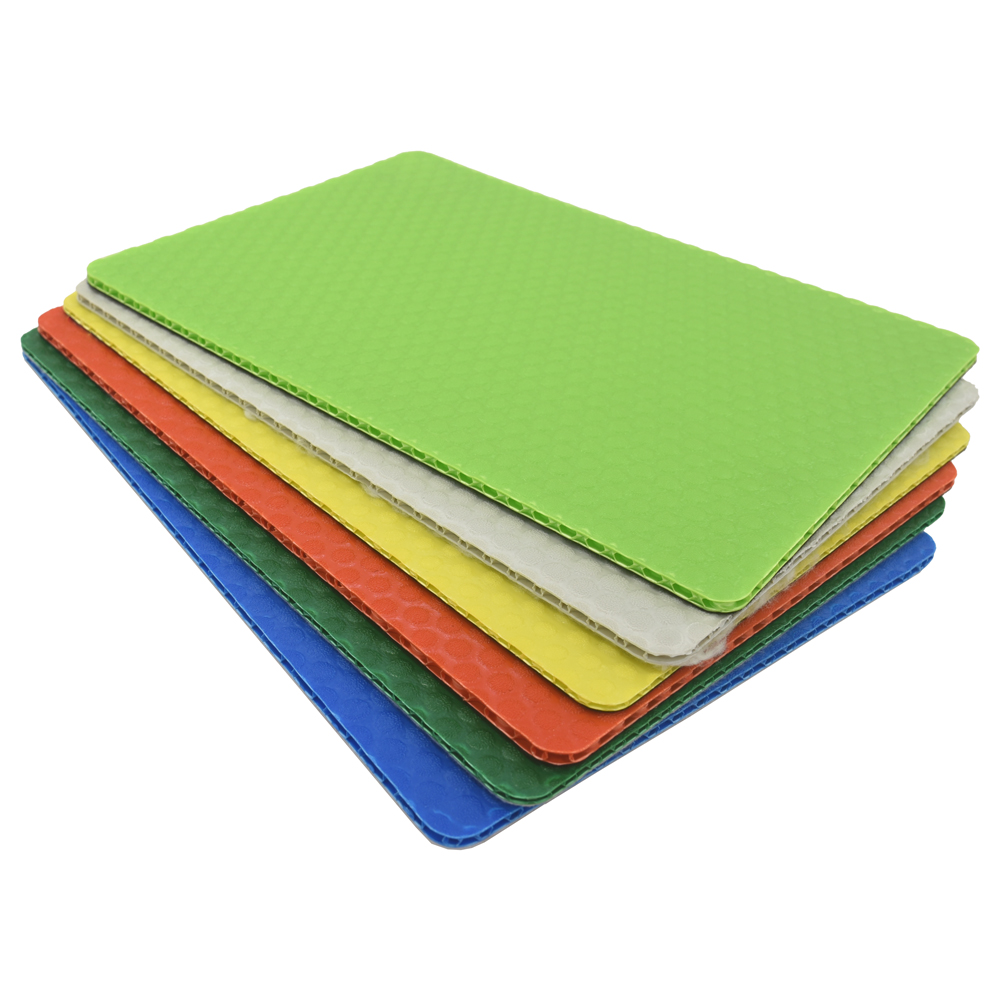
Plywood is the traditional answer for heavy-duty temporary floor protection and it still gets specified, usually by people who have used it for twenty years. It is genuinely stiff and genuinely strong. It is also four to five times the weight of a honeycomb board of the same size, and that difference decides the argument on most jobs.
Where plywood wins
Raw stiffness and puncture resistance. A sheet of 18 mm ply will take a point load that would damage most protection board, and it will not be punctured by anything short of something sharp and deliberate. Where the requirement is a temporary roadway over soft ground or protection against very heavy plant, plywood or a purpose-made mat is the right answer and board is not.
Where the weight costs more
A 1200 x 2400 sheet of 18 mm ply weighs in the region of 25 kilograms and needs two people. That means laying is a two-op job, moving panels between phases needs planning, and in practice the protection gets laid once and left – which is exactly when it stops protecting the areas that change. Weight also brings a manual handling cost that is real on a repetitive job.
Water and reuse
Plywood absorbs water at its edges, swells, and does not recover. It is effectively single-use on any job with wet trades. A polypropylene board does not absorb and can be washed and re-laid. On a programme longer than a few weeks that difference alone pays for the more expensive product.
Splinters and debris
Worn plywood produces splinters and its edges break up, and the debris is sharp. On a finished floor that debris is itself a hazard. Board wears differently – it does not splinter, and when it is damaged it is usually visible and obvious rather than progressive.
Choosing
Ask two questions: does the protection have to move, and will it get wet? If either answer is yes, board wins. If both are no and the loads are extreme, plywood is still a reasonable choice and cheaper to buy.
Cost per use, which is the fair comparison
Plywood is cheaper to buy and usually single-use on a site because it absorbs water and its edges break up. Board costs more and lasts several phases. Comparing purchase prices is misleading; comparing cost per use is not, and on anything beyond a single short phase the board wins comfortably. The arithmetic is set out in cost per square metre per month for floor protection.
Where plywood is genuinely better, and where it is not
Plywood is stiff, holds a screw, and spreads a heavy point load well. If you are protecting a floor under tracked plant or a static machine on legs, plywood is the right answer and a honeycomb panel is not. That is the honest boundary.
Everywhere else, plywood loses on weight, moisture and grip. A 2440 x 1220 sheet of 18 mm plywood is a two-person carry and a back injury risk on stairs; it swells when wet and its edges splinter; and its surface is slippery when wet, which matters at entrances. PP honeycomb panel is a one-person carry, does not take up water, and can be specified with a felt face for grip or a studded face for drainage. Where the requirement is a walkway rather than a plant base, the weight difference alone decides it. The commercial comparison over time is in cost per square metre per month for floor protection.
What we can do
We supply PP honeycomb protection board for heavy routes and will say plainly where plywood is the better answer. Tell us the load, the route and whether the panels have to move, and we will recommend one or the other. Load spreading is explained in dropped tools and dented floors.