
Protection is specified for a programme, and programmes slip. A cover that was going to be down for six weeks ends up down for six months, and somewhere past three months the failure modes change from the ones everybody plans for to ones nobody thought about.
Adhesive keeps bonding
Tape and adhesive residues get harder to remove with time, not easier. A low-tack tape rated for 60 days will come off cleanly at 60 days and take the finish with it at 180. If a job overruns, the taped areas are the first thing to check and the first thing to deal with – and they should be re-taped rather than left, because the clock restarted months ago.
Condensation and the outline mark
A cover over a floor in a building that is drying out or heating up produces condensation, and over months that leaves an outline – a visible difference between the covered and uncovered areas, or a bloom on stone and some coatings. It is not always permanent but it is always a handover conversation. Ventilating under the cover periodically is the prevention.
Colour difference from light
Timber, vinyl and some coatings change colour with light exposure. Cover part of a floor for six months and the covered area can be visibly different from the rest. This is a real risk on timber in a sunny room, and the mitigation is to move the cover periodically or to accept it and manage the client’s expectation early.
The face has stopped protecting
A fibrous face loaded with grit stopped holding new grit weeks ago and has been grinding it into the floor ever since. That is the mechanism behind the floor that was protected throughout and still comes up dull. On a long programme the cover needs lifting and cleaning on a schedule, not at the end.
What to check before lifting
Lift one corner in a visible area a month before handover and look. If there is a mark, a colour difference or bonded adhesive, there is time to deal with it. If the first lift is on handover day, there is not. That single check is worth more than any specification detail.
Re-taping rather than leaving it
Where a programme has overrun, the right move is to lift the taped areas, clean them and re-tape rather than leave the original tape down. The clock on the adhesive restarted months ago and it will not come off cleanly. Re-taping costs an hour and it converts a certain handover problem into a non-event.
Insurance and notification
Where a programme has slipped far enough that damage is likely, tell the client and the insurer early rather than at handover. Late notification of a known risk is treated far worse than early notification of a possible one, and the difference in how the conversation goes is significant. Document the slip, the condition and what has been done about it.
Deciding whether to lift early
Sometimes the right call is to lift protection in the low-risk areas early, accept a small amount of risk there, and keep it down only where the traffic is. That reduces the covered area, reduces the condensation and colour-difference exposure, and concentrates the protection where it is still doing something.
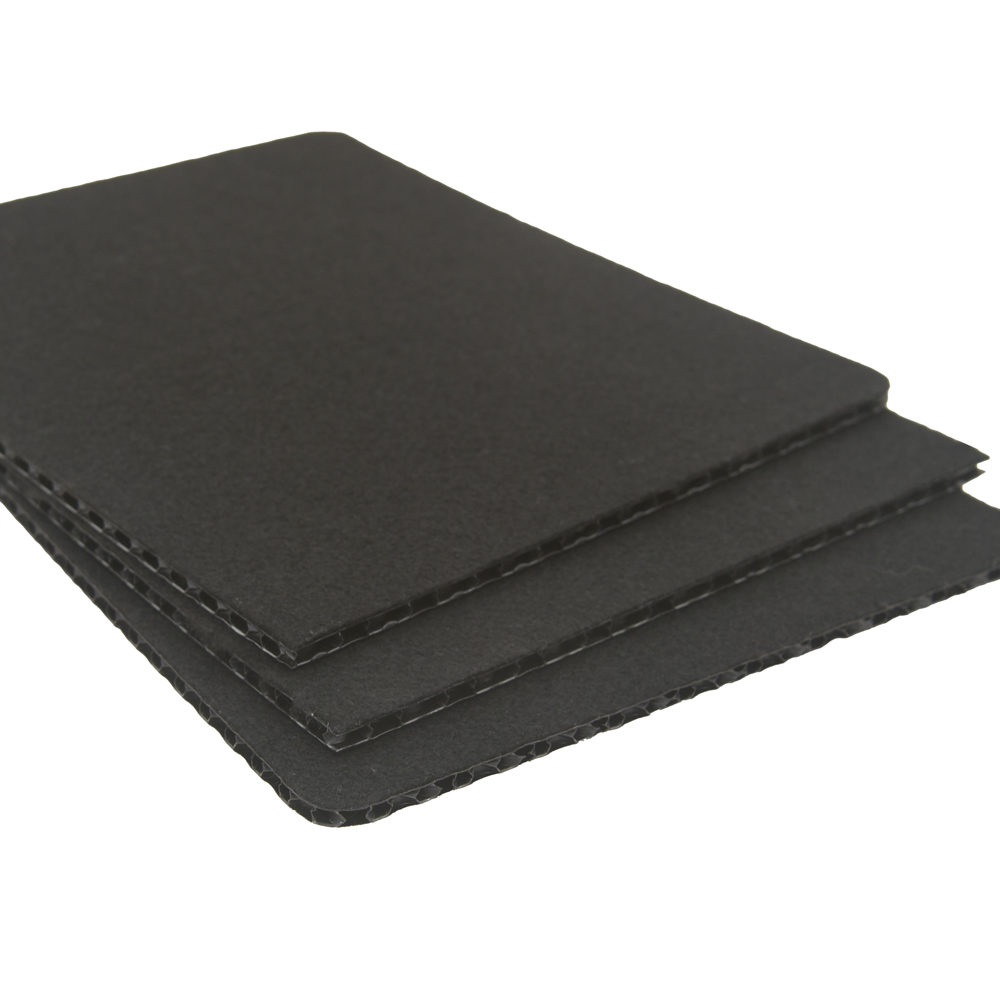
A PP honeycomb panel can be lifted, washed and put back, which is what makes a long overrun survivable; corrugated PP sheet is a single-use item and should have been replaced weeks ago. Getting it up without further damage is described in removing protection without damaging the floor below.
What we can do
We supply panels with a face that survives long programmes and we will ask how long the cover stays down before quoting – because it changes the specification. Tell us the real programme, including the likely slip, and we will specify for that rather than for the optimistic version.