
Protection in the middle of a run works. Protection at an edge is where problems start: it lifts, it trips people, it lets grit and water underneath, and it gets kicked out of position. The termination detail is the least glamorous part of a protection specification and it determines most of the outcome.
What goes wrong at an edge
Four things. The edge lifts because nothing holds it and traffic catches it. It becomes a trip lip, particularly where two covers meet. It funnels grit and water underneath, which is then ground into the floor along a line. And it gets kicked aside by anyone wheeling something across, after which the strip it was covering is bare.
Chamfer or ramp the edge
A tapered edge removes the trip risk and stops wheels catching. On a foot-traffic route, a shallow chamfer is enough; on a wheeled route, a proper ramp with a gradient a trolley will climb. The difference matters: a chamfer that is fine for boots will still stop a loaded trolley and get damaged doing it.
Hold it down
An edge that is stuck down at the perimeter, with the field laid loose inside it, stays put and can still be lifted for cleaning. Fixing every panel is slow and makes cleaning a chore; fixing nothing means the edges walk. Perimeter fixing is the compromise that actually works on site.
Where the edge should be
Not at the wall, if joinery work is happening – the perimeter strip is where the damage occurs. Not at the threshold, if anything with wheels crosses it. And not in the middle of a traffic line, where a joint across the route gets hit by every pass. Put the edges where nothing crosses them, which usually means along the traffic rather than across it.
Where an edge is correct
In a room that is finished and closed, an edge at the door is fine – the door is the barrier. In a corridor with no traffic, a butt joint is fine. Overspecifying edge treatment everywhere is wasted cost; the edges that matter are the ones that get crossed.
Kick rails and why a fixed edge survives
Where a run ends in a traffic route, a kick rail – a fixed upstand at the edge – stops both wheels and boots from lifting it. It is a standard detail on temporary flooring and it is almost never used on floor protection, where the edge is simply expected to stay put. On a route that gets crossed repeatedly, it is the difference between a run that survives and one that gets relaid weekly.
Edges at changes of material
Where two floor finishes meet, the junction is both a movement line and a visual one, and an edge stopped there will be seen. Run the cover across the junction and terminate on one side of it rather than at the line – it avoids a trip edge exactly where people are looking and it protects the junction itself.
Where an edge is unavoidable
In a corridor that stays in use, one edge has to remain live while the rest is lifted and cleaned. A chamfered edge, taped down, is the answer for that period, and it needs checking daily because it is the one edge that traffic is crossing deliberately.
What we can do
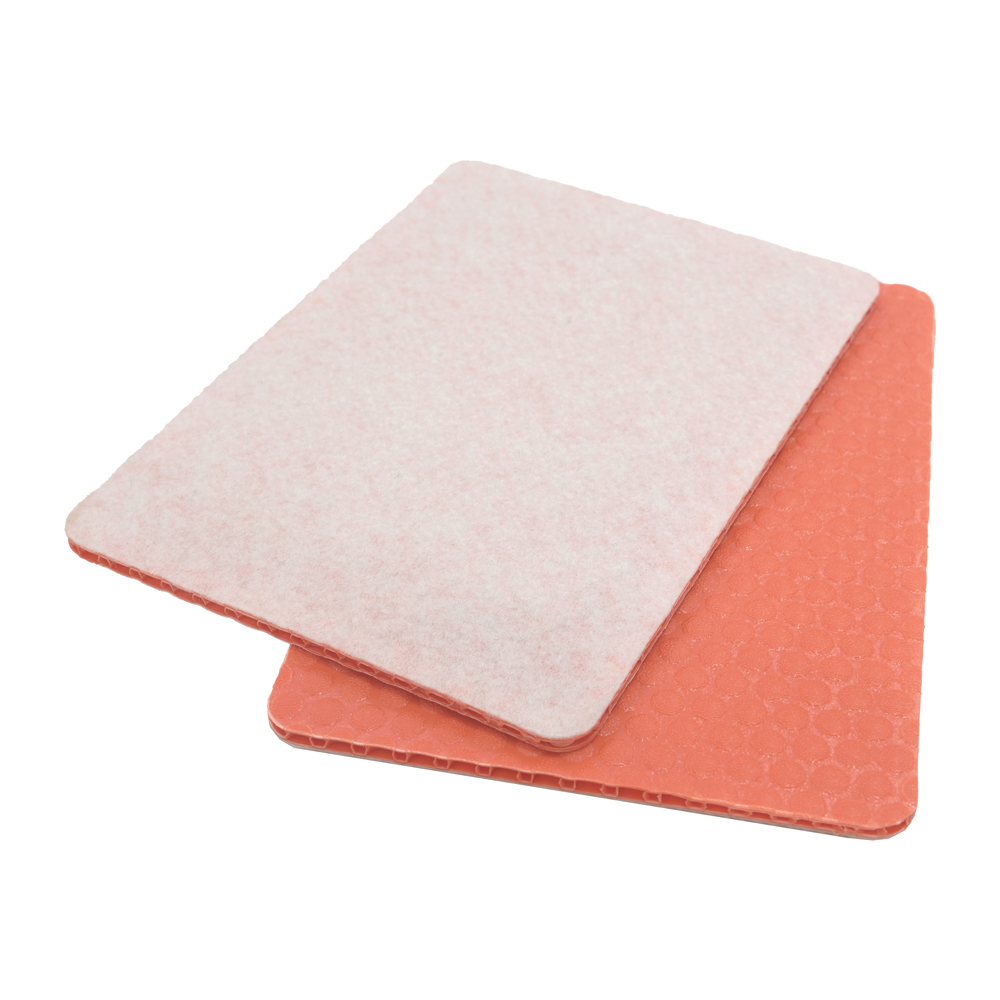
We supply honeycomb panels with a chamfered edge and separate ramped edge trims for wheeled routes. Tell us where the runs stop and what crosses them, and we will specify the termination per edge rather than leaving it to whoever lays it. Joint behaviour is covered in floor panel joints that are not trip hazards.