
School work is compressed into holiday windows, which changes the protection requirement in a way nothing else does. The programme is short and unforgiving, the building has very long corridors and a lot of furniture to move, and there is a fixed date when the floor has to be perfect and the protection gone.
Short programme, heavy traffic
Six weeks of a summer holiday carries the traffic of three months of a normal job, in corridors that are long, narrow and full of people moving furniture. Abrasion is the dominant mechanism and it happens fast: a corridor floor can go from clean to visibly dull in a fortnight of desk-moving. The protection has to be laid on day one, not in week two when somebody notices.
Furniture is the destructive part
School furniture is heavy, metal-legged and gets dragged rather than carried. Metal legs on a polymer panel cut rather than roll, and dragging a desk across a corridor produces a scratch line that goes straight through a soft face. Either furniture gets lifted – which is slower – or the corridor route gets a harder wearing surface than the classrooms. Most schools end up needing both.
Corridor length and joint count
A long corridor is a lot of joints, and every joint is a place a trolley wheel catches and a place grit gets through. Using the largest panel size that can be handled through the doors reduces the joint count, and on a school corridor that is usually worth the awkwardness of the bigger panel. It also lays faster, which matters on a six-week programme.
The fixed end date
Everything has to be up, cleaned and out before the term starts, and the floor has to be clean under it. That argues for protection that lifts quickly and does not leave adhesive residue – and against anything taped down, because removing tape from a school corridor floor in the last two days is not a job anyone wants. Friction-held panels and a tapered edge are the practical answer.
Where protection is not needed at all
School floors are often being replaced or re-sealed during the holiday anyway. If the corridor is scheduled for a new finish in week four, protecting it in weeks one to three is wasted. Ask for the floor scope by area before ordering; it is usually mixed, and the order should be too.
The term-date handover
A school floor has to be clean, dry and safe on a fixed morning, and there is no flexibility. Work backwards from that date: removal and clean need two to three days, and the protection needs to be the kind that lifts quickly. Anything taped down is a risk on this programme, because tape removal is slow and it is the last thing anyone has time for.
The first day back
A school floor gets more wear in the first morning of term than in the previous six weeks: hundreds of children, some with grit on their shoes, all at once. It cannot be prevented and it should be planned for – a clean at the end of week one, and a realistic expectation about what the floor will look like by Christmas.
What to leave behind
Leaving a small stock of panels with the site team is worth doing, for the repairs and maintenance visits that happen during term. It costs very little and it means the next contractor to open the floor has something to protect it with rather than nothing.
The mechanism that dulls a corridor floor in a fortnight is explained in site grit is what scratches floors, not boots.
What we can do
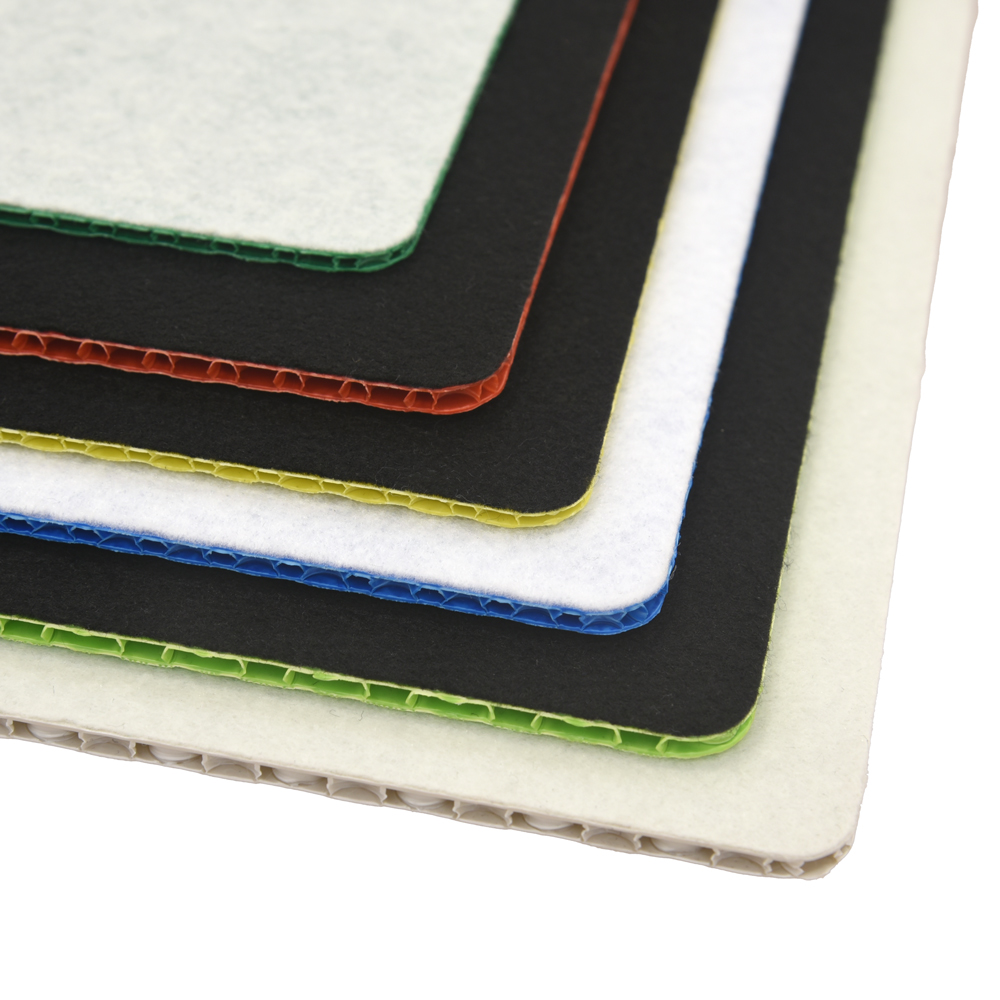
We supply honeycomb protection panels in the largest size that will go through a standard door, with a wearing face chosen for dragged furniture. Tell us the corridor lengths, what is being moved and how long the window is, and we will size the order and the layout.