
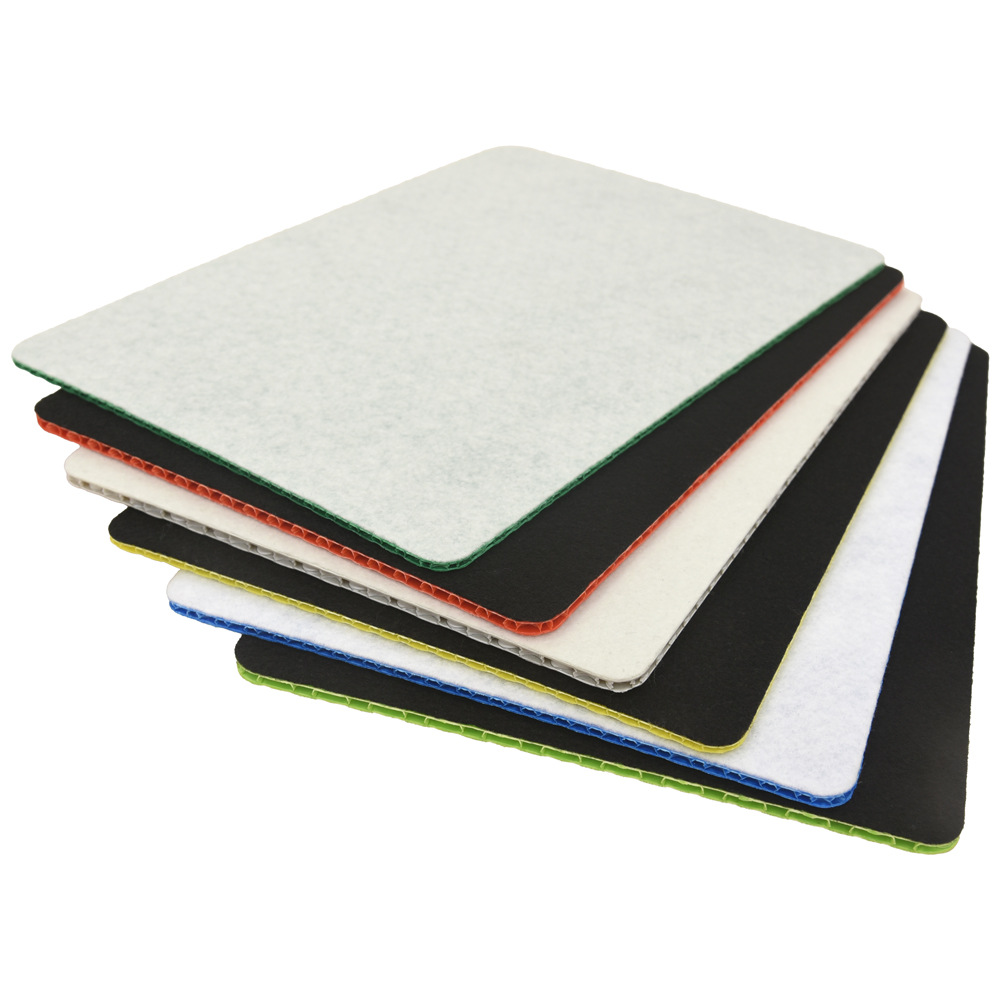
The skin peeling away from the core at a panel edge is familiar to anyone who has used honeycomb panels on site. Sometimes it is cosmetic, sometimes it means the panel has lost much of its stiffness at the point where loads concentrate. Deciding which is a five-minute assessment, and repairing the fixable ones is genuinely quick.
Why edges fail first
An edge has no adjacent material to share load with, and it is where impacts, trolley wheels and boot scrapes all land. Once the skin separates from the core locally, the panel can no longer transfer load through that region, so the delamination tends to extend with each subsequent impact. Left alone it usually gets worse; it rarely stays the same.
Cut it back and look
The standard repair starts by cutting back to sound material. Trim the affected edge square, inspect the exposed core, and check whether the core cells are crushed or contaminated with grit. Clean dry delamination with intact core repairs well. Crushed, wet or debris-filled core does not, and that panel should be downgraded rather than repaired.
Edge sealing as both repair and prevention
Re-sealing the trimmed edge restores stiffness at the boundary and prevents grit from getting back in – grit in the core accelerates future failure considerably. Options include an extruded edge profile, a welded fillet, or a bonded tape depending on the panel construction and how much handling it will see. Doing this at manufacture is far better than doing it after failure, which is why cut-to-size with sealed edges usually pays back over a couple of phases.
When welding is appropriate
Hot-air or hot-wedge welding works well on the same polymer family and gives a durable joint where the skin thickness allows it. It needs a competent operator and reasonable access. Where the repair is small and the panel will see light duty, a mechanical edge profile is usually faster and perfectly adequate.
Patch or downgrade
A repaired edge is rarely as strong as the original. Rather than returning it to heavy-duty service, downgrade repaired panels to lighter areas – storage routes, dry areas, low-traffic corridors. Keeping three grades on site rather than two avoids arguments about whether a repair is good enough.
Know when to stop
Repairing past roughly twenty per cent of an edge length, repairing the same panel repeatedly, or repairing at load-bearing points in a heavy route are all signs to write off. Skilled labour costs more than the replacement panel once you go past about fifteen minutes of work.
Prevent the next one
If recurring delamination shows up across many panels, it is a specification or handling problem rather than bad luck: panels too thin for the traffic, unprotected cut edges, or being dragged rather than lifted. We covered cutting and edging methods in cutting and edging honeycomb panels, and the inspection ideas in checking panels without specialist equipment transfer well.
Kit for a repair point
A repair station needs very little: a straight edge and marking tool, a cutting method appropriate to the panel, cleaning materials, the chosen edge treatment, and somewhere flat to work. Setting it up at a fixed location rather than improvising per repair roughly halves the time each one takes.
Keep repaired panels physically separated from new and from scrap, even if only by a marked area on the floor. Repairs are only economical if someone can find them later, and mixed stacks mean everyone picks the panel nearest the door.
What we can do
We supply honeycomb protection panels with factory sealed edges and can supply replacement panels cut to match previous orders. Tell us where failures concentrate and we will suggest whether a thicker skin, a different edge or a handling change is the real fix.