
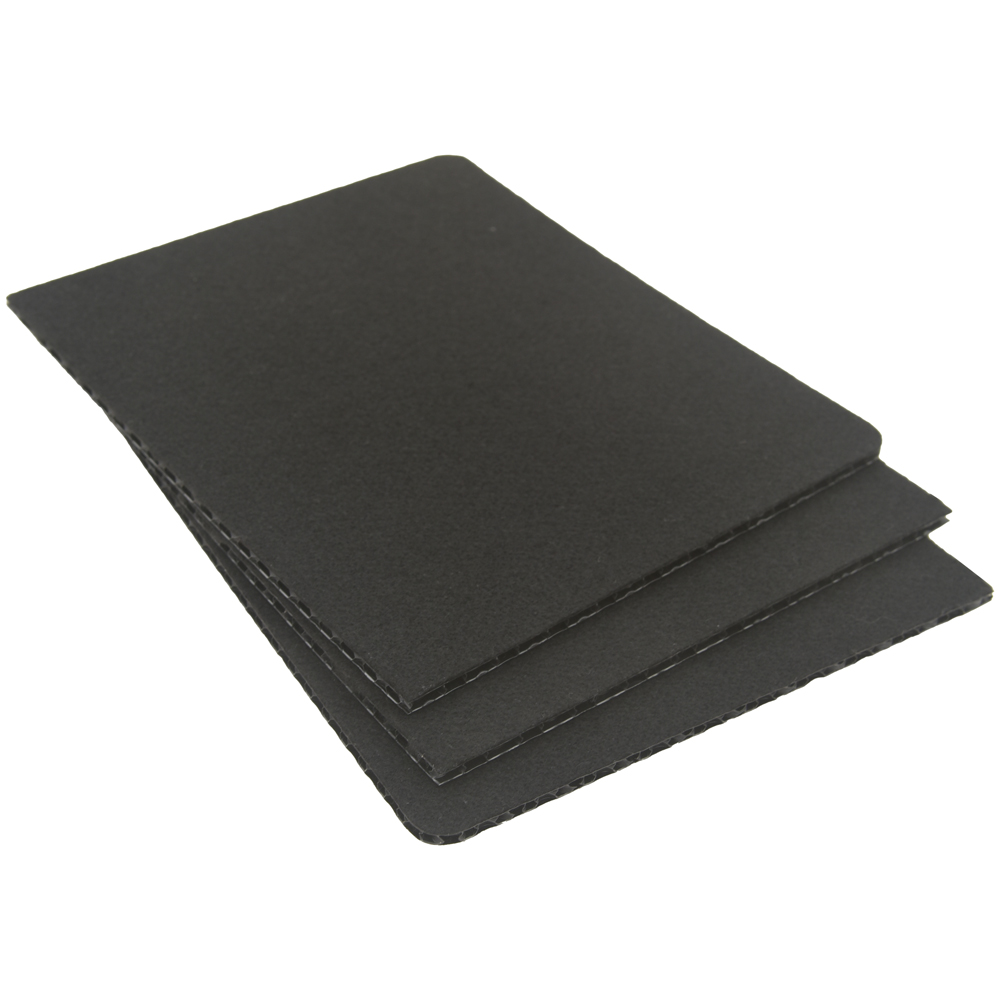
Every protection system has joints. Rolled product has fewer and thinner ones; rigid panels offer better load spreading and puncture resistance at the cost of an edge every metre or so. That edge is what people trip on, what wheels catch on and what inspectors photograph.
Height is the whole argument
A step of a few millimetres catches a shoe toe and the small front wheel of a pallet truck. In practice, keeping the lipped edge under roughly five millimetres, or chamfering it, removes most of the problem. Anything you put on top of the joint – tape, a ramp strip, a second layer – adds height and creates a new edge on both sides. Sometimes taping a joint makes it worse.
Choose how the edges meet
Three options are common. Butt-jointed square edges are the cheapest and the worst for tripping unless they stay tight. Overlapping lips stay flatter and shed less material through the joint, cost a little more, and only work if panels are laid in one direction. Interlocking or rebated edges perform best but need the panels fabricated that way rather than cut on site.
Tape is temporary by definition
Gaffer and cloth tapes lift at the edges within days under wheeled traffic, and the lifted edge is itself a trip hazard. If you must tape, use it as a holding measure until something better is in place, and add it to the weekly inspection. We have covered how marking materials behave on site in edge protection versus strapping.
Fire routes and emergency egress
Protection laid across an escape route has to stay continuous and has to be maintained. Where a route crosses panels, make sure edges are taped flat or ramped, and that the arrangement survives being used. A protection layout that is compliant at handback and displaced three days later is not a protection layout.
Inspect weekly, record briefly
A five-minute walk of the main routes once a week, with lifted and damaged edges noted, is enough on most projects. The record matters more than the inspection: it shows the hazard was managed rather than ignored, and it gives you evidence if an incident is later attributed to site condition.
Where rolled product genuinely wins
Long uninterrupted corridors with little point loading favour a rolled product, and we will say so. Panels earn their place where there are frequent direction changes, heavy wheeled loads or repeated re-use across phases – not where the requirement is a continuous flat runner down a straight corridor.
Testing a joint before you commit
Lay two panels using the joint detail you intend to use, in a place where people will actually walk over them, and leave them for a week. Check whether the joint stays closed, whether the tape still grips, and whether the edge has lifted under traffic. This takes no real effort and catches most joint problems before they are repeated across several hundred square metres.
Where the trial shows the joint opening, the fix is usually directional: panels laid against the dominant traffic direction stay closed, while those laid with it tend to separate. Some layouts only work if the laying direction follows the main route, which is worth knowing before installation rather than after.
What we can do
We supply honeycomb protection panels with square, lipped or rebated edges, and we can chamfer edges on cut panels. Send the layout and the likely wheeled traffic and we will recommend an edge treatment – including telling you when a simpler product would do the job for less.