
Most floor damage on fit-out projects is not caused by careless handling. It is caused by sequencing: a wet trade works in an area before the floor below can take it, or the protection is laid and then the following trade pours, splashes and washes across it. Fixing this is a programme question more than a product question.
Wet trades and what they carry
Plaster, screed and grout are alkaline and abrasive. Washing tools out leaves a residue that grinds into a finish under subsequent traffic, and standing water finds every joint in the protection. None of this is exotic – it is simply what happens when people work above or adjacent to a finished surface.
Some floors must not be covered
This surprises people, and it is worth stating plainly. A cementitious screed in early cure needs to lose moisture to cure properly, and an impermeable sheet laid too soon traps that moisture at the surface, weakens the top layer and can leave a permanent soft patch. Follow the flooring subcontractor’s guidance on when protection may be applied. If they say wait seven days, waiting is cheaper than grinding and re-levelling later.
Once it is fit to cover
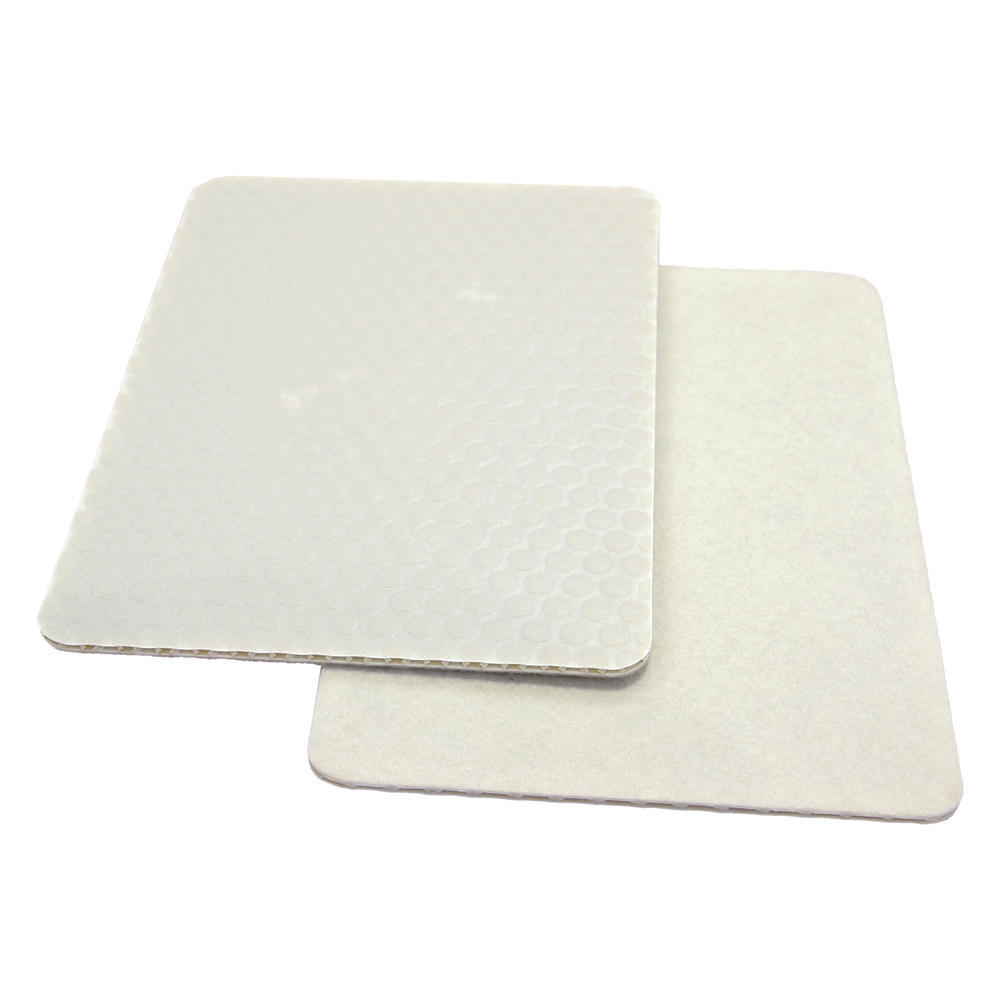
Lay protection with joints that do not let slurry through, and choose something with enough puncture resistance that a bucket corner does not go straight into the finish. Polypropylene handles wet alkaline material well compared with absorbent alternatives, but nothing survives indefinitely under standing grout water, so plan to lift, dry and re-lay in areas with heavy wet work rather than treating the protection as permanent.
Route the trades
A written route with physical marking does more than any product specification. One corridor for wet materials, one for waste, and a clean route for finished goods. Where routes cross a protected floor, put down a sacrificial runner rather than relying on the general protection. Marking and signage in PP sheet is a cheap way to keep those routes legible after three weeks of site traffic.
Cleaning frequency is part of the spec
Protection that is never cleaned becomes an abrasive paste held against the floor. Decide how often it will be lifted or washed, who does it, and where the waste water goes. On most projects this is nobody’s named responsibility, which is exactly why it stops happening after the first fortnight.
Handover condition
Agree with the client what condition the finished floor is handed over in, before the works start. “Protected throughout” and “as new” are different contractual promises and cost different money. Getting that into writing early prevents a retention argument at the end.
What belongs in the sequencing discussion
Most of these problems are settled in one meeting if somebody raises them there. Bring the floor finish dates, the following trades and their wet operations, the protection method for each, and who cleans what. Ten minutes covering those four items before the floor is laid prevents weeks of arguments afterwards.
Also agree what happens when the sequence changes, because it will. If plastering overruns into an area whose floor is already finished, does protection get upgraded, does the trade get moved, or does somebody accept the risk and record it? Deciding that in advance is far cheaper than deciding it under pressure. Keeping wet work off a floor and keeping vapour out from under protection are related but distinct questions – the second is covered in moisture trapping under floor protection panels.
What we can do
We cut honeycomb floor protection panels to size and can supply temporary runners for high-traffic routes. Tell us your programme sequence and which trades follow the floor finish, and we will suggest what to protect, when to cover it, and – where relevant – when to leave it alone.