
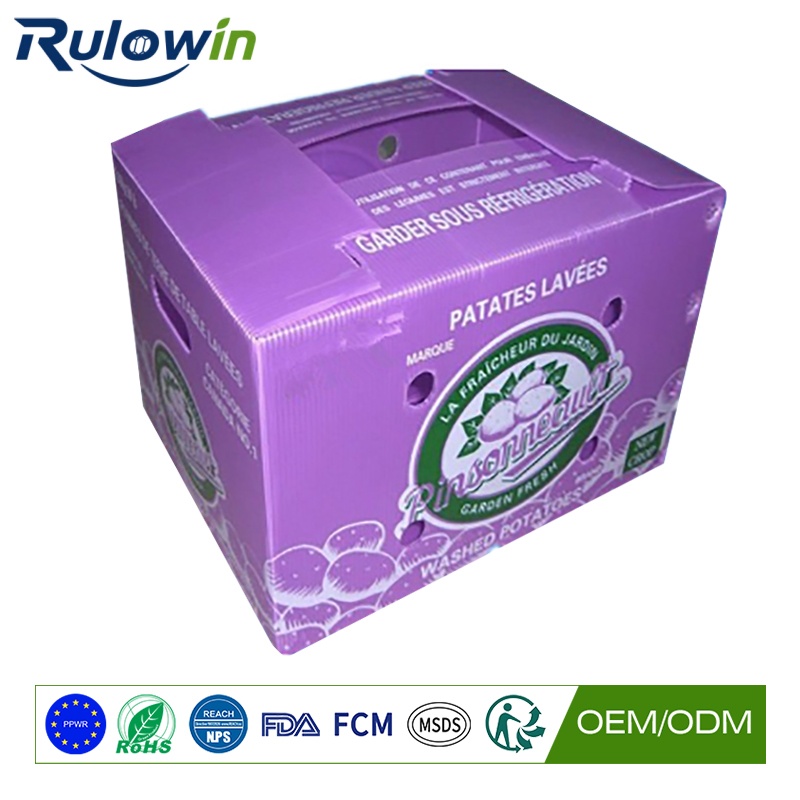
A washed produce crate either goes back into the field or it does not, and that decision gets made thousands of times a week, usually at a glance. The temptation is to make it a laboratory question – swab results, plate counts, certificates. Those have their place, but the day-to-day release decision is a visual and procedural one, and pretending otherwise just moves responsibility somewhere nobody can act.
Six checks, in this order
One: visible soil, with attention to vent slots, stacking lugs and the inside corners where the base meets the wall. Crates that look clean on the flat faces frequently are not.
Two: feel. A slimy or tacky surface means biofilm, and biofilm is not removed by another rinse cycle at the same parameters – it needs mechanical action or a change in chemistry.
Three: dryness. Crates going into storage or transport wet will grow whatever survived the wash. This sounds obvious and it is the single most common failure we see, mostly because drying capacity is not sized for the seasonal peak. What we wrote about washing crates without a drying rack applies here too.
Four: smell. A sour or musty odour after washing means contamination is being carried somewhere in the process, usually the water rather than the crates.
Five: physical condition that affects cleanability – split walls, deep scoring, delaminated areas that trap water.
Six: any crate that carried a suspect load. Known-contaminated returns should never go through the general wash with everything else.
The water is usually the culprit
When release testing starts failing, teams tend to change detergent. Nine times out of ten the issue is bath condition – organic load, temperature drift, or a tank that has not been changed on schedule. Check the wash water before changing anything else.
Downstream handling undoes good washing
Washed crates stacked wet, stored outside, or stacked under raw returns defeats the whole operation. Sequence matters more than most certification schemes will admit: clean crates need a covered, separated, first-in-first-out area, and someone who is responsible for it.
Records that are worth keeping
Bath temperature and change intervals, detergent dosing, and the release decision with who made it. Simple tick boxes per wash batch are plenty. What auditors generally want to see is that the checks happened consistently and that somebody reviewed them – not a binder of unused detail.
Where we are honest about the limits
No inspection regime proves a crate is sterile, and for fresh produce nobody needs it to be. The purpose is to control soil and microbial load and to spot when the wash process has drifted. Visual and tactile checks do that as well as most testing programmes, at a fraction of the cost, provided the process itself is under control.
Identification survives the line
If you are tracing batches, remember the marking has to survive wash chemistry and cold damp storage – the practical notes in labels that survive cold damp crates cover the options and their failure modes.
Who owns the release decision
A checklist with no name attached is decoration. The release decision needs one accountable person per shift, and that person needs to have enough standing to hold a load when the answer is no. Where the answer is always yes, the checklist has quietly become a formality and will be discovered to be one at the worst possible time.
The other thing worth deciding in advance is what happens in October. Every wash line we have looked at runs out of drying capacity in the seasonal peak long before it runs out of washing capacity, and the crates released damp in the peak are the ones most likely to carry a problem back into the field. Plan the drying before you need it.
What we can do
We supply returnable produce crates with smooth internal corners and vent geometry that actually drains, because most retained soil is a design problem rather than a washing problem. Send us your wash parameters and we will flag anything in the crate design that will fight them.