
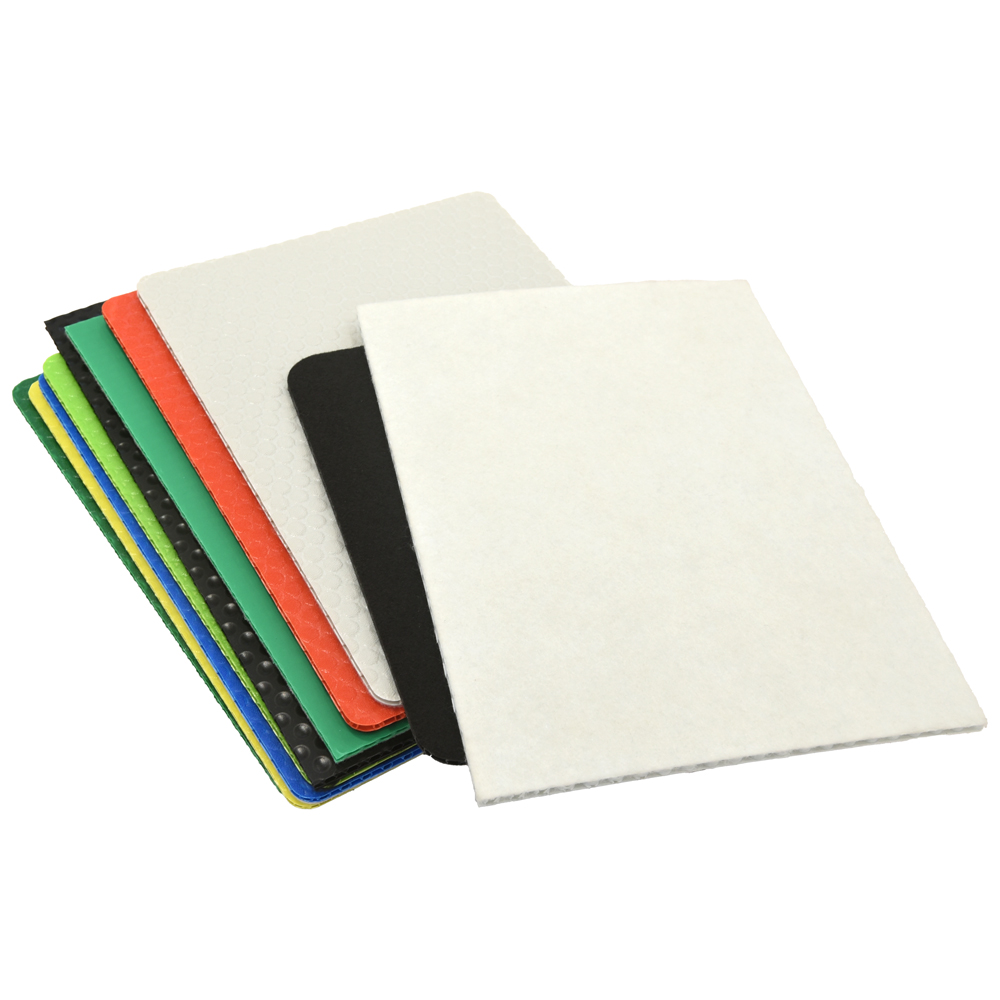
Honeycomb panel is easy to clean on the flat faces and awkward at the edges, because an unsealed edge exposes the open cells and those hold water and dirt. How you deal with that depends on whether the panel was sealed when it was made.
Sealed vs unsealed
A sealed edge caps the cells, so the panel behaves like a flat sheet with a solid border – you can wipe it, pressure-wash it, and it dries. An unsealed edge leaves a row of open channels that wick water in and trap whatever was in the water.
If you are buying panels for anything that gets washed, sealed edges are worth specifying. The cost difference is small and it removes the entire problem described below.
What works on an unsealed edge
Air, not water. A jet of compressed air blows the cells out; a cloth pushes debris further in. Where a wash is required, use a low-pressure rinse and then dry with air rather than wiping.
The thing that does not work is soaking. A panel stood in a dip tank fills its edge cells and then leaks for hours afterwards, which is worse than not washing it.
The faces
Standard PP cleaning: warm water, a mild detergent, a soft brush for anything stuck. No solvents unless you know the grade can take them, and nothing abrasive, because an abraded face holds dirt far faster than a smooth one and the panel then looks dirty permanently.
How the surface finish affects this is discussed in embossed vs smooth sheet for pallet layers – the same logic of smooth being easier to keep clean applies to panel faces.
Drying, which is the part people skip
A panel with water in its edge cells, stacked flat against another panel, will grow something. Stack panels on edge, spaced, until they are dry – or at least until the edges are dry, which is the part that matters.
If you have to stack them wet, stack them with the edges exposed to air rather than face to face.
What not to do
Steam clean at high temperature, which softens PP and can distort a panel. Strong solvents, which can craze the surface. And high-pressure washing directly at an exposed edge, which drives water and contamination deeper into the cells.
The general cleaning approach for panels is set out in how to clean PP honeycomb panels.
How often
Less often than most schedules say. A panel in a dry internal loop does not need washing unless something has spilled on it, and unnecessary washing shortens its life more than dirt does. Wash on condition rather than on a calendar.
Inspection while you clean
Cleaning is when you find damage. Run a hand along the edges while the panel is wet and upright – a separating face shows as a flap, and a crushed edge holds water visibly. Both are easier to spot clean than dirty.
Where cleaning actually matters
In a dry internal loop, cleaning is cosmetic and can be infrequent. In food, pharmaceutical or any audited environment, it has to be verifiable, which changes both the method and the panel specification – sealed edges stop being optional.
Say which of those you are in when you order. A panel specified for a dry loop is not the panel you want in a wash-down area.
What we can do
We supply PP honeycomb panels with sealed edges, which is the answer to most of this. Tell us whether your panels get washed and how – if they do, sealed edges cost a little and save a lot.