
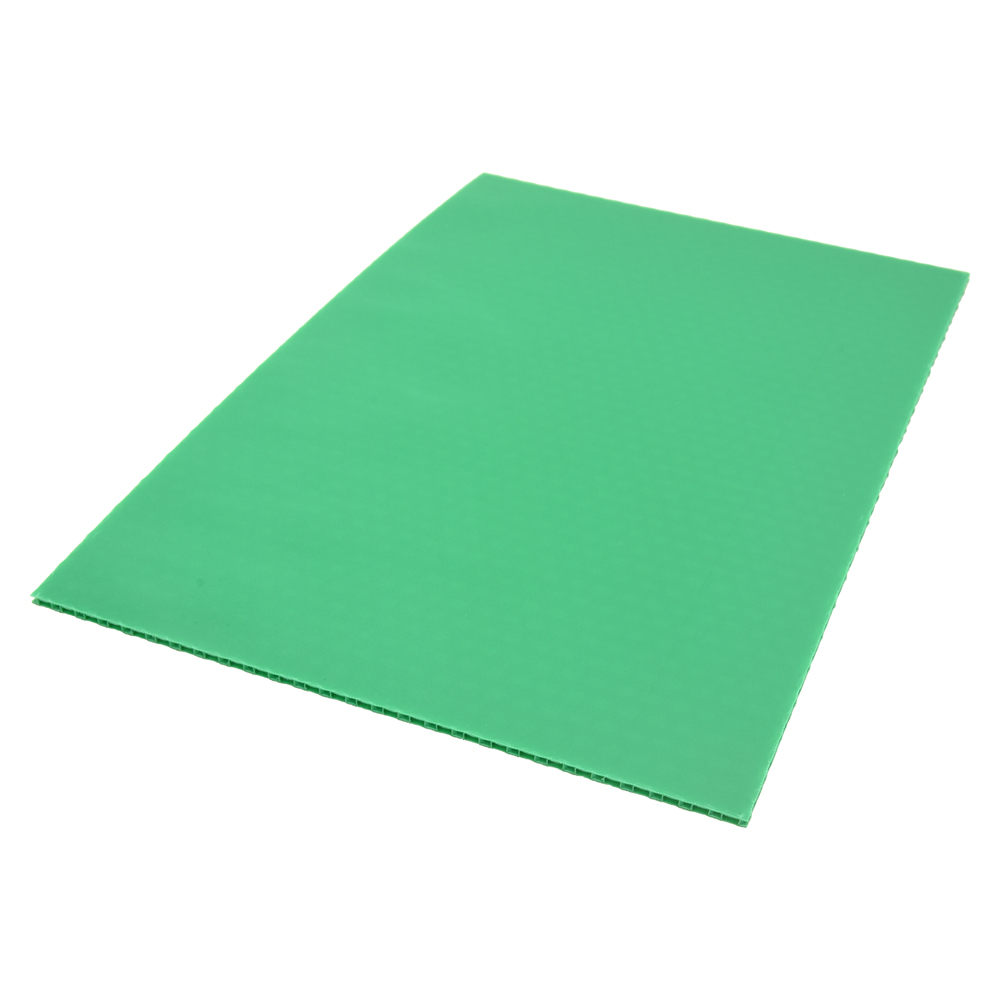
Honeycomb panel gets damaged at the edges far more than in the middle, and the question of whether it can be repaired comes up constantly. The answer depends entirely on which of two types of damage it is.
Damage that can be salvaged
Localised edge crush. The edge has been compressed over a few centimetres, the cells have collapsed, and the rest of the panel is fine. This can be cut out. Trim back to sound material and seal the new edge, and you have a smaller but serviceable panel.
The panel is now shorter, so check it still does the job. In a lot of applications a panel trimmed by twenty millimetres is still perfectly usable, and that is the whole calculation.
Damage that cannot
A crease across the face. Once the panel has folded, the cell structure along that line is destroyed and the two faces are no longer working together. You cannot restore it, and a patch over it does not restore stiffness worth having.
Delamination. A face lifting from the core is repairable in principle with the right adhesive, and in practice rarely worth it on a standard panel. By the time you have cleaned, clamped and cured it, you have spent more than a replacement costs.
How to seal a trimmed edge
The point of sealing is to stop the exposed cells filling with water and dirt, and to restore some edge strength. Options range from a purpose-made edge profile to a simple tape, and the right one depends on how the panel gets handled afterwards.
For an internal loop, tape is often enough. For a panel going outside or into a wash, use a proper profile. What matters is that the seal is continuous – a partial seal traps water rather than excluding it.
When to stop and replace
If more than about a fifth of the panel area is damaged, or if the damage crosses a load path, replace it. A repaired panel in a structural position that then fails is a much more expensive outcome than the panel.
Also replace rather than repair anything that goes into a food-contact or audited position, because a repaired panel is difficult to evidence as cleanable.
What to do with the offcuts
Trimmed edges and damaged panels are still useful as dunnage, layer pads and protective board. We covered that in using honeycomb offcuts as transit dunnage, and it is the honest answer to where most damaged panels should end up.
Preventing it in the first place
Edge damage comes from dragging, from dropping on a corner, and from stacking with the edge unsupported. Two of those are handling and one is storage. Panels stored on edge, leaning, deform at the bottom edge over time – store them flat.
The cost test
Time the repair once, honestly, including finding the panel, cutting it, sealing it and putting it back. Compare that with the cost of a replacement panel. In most operations the repair loses, and it loses by enough that the decision stops being close.
The exception is a large or custom panel where the replacement cost is genuinely high. Repair those; replace everything else.
What we can do
We supply PP honeycomb panels with sealed edges, which is the cheapest insurance against most of this. Tell us how your panels get handled and we will tell you whether edge sealing is worth specifying – including when it is not.